
If you drive around Huntsville, Alabama, you already know the heat here is no joke. Summer temperatures push into the 90s, and that kind of weather puts real stress on your car’s engine parts. One part that takes a serious beating is your timing system. Knowing the difference between a timing belt and a timing chain can save you from a very expensive surprise down the road.
What Is a Timing Belt and How Does It Work?
A timing belt is a rubber belt with small teeth on the inside. It connects two key engine parts: the crankshaft and the camshaft. The crankshaft moves the pistons up and down. The camshaft opens and closes the engine valves. The timing belt keeps both of them working together at the exact right moment.
Think of it like a bicycle chain, but made of rubber. It runs quietly and smoothly. That’s one reason car makers started using them, they make the engine much quieter.
The problem is rubber wears out. Most manufacturers recommend replacing timing belts every 60,000 to 100,000 miles, depending on the vehicle. If you miss that window, the belt can crack, slip, or snap completely.
I’ve seen this happen to a friend. She ignored her belt for too long and one morning the engine just wouldn’t start. The belt had snapped overnight. What could have been a $700 fix turned into a $3,500 engine job. Don’t let that be you.
What Is a Timing Chain and Why Do Some Engines Use It?
A timing chain does the exact same job as a timing belt, but it’s made of metal links, like a real chain. Timing chains are made from high-strength steel and are built to endure the stresses of engine operation.
Because it’s metal, the timing chain is much stronger. Timing chains are designed to last much longer, often the life of the engine if properly maintained, sometimes exceeding 150,000 to 200,000 miles.
The downside? Metal makes noise. Chains can rattle a bit, especially when the engine is cold or if the tensioners get worn. But modern engines have gotten a lot better at reducing that noise.
Most newer trucks, SUVs, and performance cars use timing chains now because they just last longer and need less attention.
Timing Belt vs Timing Chain: The Key Differences Huntsville Drivers Need to Know
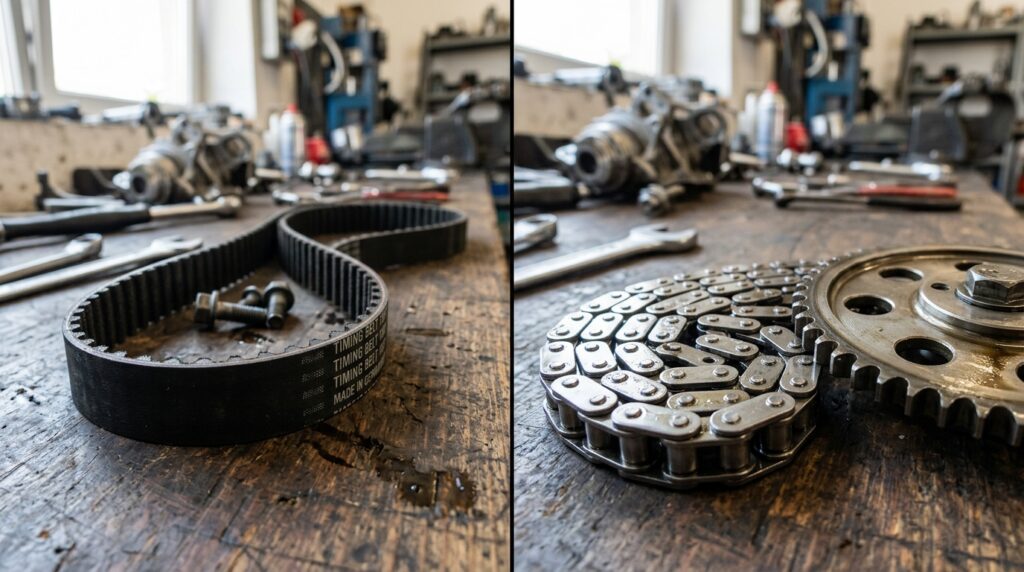
Here’s the simple breakdown so you can see what you’re dealing with:
| Feature | Timing Belt | Timing Chain |
| Material | Reinforced rubber | Metal links (steel) |
| Noise | Quiet | Slightly noisier |
| Lifespan | 60,000 to 100,000 miles | 150,000+ miles (often lifetime) |
| Replacement Cost | $500 to $1,000 | $1,000 to $2,500+ |
| Lubrication Needed | No | Yes (uses engine oil) |
| Risk if It Fails | Sudden snap, major damage | Gradual wear, but it can cause damage |
The biggest thing to understand here is that a timing belt can fail suddenly with zero warning. Many belts fail suddenly with no noise. A timing chain usually gives you some warning signs before it goes bad, like a rattling sound.
How Huntsville’s Hot Climate Affects Your Timing System
This is the part most people don’t think about. Living in Huntsville means your car deals with hot summers, high humidity, and a lot of stop-and-go traffic on Research Park Boulevard or University Drive. All of that adds up.
High humidity, constant heat cycling, and short city trips all accelerate wear, even on low-mileage vehicles. So a timing belt that might last 90,000 miles in a cooler climate could wear out faster here.
Rubber does not love heat. It dries out, gets brittle, and cracks. Prolonged high heat and humidity accelerate rubber belt wear, making timely replacement especially important in a region like ours.
If your car has a timing belt, you really need to stick to the lower end of the replacement schedule here in North Alabama. Don’t wait until 100,000 miles. Talk to a trusted Huntsville mechanic and aim closer to 60,000 to 75,000 miles.
A timing chain handles heat better since it’s metal and stays lubricated by the engine oil. But even chains need good, regular oil changes to stay healthy in our climate.
Warning Signs Your Timing System Needs Attention
Whether you have a belt or a chain, your car will usually try to tell you something is wrong. Here are the signs to watch for:
For Timing Belts:
Symptoms of a failing timing belt include ticking or clanking noises coming from the front of the engine, the Check Engine light coming on, and excessive engine vibrations. You might also notice the engine misfiring or hard starts.
If the timing belt is worn, there is a loss of tension which makes belt slipping more likely. Belt slippage or skipping will lead to the engine going out of sync and can result in piston and cam collision causing catastrophic engine failure.
For Timing Chains:
A stretched or worn timing chain usually rattles, especially when you first start the car. If the timing chain or any of its associated parts are going bad, they’ll often generate unusual noises, such as a rattling sound.
Honestly, both systems can fail quietly too. So never skip scheduled inspections just because your car feels fine.
What Happens If You Ignore It? The Real Cost of Waiting
This is where it gets scary. If your timing belt snaps or your timing chain jumps a tooth, the engine parts stop working together. On what’s called an interference engine, the pistons and valves share the same space but never at the same time. If the timing is off, they smash into each other.
Once the belt fails, your engine could suffer from destroyed pistons, bent connecting rods, destroyed guide valves, or bent valves. No matter which components are damaged, you’re likely looking at an extensive repair bill or a total engine replacement.
According to RepairPal, the average cost for a timing belt replacement in Huntsville is between $882 and $1,285 but can vary from car to car. That sounds like a lot. But compare it to a full engine rebuild, which can easily run $4,000 to $8,000 or more. Preventive maintenance always wins.
How to Find Out If Your Car Has a Belt or a Chain
Not sure what your car has? Here’s the easiest way to find out:
The first thing to do is grab your owner’s manual. Look in the maintenance schedule section. If you see a timing belt listed with a replacement interval, you have a belt. If there’s no mention of it at all, you likely have a chain.
You can often tell whether you have a belt or a chain by looking at the housing it’s located in. Plastic timing covers generally mean the engine uses a timing belt, while a metal timing cover is a good sign you’re looking at a chain, as chains need to be lubricated by engine oil and require a metal housing.
You can also just ask your mechanic or look up your specific year, make, and model online. It only takes a few minutes and it’s worth knowing.
Timing Belt Replacement: What to Expect at a Huntsville Auto Shop
If your car needs a timing belt, here’s what a good Huntsville mechanic will do. They’ll remove the timing cover, pull the old belt off, and inspect all the parts around it.
Timing belt replacement usually includes replacing the water pump, idler pulleys, and tensioners, since they’re accessible during the service. This is smart because those parts have similar lifespans. Replacing them together saves you from paying for all that labor again in another year or two.
The timing belt drives the water pump in 60% of the vehicles on the road. The labor cost of replacing the water pump is significantly higher than the cost of the pump itself, so it makes great sense to replace it at the same time as the belt.
Ask your shop to also replace the tensioners and pulleys while they’re in there. It’s a small extra cost that can prevent a big headache down the road.
Timing Chain Maintenance: Keep the Oil Fresh
If you have a timing chain, the most important thing you can do is simple: change your oil on time.
The maintenance costs for a vehicle with a timing chain are mostly related to your oil change interval. If you change your oil regularly, according to your manufacturer’s recommendations, it will protect the timing chain and keep it in peak condition for a long time.
The timing chain lives inside the engine and gets lubricated by engine oil. Old, dirty oil doesn’t protect the chain well. It can cause the chain to wear faster, stretch, or skip teeth on the sprocket.
In Huntsville’s heat, I’d suggest not pushing your oil changes too long. Check what your car’s maker recommends and stick to it. Think of it this way: a $50 oil change is a lot cheaper than a $2,000 timing chain job.
Conclusion
The difference between a timing belt and a timing chain comes down to material, lifespan, and maintenance needs. Belts are quieter and cheaper to replace but wear out faster, especially in hot places like Huntsville. Chains last longer but need clean oil and regular attention.
No matter which one your car has, ignoring it is never a good idea. Huntsville’s heat and humidity are tough on engine components. Stay on top of your replacement intervals, watch for warning signs, and talk to a mechanic you trust.
Your engine is the heart of your car. Give it a little attention and it’ll take care of you for hundreds of thousands of miles.
Frequently Asked Questions
How do I know if my car has a timing belt or timing chain?
Check your owner’s manual under the maintenance schedule. If you see a replacement interval for the timing belt, you have one. No mention? You likely have a chain. You can also look at the timing cover: plastic usually means a belt, metal means a chain.
How often should I replace a timing belt if I live in Huntsville, AL?
Most manufacturers say every 60,000 to 100,000 miles. But because Huntsville summers are hot and humid, aim for the lower end: around 60,000 to 75,000 miles. Heat speeds up rubber wear and shortens belt life.
Can I drive my car if the timing belt is making noise?
No, not safely. A ticking or slapping noise from the front of the engine is a serious warning sign. Drive it to a mechanic as soon as possible, or better yet, have it towed. A snapped belt can cause major engine damage in seconds.
Is a timing chain better than a timing belt?
For most drivers, yes. Timing chains last longer and don’t need scheduled replacement like belts do. But they cost more to repair when something does go wrong. If your car has a chain, just keep up with regular oil changes and you’re good.
What happens if a timing belt breaks in an interference engine?
In an interference engine, a snapped timing belt can cause the pistons to hit the valves. This bends the valves, damages the pistons, and can destroy the engine. Repair costs can reach $4,000 or more. Always replace your belt on schedule to avoid this.