

That little orange light comes on, and your whole mood changes. Your stomach drops. Your mind jumps to the worst. Maybe it is the engine. Maybe it is going to cost thousands. This check engine light anxiety guide is here to tell you one thing first: take a breath. Most of the time, that light is not as scary as it looks.
Why So Many Drivers Panic When They See It
Honestly, the panic makes total sense. The check engine light gives you zero information. It just sits there glowing like it knows something you do not. No details. No explanation. Just that little engine symbol on your dashboard staring back at you.
I felt the same way the first time mine turned on. I pulled over immediately and sat there for five minutes doing nothing. The truth is, most drivers have no idea what the light actually means. A study by CarMD found that nearly 49% of U.S. drivers are currently driving with at least one warning light on. So you are far from alone.
The fear mostly comes from not knowing. And that is exactly what this guide is here to fix.
What Is the Check Engine Light and How Does It Work?
The check engine light is part of your car’s onboard diagnostic system, known as OBD-II. Every car sold in the U.S. since 1996 has one. This system watches over your engine, your emissions system, and other key parts of your vehicle.
When it spots a problem, it saves a diagnostic trouble code or DTC in your car’s computer. Then it turns on the check engine light to tell you something needs attention. That code is like a clue. It points directly to the part or system that has an issue.
The light itself is usually yellow, orange, or amber. It might look like a little engine, or it might say “Check Engine” or “Service Engine Soon.” Some newer cars even use red for more urgent problems.
Solid vs. Flashing Check Engine Light: Know the Difference
Not every check engine light is the same. The way it behaves tells you a lot about how serious the problem is. This is one of the most important things to understand in this whole guide.
A Solid Light Is Not an Emergency
A solid check engine light means your car has noticed something is off. But it is not screaming at you. It is more like a calm nudge. Something in the engine or emissions system needs a look, but it is not causing immediate damage right now.
You can usually keep driving for a short while. Still, do not ignore it. A small problem left alone can grow into a big one. Schedule a visit to your mechanic soon and get it diagnosed. Think of it like a small ache in your back. You can walk on it today, but you do not want to leave it for three months.
A Flashing Light Needs Immediate Action
A flashing check engine light is a completely different story. This one is urgent. A blinking light usually means a serious engine misfire is happening right now. When the engine misfires that badly, it can send raw fuel into your catalytic converter and destroy it within minutes.
Pull over safely. Turn off the engine. Do not keep driving. A flashing light that gets ignored can turn a $300 fix into a $3,000 one. If your light is also paired with loss of power, shaking, or a strange smell, call for help right away.
Most Common Reasons Your Check Engine Light Turns On
Here is the good news. While hundreds of things can trigger the check engine light, a small group of problems causes most of them. Knowing these helps you go into the repair shop feeling informed instead of helpless.
Simple Fixes Like a Loose Gas Cap
The most common trigger is also the easiest fix: a loose gas cap. When your fuel cap is not tight, it breaks the seal on your fuel system. Your car’s computer reads that as an emissions leak and turns on the check engine light.
Before you panic, just check your gas cap. Give it a firm twist until you hear it click. After a few drives, the light might go off on its own. I have seen this happen plenty of times. Sometimes the fix costs nothing at all.
Bigger Issues Like Oxygen Sensors and Catalytic Converters
Beyond the gas cap, the next most common causes include a failing oxygen sensor, a bad mass airflow sensor, dirty fuel injectors, and worn spark plugs. A broken oxygen sensor is especially common. It measures the oxygen in your exhaust and helps control how much fuel your engine uses. When it fails, your fuel economy drops and your emissions go up.
The most expensive common issue is a failing catalytic converter. This part turns harmful gases like carbon monoxide into safer ones like carbon dioxide. When it fails, your car runs poorly and can fail a state inspection. According to AAA, catalytic converter replacement can cost between $900 and $2,500 depending on the vehicle. Always worth catching early.
What to Do When Your Check Engine Light Comes On
Okay, the light is on. Here is exactly what to do. No guessing. No panic.
First Steps to Take Right Away
The very first thing to do is stay calm. The check engine light does not mean your car is about to break down on the highway. Take a breath and pay attention to how your car feels. Is it driving normally? Are there any strange sounds, smells, or signs of overheating?
If the car feels fine and the light is solid, you have a little time. Check your gas cap first. Tighten it and drive for a day or two. If the light stays on, your next step is to get the diagnostic trouble codes read. Many auto parts stores will do this for free. Just pull up, ask them to scan your car, and they will tell you the exact code.
How to Use an OBD-II Scanner to Read Trouble Codes
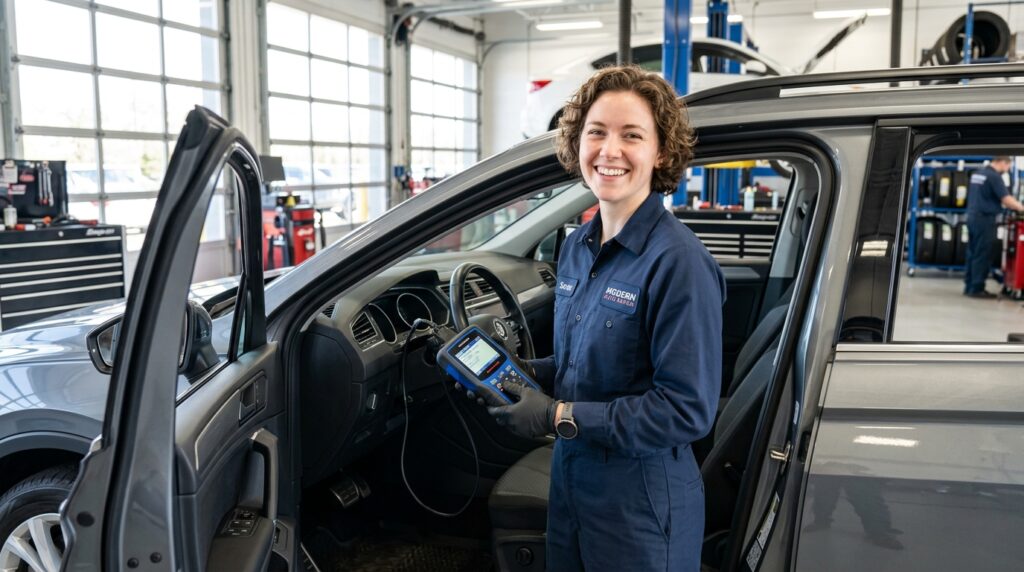
You can also buy your own OBD-II scanner for around $30 to $50. You plug it into the port under your dashboard (usually near the steering column) and it reads the DTCs stored in your car’s computer.
The scanner shows you codes like P0171 (lean fuel mix), P0300 (random engine misfire), or P0440 (evaporative emissions issue). These five-digit codes tell you exactly what system is involved. You can look them up online or share them with your mechanic. This gives you more power in the conversation and helps you avoid being overcharged. According to the National Institute for Automotive Service Excellence (ASE) at, a proper diagnostic process always starts with reading and confirming these codes before any repair begins.
Is It Safe to Drive with the Check Engine Light On?
This is the question everyone asks. The honest answer is: it depends.
When You Can Keep Driving Safely
If the check engine light is solid and your car feels totally normal, then yes, you can drive it for a short time. That means no shaking, no weird sounds, no smoke, and no loss of power. You should still get it checked within the next day or two. Do not use this as an excuse to ignore it for weeks.
A good rule: drive it home or to a nearby mechanic. Avoid long road trips until you know what the code says. Think of it the same way you would a small warning on your phone. You would not throw the phone away, but you also would not keep ignoring the notification forever.
When You Must Stop Right Away
If the check engine light is flashing, stop driving as soon as it is safe to do so. Same goes if you notice smoke from the tailpipe, a burning smell, heavy engine shaking, or a big drop in power. These signs point to an active problem that is getting worse by the mile.
Call for a tow truck or roadside assistance. Driving through these symptoms is one of the most common ways a $500 problem turns into a $5,000 one. I know it feels dramatic to call a tow for a dashboard light, but your engine will thank you.
How to Keep the Check Engine Light from Coming Back
Once you fix the problem, the goal is to keep it from happening again. The great news is that most check engine light triggers are completely preventable.
Easy Maintenance Habits Every Driver Should Know
The most powerful thing you can do is follow your car’s regular maintenance schedule. That means getting oil changes on time, replacing spark plugs when they are due, checking your air filter, and making sure your gas cap is always tight after filling up.
It also helps to pay attention to how your car feels day to day. If something sounds different or feels off, get it checked early. Small problems caught early are almost always cheaper and faster to fix.
How Regular Checkups Save You from Big Repair Bills
Skipping maintenance is one of the top reasons drivers end up with expensive surprise repairs. A bad oxygen sensor ignored for months can hurt your fuel economy so badly that you pay more in extra gas than the part would have cost to replace.
According to the U.S. Department of Energy at, a faulty oxygen sensor can reduce your fuel efficiency by up to 40%. That adds up fast. Regular checkups are not just about your car. They protect your wallet too.
Conclusion
The check engine light anxiety guide comes down to one key idea: knowledge beats panic every time. That little light on your dashboard is not your enemy. It is your car trying to help you. A solid light means to handle it soon. A flashing light means stop now. Check your gas cap first, get the diagnostic trouble codes read, and talk to a good mechanic. You do not have to feel lost or helpless the next time it comes on. You now know exactly what to look for and what to do next.
Frequently Asked Questions
Can the check engine light turn off on its own?
Yes, it can. If the problem that caused it was temporary (like a loose gas cap that you tightened), the light may go off after a few driving cycles once the OBD-II system confirms the issue is gone. But if it stays on, do not wait for it to fix itself.
How much does it cost to fix a check engine light?
It really depends on the cause. A loose gas cap costs nothing to fix. Replacing an oxygen sensor might cost $150 to $300. A catalytic converter replacement can run anywhere from $900 to $2,500. Getting the diagnostic trouble codes read first helps you understand the cost before any work begins.
Can I reset the check engine light myself?
Yes. You can use an OBD-II scanner to clear the codes and turn off the light. But if the underlying problem is still there, the light will come back on within a few drives. Clearing the code does not fix the problem. It just turns off the warning temporarily.
Is a flashing check engine light dangerous?
Yes. A flashing check engine light usually signals a severe engine misfire that can damage your catalytic converter and internal engine parts in a very short time. If you see it flashing, pull over safely and do not drive the car until it has been inspected by a mechanic.
What is the most common cause of the check engine light?
The most common cause is a loose or faulty gas cap. After that, the next most common causes are a failing oxygen sensor, dirty fuel injectors, a bad mass airflow sensor, and worn spark plugs. Most of these are affordable fixes when caught early.