
That clunk when you hit a pothole. That squeak every time you go over a speed bump. These noises are not just annoying. They are your car trying to talk to you. And if you ignore them, what starts as a small fix can turn into a very big and very expensive repair.
What Does Your Suspension System Actually Do?
Your suspension system is the group of parts that sits between your car’s body and its wheels. Every time you drive over a bump or a rough road, these parts take the hit, so you do not feel it so much inside the car.
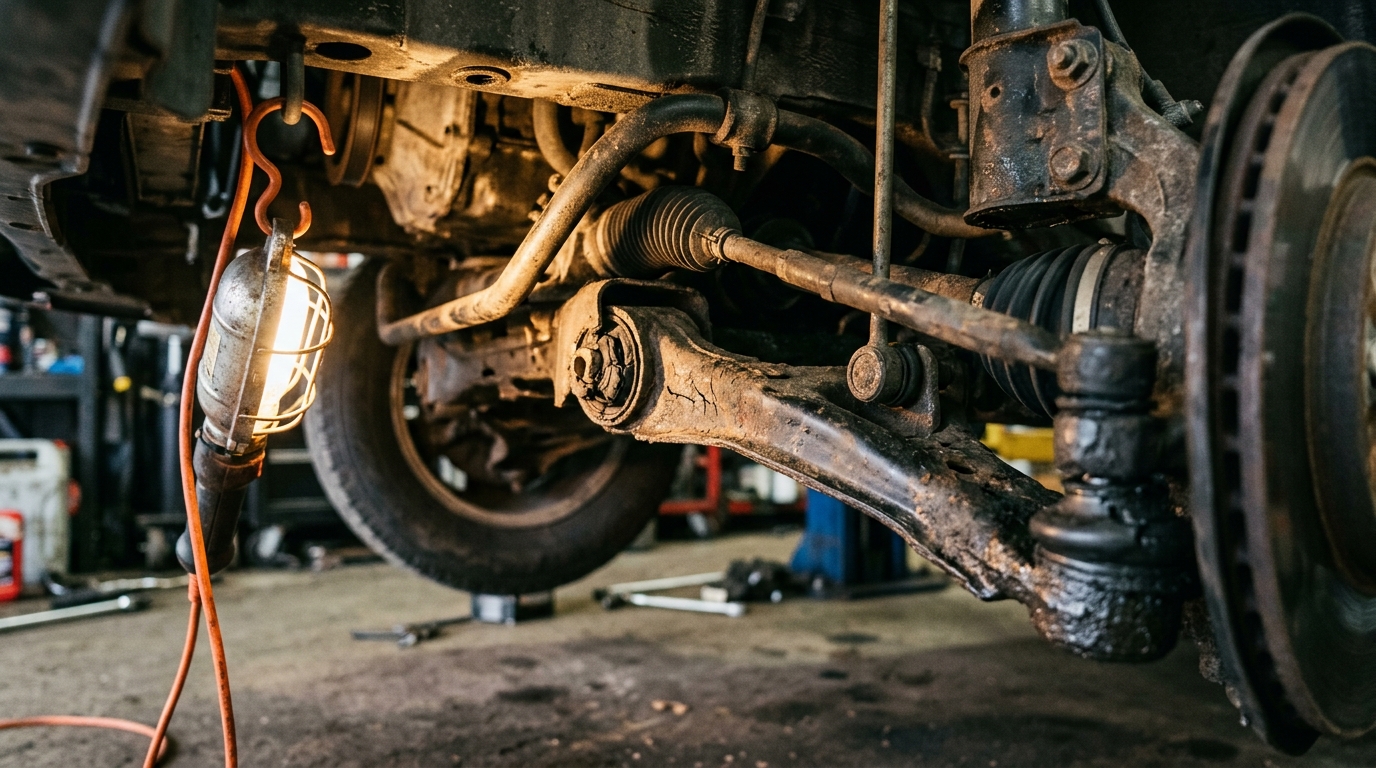
The main parts include shock absorbers, struts, control arms, ball joints, rubber bushings, and coil springs. Together they do two jobs. First, they absorb bumps. Second, they keep your tires in good contact with the road so your car stays stable and easy to steer.
Without a working suspension, driving would feel like sitting in a tin can rolling over rocks. More than just comfort, it is a safety system. When it breaks down, your ability to steer and stop safely gets worse, too.
Why You Should Never Ignore Suspension Noises
A lot of drivers hear a noise and think, “Well, the car still drives, so I’ll deal with it later.” Honestly, I understand that thinking. Life is busy. But suspension noises almost always get worse over time, not better.
One worn part puts more stress on the parts around it. Before you know it, a small bushing problem becomes a broken control arm. And a broken control arm can cause you to lose control of the vehicle entirely. That is not a scare story. That is just how the system works.
Important: Continuing to drive with suspension problems does not just risk a bigger repair bill. It puts you, your passengers, and other drivers at risk. Get it checked soon.
The Clunking Noise: The Biggest Warning Sign on Bumps
If your car makes a clunking noise when you go over a bump, you are dealing with the most common and most recognized suspension warning sign. It sounds like something hard hitting something else. Sometimes it is a dull thud. Sometimes it is sharp and loud.
What Causes That Clunking Sound Over Bumps?
The clunk happens because something in your suspension system has too much movement. It should be tightly held in place, but wear or damage has loosened it up. When you drive over a pothole or speed bump, that loose part moves and hits something nearby.
The most common causes include worn control arm bushings, damaged ball joints, worn out struts or shock absorbers, damaged leaf spring shackles, and loose body mounts. Each of these parts can develop excessive play over time from normal use on rough roads.
| Noise Type | Most Likely Cause | Urgency |
| Clunking | Worn ball joints, loose struts | High |
| Squeaking | Dry bushings, worn shock mounts | Medium |
| Creaking | Failed rubber bushings | Medium |
| Rattling | Loose sway bar link | Medium |
| Knocking | Worn control arm bushing | High |
| Popping | Failing ball joint or strut mount | Urgent |
Is a Clunking Noise Dangerous to Drive With?
Yes. And I want to be clear about this. A clunking sound from your front-end is not something to wait on. If it is coming from a bad ball joint, for example, that joint could separate completely. When that happens, your wheel can tuck under the car while you are driving. That is a loss of control.
A friend of mine ignored a clunking sound in his old truck for about three months. One day on the highway, his front wheel started pulling hard to the left. He pulled over and found his strut had completely given out. What would have been a $200 fix became a $700 repair plus a tow truck.
Even if the cause turns out to be something less serious like a loose body mount, it is always better to know. A quick visual inspection from a mechanic can tell you exactly how urgent the problem is.
Squeaking and Creaking: When Your Car Cries for Help
Not all suspension noises are loud crashes and clunks. Some are softer but just as important to pay attention to. A squeaking noise or creaking noise from under your car is your suspension telling you something is dry, worn or starting to fail.
What Makes Your Car Squeak When Going Over Bumps?
The squeak usually comes from a lack of lubrication. When rubber or metal parts dry out, they start to rub against each other and make that high pitched sound. Rubber bushings are the most common source. They are small rings of rubber that sit between metal parts to cushion movement. Over time they dry out, crack and harden.
When your shock absorber’s internal seals start to fail, it can also squeak as the metal parts move without enough fluid. You might also notice your ride quality gets worse at the same time. The car feels bouncier than normal, and you start to feel every small bump in the road more sharply.
A creaking sound is very similar. It often shows up when you go over a speed hump or when you push down on the corner of your car. It can point to worn strut mounts, cracked bushings or coil springs that have started to settle and rub.
Rattling Sounds: Is a Loose Sway Bar the Cause?
A rattling noise when you hit a bump is often fast and sounds almost like something is loose in a tin can. And in a way, something probably is loose. The most common cause is a worn sway bar link.
The sway bar (also called the stabilizer bar) connects the left and right sides of your suspension system to stop the car from leaning too much when turning. The link that connects it to the control arm is small. When it wears out or breaks, it rattles every time the suspension moves over a bump.
I once had a rattling sound in my own car that drove me crazy for two weeks. I thought it was something in the trunk. Turned out to be a broken sway bar link. My mechanic showed me the part and it was completely snapped. It costs about $80 to fix. But those two weeks of guessing were not fun!
A damaged shock absorber or strut can also cause rattling. If the internal components have broken down, they can move around inside the housing and make that loose rattling sound over every bump and dip.
Knocking and Popping Noises: Red Flags You Cannot Miss
If your car makes a knocking or popping sound when going over bumps, this is the most serious category of suspension noise. These sounds usually mean something is very close to failing or has already started to fail.
Knocking Noise from Bad Control Arm Bushings
A knocking sound over bumps is often caused by a damaged or worn control arm bushing. The bushing is supposed to absorb small movements between the control arm and the car’s frame. When it wears out or cracks, the metal arm can move too much and knock against surrounding parts.
You will often hear this sound when you go over a bump and sometimes also when you brake or turn. The knock sounds like someone tapping on metal from underneath your car. The louder and more frequent it gets, the more worn the bushing has become.
A worn or damaged strut mount can also produce a very similar knocking sound. The strut sits inside a mount at the top of your wheel well. When that mount wears out, the strut loses its solid anchor point and knocks with every suspension movement.
According to the National Highway Traffic Safety Administration (NHTSA), suspension component failures are a contributing factor in thousands of vehicle crashes each year. Regular inspection is key to preventing dangerous failures.
Popping Sound Near Ball Joints or Strut Mounts
A popping noise is the red flag of all red flags when it comes to suspension sounds. This sound often means a component is on the very edge of failing. The most likely culprits are a ball joint that has lost too much material or a strut mount that is nearly broken.
Ball joints act as pivot points between your wheels and the suspension arms. They allow your wheels to move up and down as well as turn left and right. When they wear out, they develop play and pop when put under stress. If a ball joint separates while you are driving, your wheel can fold under the car completely.
Do not keep driving if you hear popping from the front end. Pull over safely and call for an inspection right away. This is one of those times where acting fast can prevent a serious accident.
According to a study referenced by AAA (American Automobile Association), US drivers spend an average of $3 billion per year on vehicle repairs caused by bad road conditions and neglected vehicle maintenance. Early detection of suspension problems can save hundreds of dollars in repair costs.
Other Signs That Show Up With the Noises
Suspension problems do not always show up as noise alone. There are other symptoms that often come at the same time. Knowing all of them helps you give your mechanic a better picture of what is going on and helps you catch problems earlier.
Your Car Nose Dives or Bounces Too Much
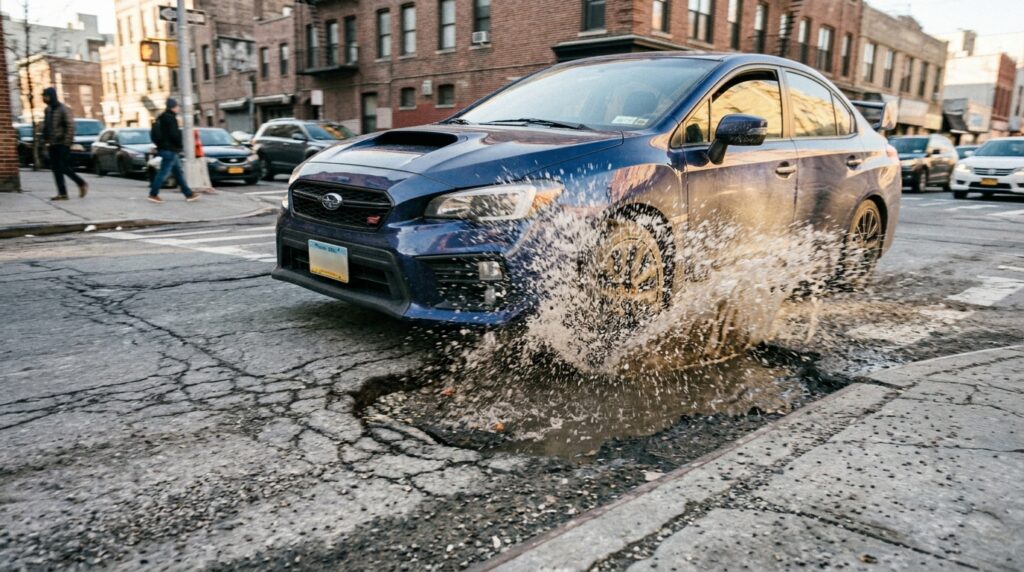
When your shock absorbers or struts are worn out, they can no longer control how much your car moves. So when you hit a bump, instead of absorbing it quietly and settling back to normal, the car bounces two or three times before it settles. This is called a bouncy ride and it is a clear sign the damping is gone.
When you brake hard or go down a steep slope, a car with bad suspension will nose dive. The front dips down sharply. You may also feel a rolling or swaying sensation when you make a turn. This happens because the suspension is no longer keeping the car balanced and flat through corners.
You can do a simple test at home. Push down hard on each corner of your car and let go. A healthy suspension will rise up and settle in one smooth motion. If it bounces two or three times before stopping, your shock absorbers likely need replacing.
Uneven Tire Wear and Pulling to One Side
Your tires can tell you a lot about your suspension system. If one side of a tire is wearing down faster than the other, or if you see bald spots appearing in patches, the suspension is likely not holding your wheels at the right angle.
When suspension parts like tie rods or control arms wear out, your wheel alignment gets thrown off. The tire sits at a wrong angle against the road and wears unevenly. Over time this means you need new tires much sooner than you should.
If your car also pulls to one side when you drive in a straight line without touching the wheel, that is another sign. You might feel it during braking as well. This pulling usually means the suspension on one side is weaker or more worn than the other. A professional inspection and a wheel alignment check will tell you exactly what needs attention.
Conclusion
Warning signs like a clunking noise, a squeaking suspension, a sharp knocking sound or a strange rattling when you go over bumps are not sounds to ignore. Each one is your car’s way of asking for help before things get worse.
The good news is that catching these problems early almost always means a cheaper fix. A worn sway bar link costs very little to replace. A failed ball joint that causes an accident costs far more in every possible way.
Next time you go for a drive, turn down the radio. Listen. If you hear anything unusual when going over bumps, do not put it off. Take it to a mechanic you trust and get a full suspension inspection. Your safety and your wallet will both thank you for it. I’d love to hear what noise you’re dealing with. Drop a comment below and let’s figure it out together.
Frequently Asked Questions
What does a clunking noise when going over bumps usually mean?
A clunking noise over bumps almost always points to a problem in your suspension system. The most common causes are worn ball joints, damaged control arm bushings, worn out struts or loose body mounts. Any of these parts can develop too much movement over time, and that movement creates the clunking sound when you drive over a bump or a rough surface. It is best to get it checked quickly because some of these causes, like a bad ball joint, can be dangerous if they fail completely.
Is it safe to drive with a squeaking suspension?
A squeaking noise from your suspension is usually less urgent than a clunking or popping sound, but it still should not be ignored. It often means your rubber bushings are dry or worn, or that your shock absorber seals are starting to go. In some cases, a bit of lubrication can fix it temporarily. But if the squeaking keeps coming back or gets worse, the worn parts need to be replaced. Driving on worn suspension parts for too long leads to more damage and a bigger repair bill later.
How do I know if my shock absorbers need replacing?
There are a few clear signs. Your car feels much bouncier than normal, especially after going over a bump. It takes more than one or two bounces to settle back down. You might also notice the car nose dives when you brake hard, or it sways and rolls more than usual when you turn. You can also check by pushing down firmly on each corner of the car. If it bounces more than once before stopping, your shock absorbers are likely worn and need to be checked by a mechanic.
What causes a popping noise from the front suspension?
A popping sound from your front-end suspension is a serious warning sign. It often points to a ball joint that has worn out and lost its ability to hold the wheel firmly in place. It can also come from a failing strut mount that has cracked or broken. Both of these are high urgency issues. A failing ball joint can cause your wheel to collapse under the car while you drive. If you hear popping from the front suspension, stop driving and get it inspected by a professional as soon as possible.
How much does suspension repair usually cost?
The cost depends on which parts need fixing and what kind of car you have. A simple fix like replacing a sway bar link might cost between $50 and $150 including labor. Replacing shock absorbers or struts on both sides of the car can range from $300 to $900 or more. Fixing ball joints or control arm bushings can fall anywhere between $200 and $600 per side. The earlier you catch the problem, the less expensive it usually is. Waiting too long often means more parts need replacing at the same time.