
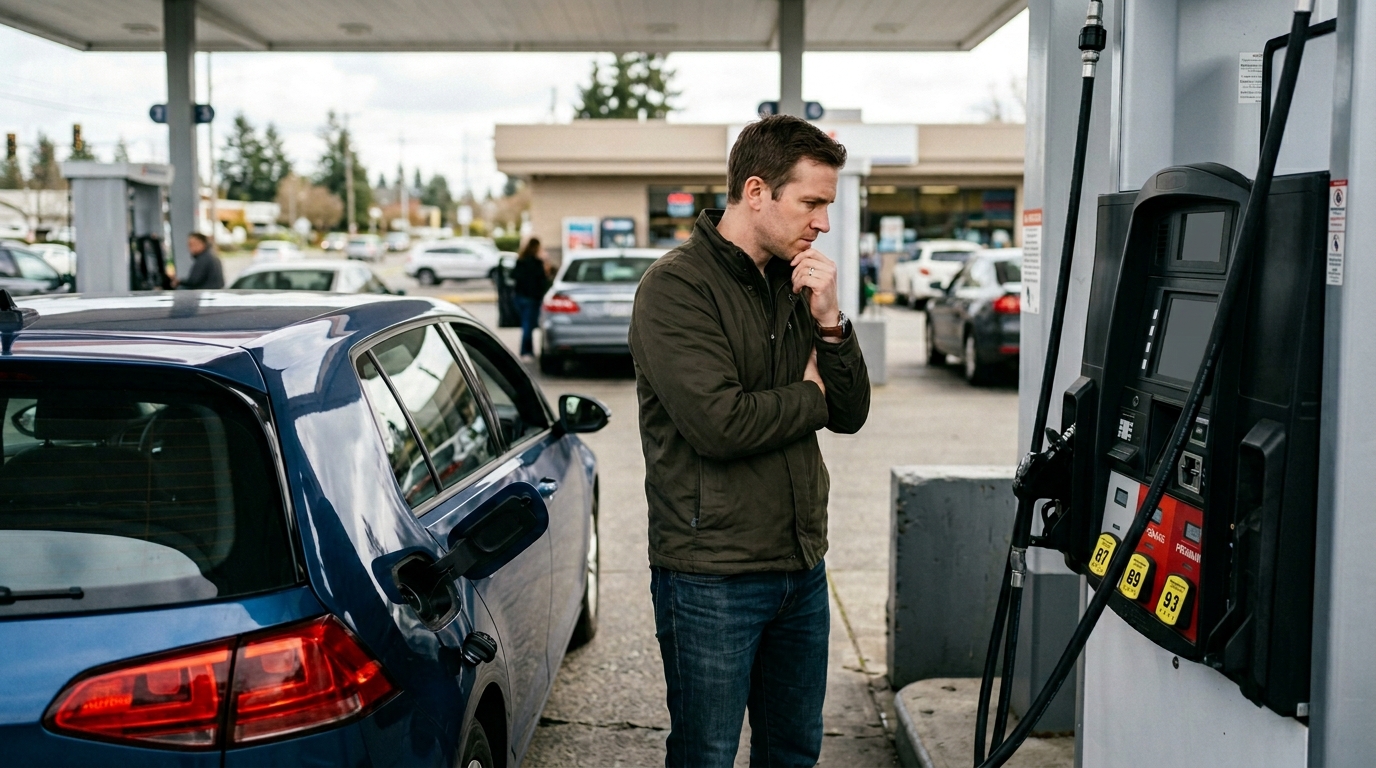
Engine knocking is one of those sounds you hear once and never forget. It can sound like someone dropped a handful of marbles inside your hood. Or like rhythmic tapping that gets louder when you press the gas. Honestly, the first time I heard it in my old sedan, I pulled over immediately because I had no idea what was happening. It turned out to be a simple fix, but it could have been much worse if I had waited. So if you are hearing a knocking sound from your engine, keep reading. This guide will walk you through every major engine knocking cause and the best fixes you can try.
What Is Engine Knocking?
How a Healthy Engine Is Supposed to Work
Your car engine works by mixing air and fuel inside small spaces called cylinders. A spark plug sends a tiny spark at exactly the right moment. That spark lights the air-fuel mix, which creates a small explosion. That explosion pushes the piston down, which turns the wheels and moves your car.
The keyword here is “exactly the right moment.” Timing matters a lot. When the spark happens too early, or the fuel burns in two places at once inside the cylinder, you get uneven combustion. Those small shockwaves hit the cylinder walls, and that creates the knocking or pinging sound you hear.
Why Engine Knocking Is Not Normal
Some people ignore the knock and hope it goes away. It won’t. Engine knock (also called detonation or pinging) will not stop on its own. And the longer you wait, the more damage builds up inside your engine.
According to a 2025 estimate from automotive repair experts, rod knock repair alone can cost between $1,400 and $4,500, depending on the damage. (Source: The Cost Guys, 2025). That is a lot of money for something that could have been caught early with a $50 fix.
A knock sensor in most modern cars will alert you when something is wrong. But even then, you need to find the real cause. The sensor only tells you there is a problem; it does not tell you which part is causing it.
Top Engine Knocking Causes and How to Spot Them
Wrong or Low-Octane Fuel: The Most Common Cause
If you filled up with the cheapest gas at the pump without checking what your car needs, this might be your problem. Low-octane fuel can ignite too quickly under the pressure inside a high-compression engine. That early ignition is called pre-ignition, and it produces that sharp metallic knock.
Every car has an octane rating requirement listed in the owner’s manual. Some cars run fine on regular (87 octane). Others, especially performance or luxury cars, need premium (91 or 93 octane). If your car calls for premium and you put in regular, you will likely hear the engine knock especially when accelerating.
The fix here is simple. Next time you fill up, use the right fuel grade. If you already filled up with the wrong gas, top it off with the correct one as soon as you can. Well, it may feel a little wasteful, but it is way cheaper than an engine repair.
Worn or Dirty Spark Plugs
Spark plugs are small but they do a big job. They fire a spark at exactly the right time to light the air-fuel mixture. When a spark plug gets old, worn, or coated in carbon deposits, it does not fire cleanly. The spark happens at the wrong moment, or the burn is incomplete. This throws off the whole combustion cycle and causes knocking.
I once ignored a spark plug replacement for way too long. My car started hesitating on hills, and then came the knocking. My mechanic replaced all four plugs in under an hour for under $80. The knock was gone immediately. Lesson learned do not skip scheduled spark plug changes.
Most cars need new spark plugs every 30,000 to 100,000 miles, depending on the type. Check your owner’s manual. If you hear knocking and your plugs are overdue, this should be the first place you look.
Carbon Buildup in the Combustion Chamber
Every time fuel burns inside your engine, it leaves tiny amounts of carbon residue. Over time, this builds up on the pistons, valves, and inside the combustion chamber. That buildup takes up space, which raises compression. Higher compression means more heat. More heat means the fuel can ignite before the spark plug even fires. That is pre-ignition, which causes a knock.
A professional fuel system cleaning or intake cleaning can remove years of carbon buildup and restore smooth combustion. Some mechanics also use chemical treatments that you pour into the fuel tank to help dissolve deposits gradually.
Incorrect Spark Timing
Modern engines use sensors and a computer to control exactly when each spark plug fires. If the ignition timing is off even by a little, combustion happens at the wrong point in the engine cycle. Too early, and you get knock. Too late, and you lose power and fuel efficiency.
Timing problems are usually caused by a faulty sensor, a bad ignition module, or a stretched timing chain. A mechanic can run a diagnostic scan to check if timing is off. In many cases, recalibrating the engine control unit (ECU) or replacing a sensor is all it takes to fix it.
Low Engine Oil or Poor Oil Pressure
Engine oil keeps all the moving metal parts inside your engine from grinding against each other. When oil level is too low, or when the oil pressure drops, parts like the connecting rods and their bearings lose that protection. Metal hits metal. That creates a deep knocking or thumping noise called rod knock.
Rod knock is one of the more serious kinds of engine knock. It often gets louder as your engine speed (RPM) goes up. If you hear a rhythmic, deep knock that gets faster when you accelerate, pull over safely and check your oil right away. Running an engine low on oil is one of the fastest ways to destroy it.
Always check your oil level every few weeks, especially in older vehicles. Keep the oil topped up between changes, and stick to the oil change schedule your manufacturer recommends.
Lean Air-Fuel Mixture
Your engine needs a very specific balance of air and fuel to run properly. When there is too much air and not enough fuel, it is called a lean mixture. A lean mixture burns hotter and can create conditions where combustion happens at the wrong time, which leads to knocking.
Common causes of a lean mixture include a clogged fuel injector, a failing oxygen sensor, or a vacuum leak. A mechanic with a diagnostic tool can measure your air-fuel ratio and find the problem fast.
Engine Overheating
When your engine runs too hot, everything inside the combustion chamber gets hotter than normal. That extra heat can make the air-fuel mix ignite before the spark plug fires. The result? Knock. If you notice your temperature gauge is higher than usual along with a knocking sound, your engine may be overheating.
Causes of overheating include low coolant, a stuck thermostat, a broken radiator fan, or a failing water pump. Never ignore an overheating engine. It can lead to a blown head gasket or a seized engine, both of which are very expensive to fix.
Engine Knocking Fixes That Actually Work
Quick Tip: The right fix depends on the cause. Using the wrong repair approach wastes time and money. Always try to identify the root cause before spending anything.
Simple Fixes You Can Try at Home
Not every engine knock needs a mechanic. Here are some things you can do yourself first:
| Cause | DIY Fix | Estimated Cost |
| Wrong fuel grade | Fill up with the correct octane level | $0 extra (just use right fuel) |
| Low oil level | Add the right engine oil to the correct level | $5–$20 |
| Old spark plugs | Replace spark plugs (DIY-friendly) | $30–$100 |
| Carbon deposits | Use a fuel system cleaner additive | $10–$30 |
When You Need a Professional Mechanic
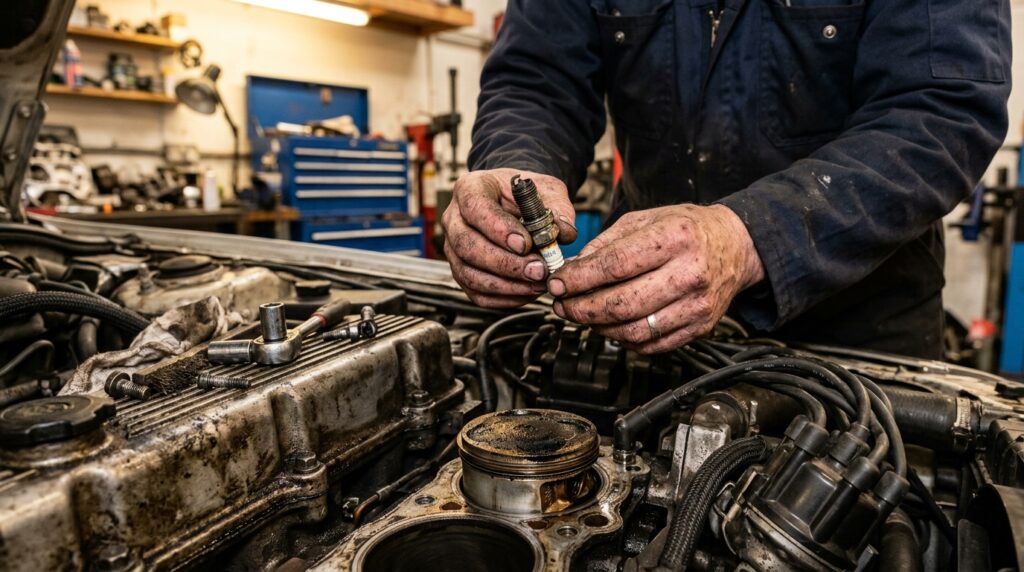
Some engine knocking causes are too serious or too complex for a DIY fix. Here is when you should go straight to a mechanic:
If the knock is deep, rhythmic, and gets faster with engine speed, you likely have rod knock. This means a worn bearing or damaged connecting rod. Ignoring rod knock can destroy your engine completely. According to repair data from 2025, rod knock repair costs range from $1,400 to over $4,500, and a full engine rebuild can go up to $10,000 or more. (Source: The Cost Guys, 2025)
If the knock comes with warning lights, overheating, or a drop in engine power, do not drive the car. Have it towed to a shop. Driving a severely knocking engine makes the damage much worse and raises your repair bill fast.
A mechanic will use a diagnostic scanner to read error codes from your ECU. They may also do a compression test, listen with a stethoscope, or check oil pressure to find the exact problem. From there, they can give you an accurate repair quote.
How to Prevent Engine Knocking Before It Starts
Simple Maintenance Habits That Save You Money
The best way to deal with engine knock is to stop it from happening at all. Most causes of engine knocking are 100% preventable with basic car care.
Change your oil on time. Always. This one habit alone prevents rod knock, which is one of the most expensive engine problems out there. Use the oil grade your manufacturer recommends. Thin oil wears out faster. Dirty oil loses its ability to protect metal parts.
Replace your spark plugs on schedule. Most standard plugs last 30,000 miles. Iridium or platinum plugs can go up to 100,000 miles. Check your manual. Do not guess.
Use the right fuel every single time. If your car needs premium, do not buy regular to save a few dollars. The cost of using the wrong fuel will be far higher in the long run. A study by the U.S. Department of Energy’s Alternative Fuels Data Center confirms that using the manufacturer-recommended octane rating helps maintain engine efficiency and reduce wear.
Signs Your Engine Is About to Knock
Sometimes your car gives you small warnings before the knocking starts. Watch for these:
Your engine hesitates or stutters when you push the gas. You notice a small drop in fuel efficiency. You hear a faint ticking or pinging sound when accelerating uphill. The engine seems to run rough at idle. Your check engine light turns on without an obvious reason.
Any of these signs means it is a good time to get your car checked. Catching the problem early keeps the repair cost small.
Conclusion
Engine knocking causes and fixes cover a wide range, from something as simple as using the wrong gas to something as serious as worn rod bearings. The good news is that most knocking problems are fixable, and the earlier you catch them, the cheaper the repair.
If you hear that tapping, pinging, or knocking from under your hood, do not wait. Start with the simple checks: oil level, fuel grade, and spark plugs. If the knock is deep or gets worse with speed, get to a mechanic right away. Your engine is the most expensive part of your car. A little attention now can save you thousands later.
Have you dealt with engine knocking before? I would love to hear what caused yours and how you fixed it. Drop your experience below. It might help someone else going through the same thing right now.
Frequently Asked Questions
Can I keep driving with the engine knocking?
It depends on the type of knock. If the knocking is light and happens only when you accelerate, you might be okay for a short time while you diagnose the cause. But if the knock is loud, deep, or constant, stop driving right away. Continuing to drive with serious engine knock can destroy your engine and turn a $500 repair into a $5,000 one.
How much does it cost to fix engine knocking?
The cost depends on the cause. Simple fixes like a fuel grade change or new spark plugs cost $30 to $150. A fuel system cleaning runs $100 to $300. If the cause is rod knock or worn bearings, you could pay anywhere from $1,400 to over $4,500. A full engine rebuild can cost $2,500 to $4,000 or more.
Does engine knocking go away on its own?
No. Engine knocking does not fix itself. In fact, it almost always gets worse over time. The longer you wait, the more damage happens inside the engine. The knock might seem quieter on some days, but the underlying problem is still there and still causing wear.
What does engine knocking sound like exactly?
Engine knocking sounds like a metallic tapping, pinging, or rhythmic banging from inside the engine. Some people describe it as marbles rattling in a tin can. Others say it sounds like someone knocking on metal. The sound usually gets louder or faster when you accelerate or put a load on the engine.
Can low oil cause engine knocking?
Yes, absolutely. Low oil is one of the most common causes of engine knocking. When there is not enough oil, the moving parts inside the engine lose lubrication. Metal hits metal. This creates a knocking or thumping sound called rod knock. Always check your oil level if you hear knocking. It takes 30 seconds and could save your engine.