
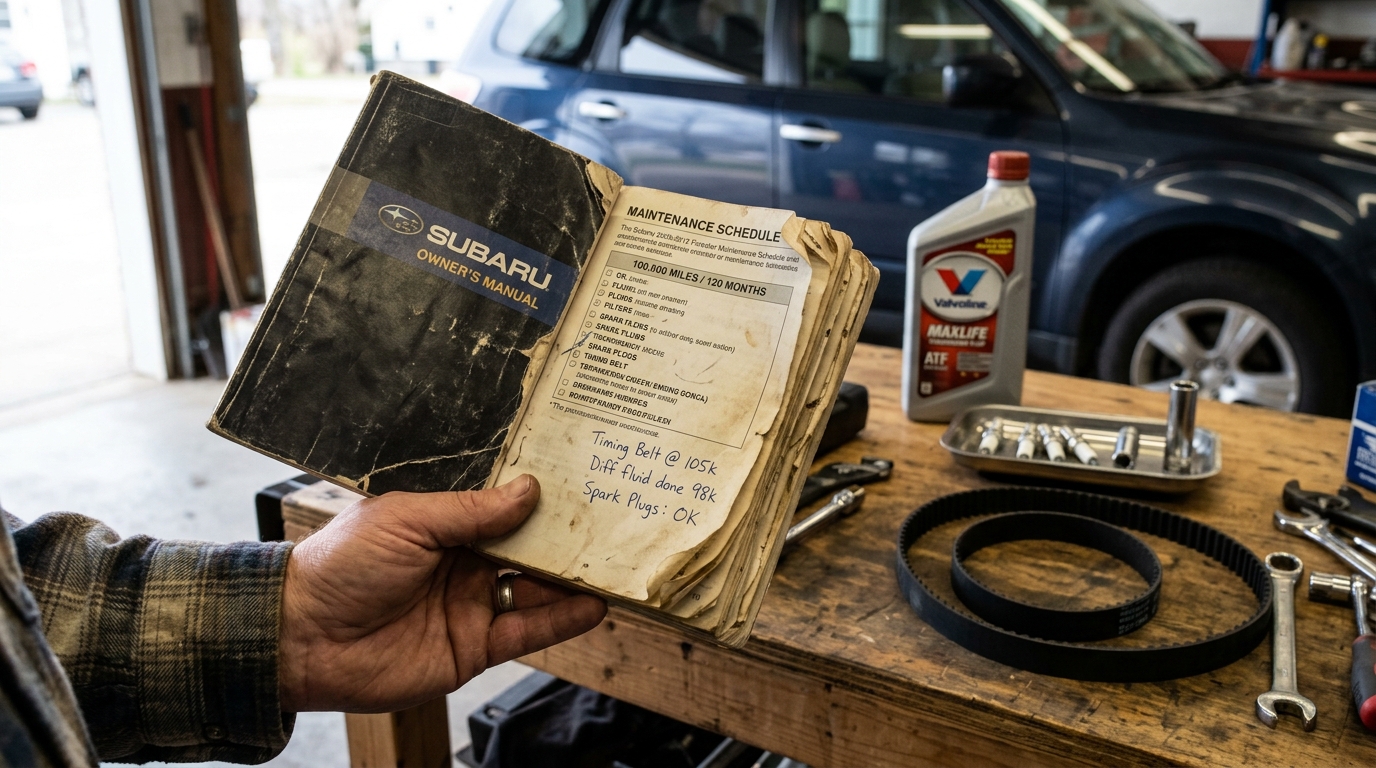
You check your oil. You fill your tires. You feel like a responsible car owner. But there is a good chance your owner’s manual is sitting in your glove box, untouched, while your car slowly falls apart from the inside. The maintenance schedule most drivers ignore is not the oil change. It is everything else your OEM wrote down, and nobody reads.
What Is an OEM Maintenance Schedule?
An OEM maintenance schedule is the list of services your car’s manufacturer says you need, at exact mileage intervals and time periods. OEM stands for Original Equipment Manufacturer. These are the engineers who built your car. They spent years testing every part so they know exactly when it needs care.
This is not the list your mechanic made up. It is not advice from a shop trying to sell you something. It lives inside your owner’s manual, and it covers everything from your spark plugs to your brake fluid to your timing belt.
Most drivers have never fully read it.
Why So Many Drivers Skip It
Honestly, I get it. Life is busy. You only think about your car when something feels wrong. And when nothing feels wrong, you assume everything is fine.
But that is exactly the problem. Most of the items on the OEM-aligned schedule go bad slowly and quietly. Your transmission fluid does not scream at you. Your coolant does not send a warning text. They just get old and dirty until one day your car breaks down on the highway and the bill is $3,000.
According to a survey by FinanceBuzz, more than half of drivers, 51%, say they are aware of an active car maintenance need on their vehicle that they are currently putting off. That is not a small number. That is most people on the road.
The 30-60-90 Rule You Probably Missed
Many manufacturers use a 30-60-90 schedule, meaning certain items need to be inspected, changed, or replaced at 30,000, 60,000, and 90,000 miles.
This is the backbone of the OEM maintenance schedule. Think of it like a three-stage checkup for your car. Each stage has different jobs.
At 30,000 miles, you are mostly looking at your air filter, fuel filter, and a basic inspection. At 60,000 miles, bigger items come in. Your brake fluid, transmission fluid, and spark plugs (on older models) come due. At 90,000 miles, you are looking at your timing belt, coolant flush, and a full mechanical inspection.
The funny part is that many drivers zoom past these numbers without stopping once. They get an oil change every few months and call it done.
What Happens When You Ignore These Intervals
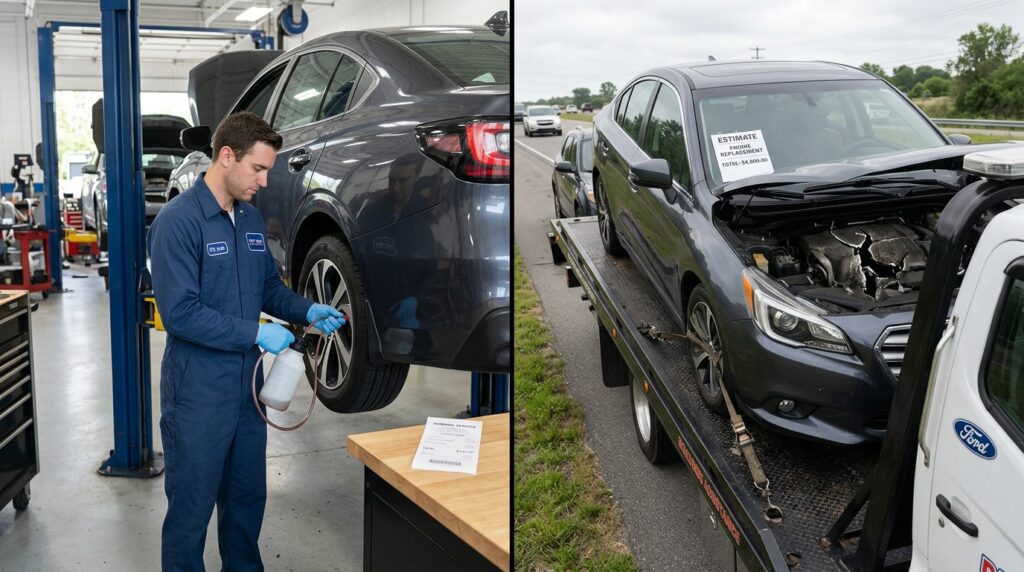
Skipping engine oil changes can leave your engine at risk. Without a healthy flow of quality oil to lubricate its internal parts, your engine can become severely damaged. It is the little things that add up to expensive repairs if left unchecked.
But oil is the one most people do remember. What about the rest?
Dirty transmission fluid wears down your gears faster. Old brake fluid absorbs water and lowers its boiling point, which gives you a soft, spongy brake pedal when you need it most. A worn timing belt can snap without warning and destroy your entire engine in seconds.
According to the Auto Aftermarket Industry Association, $50 billion of auto maintenance goes unperformed every year. This shortens the life of people’s vehicles and puts them at risk of higher future repair costs and the danger of being stranded on the side of the road.
That is a big number. And it comes mostly from people who thought they were doing enough.
The Services Most Drivers Actually Skip
I want to be specific here. These are the ones I see people skip the most.
Transmission fluid is at the top of that list. Many drivers believe it never needs changing. Some cars say “lifetime fluid” in the manual. But “lifetime” means the life of the fluid, not the life of the car. Experts recommend inspecting transmission fluid at least every 30,000 miles or during major service visits. Dark, burnt-smelling, or gritty fluid indicates breakdown and contamination.
Brake fluid is another one. You press your brakes every single day and almost nobody ever flushes the fluid. When brake fluid is contaminated by water, its boiling point is lowered and it can turn to gas, which is compressible. This leads to a soft, squishy brake pedal.
Coolant flush is another service most people skip until the engine overheats. Your cooling system keeps your engine from burning itself up. Old coolant loses its ability to control temperature and can start to corrode your hoses and engine parts.
Spark plugs on modern cars last a long time. Most new cars use iridium or titanium spark plugs which can sometimes last up to 100,000 miles. But cheaper copper spark plugs, still sold by many auto parts stores, typically need to be replaced by 30,000 miles.
The timing belt is the most dangerous skip of all. Cars that use a timing belt rather than a timing chain need to have it changed pre-emptively between 75,000 and 90,000 miles, as a belt failure can lead to catastrophic damage. If your timing belt snaps while you are driving, your repair bill can be $5,000 or more.
How to Read Your OEM Schedule the Right Way
Your owner’s manual has two sections you need to know about. The first is for normal driving conditions. The second is for severe driving conditions.
The severe maintenance schedule is for vehicles used for extra-demanding tasks, such as long-distance driving in stop-and-go traffic, off-roading, and heavy towing and hauling. Cars driven under these conditions will require more frequent part replacements and maintenance checks.
If you drive in heavy city traffic, live somewhere very hot or very cold, or do a lot of short trips under five miles, you likely fall into the severe category. That means your service intervals are shorter, not longer.
A lot of people assume they fall into normal driving. They do not.
Here is what I suggest. Take out your manual this weekend. Find the maintenance table. Look at where your odometer reading currently sits. Write down what is due. If you do not have your manual, you can download it from your manufacturer’s website for free.
The Real Cost of Skipping Scheduled Maintenance
Let me give you some real numbers.
A transmission fluid change costs around $100 to $200. A full transmission rebuild or replacement costs $2,500 to $5,000.
A timing belt replacement costs $300 to $800. If it snaps and destroys your engine, you are looking at $4,000 to $8,000 or worse.
A coolant flush costs $80 to $150. An overheated engine repair can hit $1,500 or more.
Carfax data shows that a well-maintained car is worth an extra $2,000 in resale value over one that has not been well-maintained.
So you are not just protecting your engine. You are protecting your wallet and your car’s value.
Nearly 40% of drivers say they believe they have paid for a car repair that could have been avoided if they had simply done a better job of keeping up with regular or scheduled maintenance.
That is almost half of all drivers paying for something they could have prevented.
How to Stop Ignoring Your Maintenance Schedule
You do not need to be a mechanic to stay on top of this. You just need a plan.
First, find your mileage milestone. Check where you are on the 30-60-90 scale and figure out what is due. Second, make a simple list and keep it in the car. Write down the next three services and when they come due. Third, set a reminder on your phone. Seriously. A five-second reminder every few months is all it takes.
The best defense is to stick to your vehicle’s OEM schedule, found in your owner’s manual. OEM schedules are designed by the engineers who built your car. They account for wear rates, part quality, and fluid lifespans under typical driving conditions. If a mechanic recommends a service ahead of schedule, ask why and compare it to your manual’s guidelines before agreeing.
That last part is important. Not every recommendation from a shop is honest. Use your manual as your proof. If it is not in the manual, ask questions before you pay.
Conclusion
The maintenance schedule most drivers ignore is not hard to follow. It just takes a little attention. Your OEM maintenance schedule was built by the same people who built your engine. They know exactly what it needs and when. The problem is most drivers never look.
Stop waiting for the warning light. Stop hoping the funny noise goes away. Pull out your owner’s manual, check your service intervals, and take care of your car before your car takes a very expensive revenge on you.
I would love to hear from you. Have you ever missed a big service and paid for it later? Drop a comment below. Your story might save someone else a lot of money.
Frequently Asked Questions
What is the OEM maintenance schedule?
The OEM maintenance schedule is the list of services your car’s manufacturer recommends, based on your exact make, model, and year. It tells you what to service and at what mileage intervals. You can find it in your owner’s manual or on your manufacturer’s website.
How often should I really change my transmission fluid?
Most experts say to inspect your transmission fluid every 30,000 miles. The actual change interval depends on your driving style and conditions. If you drive in heavy traffic or do a lot of short trips, you may need to change it closer to 50,000 to 60,000 miles rather than waiting for 90,000.
What happens if I skip my timing belt replacement?
If you skip your timing belt and it breaks while driving, it can destroy your engine instantly. The repair cost can be $4,000 or more. Most manufacturers recommend replacing it between 75,000 and 90,000 miles to prevent this.
How do I know if I am in the severe or normal driving category?
You are in the severe category if you drive a lot in stop-and-go traffic, take many short trips under five miles, drive in extreme temperatures, or do regular towing. If any of these sound like you, follow the severe maintenance schedule in your manual. Your service intervals will be shorter.
Does skipping maintenance affect my car’s resale value?
Yes. A well-maintained car is worth noticeably more than one with a spotty service history. Buyers and dealers check for this. Following your OEM-aligned schedule keeps your car in better shape and protects its value when it is time to sell or trade in.