
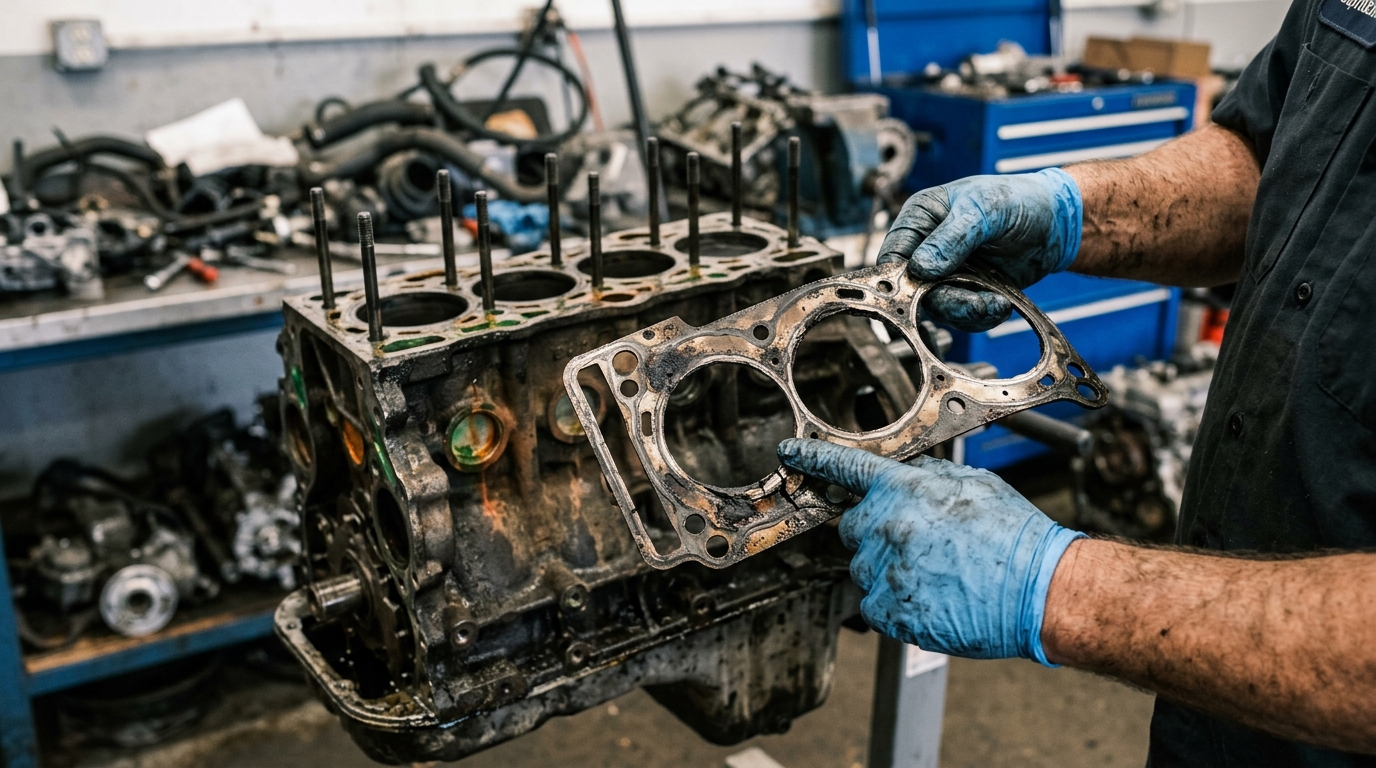
Your car starts acting strangely. The temperature gauge keeps climbing. You smell something sweet coming from under the hood. And now there is a weird white cloud coming out of your exhaust. These are not small problems. These are head gasket failure signs, and if you ignore them, you could be looking at a destroyed engine.
I know how scary this sounds. A few years back, a friend of mine kept driving his car after noticing the engine getting too hot. He thought it was just a bad day. Three weeks later, his mechanic told him the engine block had cracked, and the repair would cost more than the car itself. That mistake started with one ignored warning sign.
So let us go through everything you need to know about head gasket failure signs, in simple and clear language, so you never make that same mistake.
What Is a Head Gasket and Why Does It Matter?
The Job This Small Part Does
The head gasket sits between two big parts of your engine: the engine block (where the pistons live) and the cylinder head (where the valves and spark plugs are). It works like a super-tight seal. Its job is to keep engine oil, coolant, and combustion gases all in their own separate spaces.
Think of it like the walls in your house. Each room has its own purpose. The head gasket makes sure nothing leaks from one room into another. If those walls break down, everything gets mixed up, and nothing works right.
What makes this part so important is the pressure it handles every single second you drive. It resists heat, pressure, engine vibration, and the different speeds at which aluminum cylinder heads and cast-iron engine blocks expand and contract. That is a lot of stress for one part.
How a Head Gasket Fails
Engine overheating is the number one reason head gaskets fail. When the engine gets too hot, the metal parts around the gasket expand more than they should. This warps the gasket and causes it to lose its seal.
Other causes include detonation (a kind of small engine knock), contaminated coolant, a bad thermostat, and sometimes just old age. In V6, V8, or Boxer engines like those in Subaru, there is more than one cylinder head gasket, so failures can happen in one or both at the same time.
Head Gasket Failure Signs: The 7 Warning Signals
White Smoke From the Exhaust Pipe
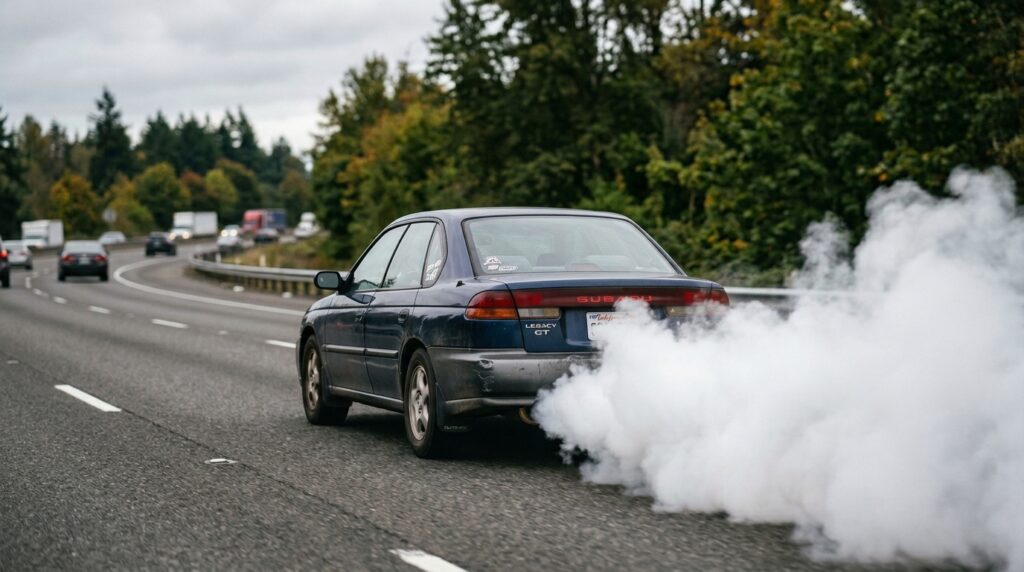
This is one of the most talked-about head gasket failure signs, and for good reason. When the gasket breaks between a coolant passage and a combustion chamber, coolant leaks into the cylinder and gets burned with the fuel. The result? Thick, white smoke coming from your exhaust pipe, often with a sweet smell.
Normal exhaust can look white in cold weather, but that goes away quickly. The kind of white smoke that comes from a blown head gasket stays thick and steady even after the engine warms up. If you notice that, do not keep driving.
Honestly, this is the sign most people notice first. It is hard to miss a big white cloud following your car down the road.
Important: Thick white smoke with a sweet smell is a strong indicator of coolant burning inside the engine. Pull over and have your car checked right away.
Engine Overheating Again and Again
If your temperature gauge keeps going into the red zone, that is your car telling you something is very wrong. A blown head gasket can stop coolant from doing its job properly. Without the right coolant flow, the engine heats up fast.
There is also a dangerous cycle that happens here. The engine overheats, which puts more stress on the gasket, which makes the gasket worse, which causes more overheating. Each time your engine gets too hot, the cylinder head and nearby parts get warped. That kind of damage is expensive to fix.
According to Firestone Complete Auto Care, even a single overheating event can start gasket damage. You should never ignore the temperature gauge, even if it only spikes once. (Source: Firestone Complete Auto Care)
Milky or Frothy Oil on the Dipstick
Pull out your oil dipstick. Does the oil look like a chocolate milkshake? Is it creamy, foamy, or light-colored instead of dark brown or black? If yes, that is a major warning sign.
When the head gasket fails between an oil gallery and a coolant passage, coolant mixes with the engine oil. This milky, frothy mixture is sometimes called “mayonnaise” by mechanics. It does not just look bad. It destroys your engine’s ability to lubricate itself. Bearing damage, engine sludge, and even a seized engine can follow if you keep driving.
You can also check the oil filler cap. If there is a white or frothy coating on the inside of the cap, that confirms oil and coolant are mixing.
Coolant Loss With No Visible Leak
This one is sneaky. You keep adding coolant to the coolant reservoir, but you never see any puddles on the ground. Where is the coolant going?
When a head gasket fails, coolant can leak internally, straight into the engine cylinders or into the oil system. There is no external leak because the coolant is being burned inside the engine or mixing with the oil. You might also see bubbles in the radiator or the coolant reservoir. Those bubbles are exhaust gases being forced into the cooling system through the broken seal.
I find that this sign often confuses people the most. They keep topping up the coolant and think everything is fine. But the real problem is getting worse inside the engine with every mile they drive.
Rough Running, Misfires, and Loss of Power
A head gasket failure between two cylinders causes compression loss. This means the engine cannot build up enough pressure to fire the fuel properly. The result is a rough, shaky idle and engine misfires.
You might feel the car shaking at a red light. It might hesitate when you press the gas pedal. The engine might sound uneven, almost like it is coughing. These are signs of poor cylinder compression and they are directly linked to head gasket problems.
A compression test or an OBD-II code scanner can help confirm this. If the scanner shows misfire codes alongside other symptoms on this list, the head gasket is a very likely cause.
Blue Smoke From the Exhaust
While white smoke points to coolant burning, blue smoke from the exhaust points to oil burning. This happens when the head gasket fails between a cylinder and an oil gallery. Hot compression gases push into the oil system, and oil gets sucked into the cylinder where it burns.
You might also notice your engine oil level dropping faster than normal. Blue smoke usually comes with a distinct burning smell. It is different from normal exhaust fumes, and once you smell it, you will recognize it.
Quick Tip: Blue smoke = oil burning. White smoke = coolant burning. Both are serious head gasket failure signs that need immediate attention.
External Oil or Coolant Leak at the Engine Block Join
Sometimes the gasket fails at the outer edge, between the cylinder head and the engine block deck. This can cause oil or coolant to leak down the outside of the engine.
Look closely at the area where the top part of the engine meets the bottom part. If you see dried coolant residue, which looks like a chalky white or greenish crust, or oily streaks running down the engine’s side, the gasket may be leaking outward. This is less severe than internal leaks but still needs repair soon.
You might also hear a ticking noise at idle if the leak is between the cylinder and the outside of the engine. This type is easy to miss but still means the gasket is not doing its job.
How to Know for Sure: Diagnosing the Problem
Tests You Can Do at Home
You do not need to be a mechanic to do some basic checks. Here is a simple table to help you connect what you see to what it might mean:
| What You Notice | What It Could Mean |
| White smoke from exhaust (sweet smell) | Coolant leaking into combustion chamber |
| Milky oil on dipstick or oil cap | Coolant mixing with oil |
| Coolant level dropping with no visible leak | Internal coolant loss |
| Bubbles in radiator or coolant tank | Exhaust gases in the cooling system |
| Blue smoke from exhaust | Oil burning in cylinders |
| Engine overheating repeatedly | Cooling system failure from gasket breach |
| Rough idle or misfires | Compression loss between cylinders |
For a more certain diagnosis, a mechanic can use a combustion leak tester (sometimes called a block test or combustion gas test). This tool detects exhaust gases in the coolant, which is a strong confirmation of head gasket failure. A cooling system pressure test can also reveal leaks that are not obvious to the eye.
Symptoms That Look Similar But Are Not the Head Gasket
To be fair, some of these signs can point to other problems too. A bad radiator hose, a failing water pump, a broken thermostat, or even a cracked engine block can cause similar symptoms. A leaking intake manifold gasket can also mimic some of the signs.
This is why it is smart to look for more than one sign at the same time. According to Fluid Life, diagnosing a head gasket failure requires experience and a step-by-step approach because many other engine problems can look the same. (Source: Fluid Life)
If you see two or more signs from the list above together, the head gasket becomes a very strong suspect. Trust your instincts and get a professional inspection fast.
What Happens If You Keep Driving?
The Damage Gets Much Worse Fast
This part is important, so I want to be very direct. If you keep driving your car after noticing head gasket failure signs, you are making a small and fixable problem into a very expensive disaster.
When coolant mixes with engine oil, the oil loses its ability to protect the engine. Bearing lubrication breaks down, sludge builds up, and the engine parts start wearing out quickly. In worst cases, the engine can seize completely. That means the engine stops working forever and you need a full engine replacement.
A head gasket replacement is already costly, running anywhere from $1,500 to $3,000 or more, depending on the car. But a complete engine rebuild or replacement can cost much more. Every extra mile you drive with a blown gasket raises the final repair bill.
Stop Driving and Do These Steps
If you notice any of the warning signs above, here is what to do right away:
First, stop driving and let the engine cool down. Do not try to open the radiator cap while the engine is hot. You could get burned by pressurized hot coolant. Once the engine is cool, check the oil, the coolant level, and look for any visible leaks or strange colors.
Second, call a trusted mechanic and describe exactly what you noticed. Tell them about the smoke color, the smell, and any sounds you heard. The more details you share, the faster they can find the problem.
Third, do not try to seal it with a quick-fix product from the store. Those temporary sealers may help in an emergency, but they are not a real repair and can actually cause more problems inside the cooling system.
How to Prevent Head Gasket Failure
Keep Your Cooling System Healthy
Most head gasket failures start with engine overheating. So the best prevention is keeping your cooling system in top shape. Check your coolant level regularly. Use the right coolant mix as recommended by your car’s maker. Replace the coolant at the intervals listed in your owner’s manual.
Have your water pump, thermostat, and radiator hoses inspected during routine service. A small coolant leak, if caught early, is a cheap fix. Ignored, it leads to overheating and gasket failure. Watch your temperature gauge every time you drive. If it creeps toward the hot zone, pull over before it gets worse.
Use Quality Parts and Oil
Using the right engine oil and changing it on time also protects your head gasket. Low-quality oil or oil that has not been changed in a long time causes more heat and friction inside the engine. Over time, that extra stress reaches the gasket.
When a head gasket does need replacing, always use OEM (Original Equipment Manufacturer) or high-quality aftermarket gaskets. A proper installation with the correct torque specs for the head bolts is just as important as the part itself. A poorly fitted gasket will fail again sooner than expected.
Conclusion
The head gasket failure signs we covered here are not things to brush off. White smoke, milky oil, disappearing coolant, engine overheating, misfires, blue smoke, and external leaks are all your engine’s way of asking for help.
Catching these signs early is the difference between a manageable repair and a destroyed engine. The head gasket is small, but what it protects is huge. Treat these warnings seriously, act quickly, and your engine has a real chance of a full recovery.
Have you seen any of these signs in your car? I would love to hear your thoughts or questions in the comments below. Share this post with someone who might need it. You might just save their engine.
Frequently Asked Questions (FAQs)
1. Can I still drive my car if I think my head gasket is blown?
Technically, you can, but it is a very bad idea. Driving with a blown head gasket causes more damage every mile. Coolant mixing with engine oil destroys lubrication, overheating warps engine parts, and you could end up needing a full engine replacement instead of just a gasket repair. Stop driving as soon as you notice warning signs and get your car inspected right away.
2. How much does it cost to fix a blown head gasket?
The cost depends on your car’s make and model. In general, a head gasket replacement can cost between $1,500 and $3,000 or even higher. The job takes a lot of labor hours because the mechanic has to take apart a large portion of the engine. Using quality OEM gaskets and proper head bolt torque during the repair helps make sure the fix lasts.
3. What does a blown head gasket smell like?
A blown head gasket often produces a sweet smell, almost like maple syrup or sugar. This comes from antifreeze or coolant burning inside the engine. You might notice this smell coming from the exhaust or from inside the car through the vents. A burning oil smell is also possible if oil is leaking onto hot engine surfaces.
4. Can a head gasket fail without overheating?
Yes, it can. While engine overheating is the most common cause, a head gasket can also fail due to age, detonation, a poor installation, or using the wrong type of coolant. In older vehicles, the gasket simply wears out over time. In some cases, the signs are subtle at first, like a small coolant loss or a slightly rough idle, so regular checks are important.
5. How do I know if it is the head gasket or something else?
Look for two or more head gasket failure signs at the same time. If you see white smoke AND milky oil AND coolant loss together, the head gasket is likely the problem. A mechanic can confirm it using a combustion leak tester, a compression test, or by checking for exhaust gases in the coolant. Do not rely on just one symptom for a final diagnosis.