
You hear a strange knocking sound from your car. You ignore it. A few days later, the engine dies. I’ve seen this happen to a friend who skipped his oil check for months. What started as low oil ended with a full engine replacement. Low oil consequences engine damage is one of the most common and most avoidable problems car owners face. If you want to keep your car alive and avoid a repair bill that could break the bank, this guide is for you.
Why Engine Oil Matters More Than You Think
Engine oil is not just a liquid you pour in and forget. It is the thing that keeps hundreds of metal parts from grinding against each other. Think of it like this: if your engine parts were dancers, oil is the floor they slide on. Without it, they crash into each other and break.
Oil does four big jobs inside your engine. It lubricates moving parts like the crankshaft, pistons, camshaft, and valves. It also cools those parts by carrying heat away. On top of that, it cleans the engine by picking up dirt, metal particles, and other contaminants as it flows around. Finally, it protects parts from rust and corrosion over time.
When the oil level drops too low, all four of those jobs stop working properly. That’s when things start going wrong fast.
Common Reasons Oil Levels Drop Low
There are a few reasons your engine might be running low on oil. The most common one is simply not checking it enough or skipping regular oil changes. I get it, life gets busy. But this one habit costs people thousands of dollars every year.
Other causes include oil leaks from worn engine gaskets or seals. You might notice oil spots under your car in the parking lot. Some engines also burn oil faster than normal, which means the oil level drops even when there is no visible leak. And then there is old oil that has broken down so much it has turned into thick sludge, which blocks oil flow paths and reduces the oil’s ability to work properly.
Low Oil Consequences Engine Damage: What Happens Inside
Increased Friction and Metal-on-Metal Wear
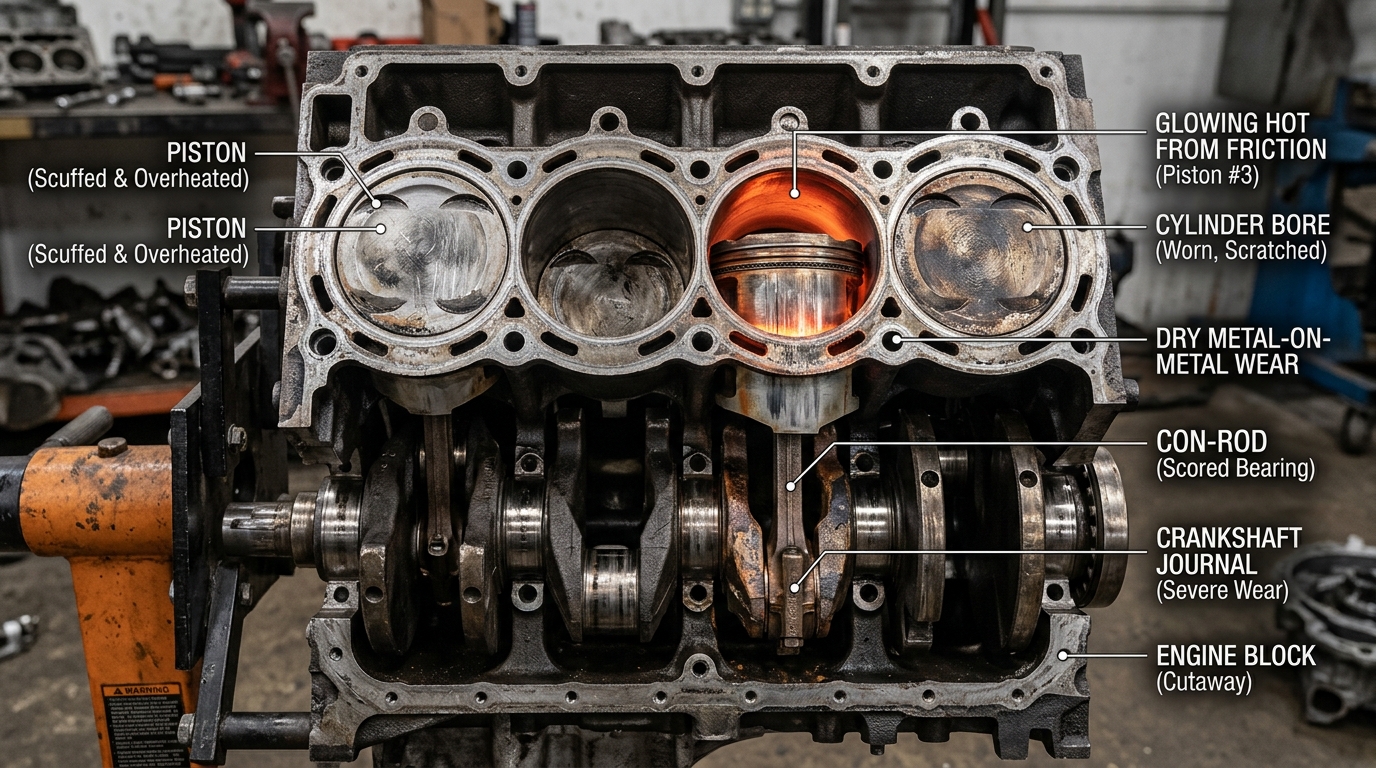
This is the first and most damaging thing that happens. When oil levels are low, there is not enough fluid to coat all the engine parts. So they start to rub against each other. Metal grinds on metal. This causes excessive wear on key parts like bearings, pistons, and the crankshaft.
The damage does not stop there. Those metal parts start flaking. Those metal flakes mix into the remaining oil and flow through the engine, scratching everything they touch. It is like pouring sandpaper into your engine. Over time, the parts wear down so much that they stop working. This is how you end up needing a full engine rebuild or even a replacement.
Overheating and Warped Engine Parts
Here is something many people do not realize. Oil does not just lubricate. It also helps cool the engine by absorbing heat and carrying it away through a process called convection. When oil is too low, there is not enough fluid to do this job.
The engine temperature rises fast. And when things get too hot, aluminum parts like cylinder heads can warp or crack. The head gasket can fail too. Once the head gasket blows, oil and coolant mix together, and your engine is in serious trouble. According to the Car Care Council, overheating is one of the top causes of engine failure, and low oil is a major trigger.
Warning Signs Your Engine Has Low Oil
Sounds and Smells That Tell You Something is Wrong
Your car will try to tell you when something is wrong. You just have to listen. One of the first signs of low oil is a knocking or ticking noise from the engine. This sound happens because the parts are not getting enough lubrication and are hitting each other.
You might also smell something burning. That could be burning oil or overheated parts. Another sign is blue or white smoke coming from the exhaust. This usually means oil is burning inside the engine, which points to worn pistons or damaged seals. If you see or smell any of this, stop driving and check your oil right away.
Dashboard Warning Lights You Should Never Ignore
Your car has an oil pressure warning light on the dashboard. It usually looks like an old-style oil can. When this light comes on, it means the oil pressure inside the engine has dropped to a dangerous level. Do not keep driving.
I once drove past this light for two days thinking it was a glitch. It wasn’t. The low oil pressure was causing damage the whole time. Another thing to watch for is a general drop in engine performance, like the car feeling sluggish or using more fuel than normal. Both of these can point to oil-related problems building up over time.
Long-Term Engine Damage From Low Oil
Sludge Buildup and Contamination
When oil gets old or runs low, it starts to break down. It picks up metal particles, dirt, and combustion byproducts that it cannot clean out on its own. Over time, this turns into a thick black paste called engine sludge. Sludge blocks the tiny oil flow paths inside the engine.
When those paths get blocked, oil cannot reach the parts that need it most. Even if you top up the oil later, the sludge stays behind and keeps causing damage. This is why regular oil changes matter so much. Fresh oil keeps things clean. Old or low oil lets contamination build up until the engine chokes on it.
Total Engine Failure and Costly Repairs
If you let low oil go on long enough, the engine will eventually seize. This means the internal parts get so hot and so worn that they literally lock up and stop moving. A seized engine cannot be fixed by adding more oil. You either need a complete engine rebuild or a full engine replacement.
According to data shared by the Bureau of Transportation Statistics, Americans spend hundreds of billions of dollars on vehicle repairs each year. A significant portion of that is preventable with basic oil maintenance. A simple oil top-up or oil change costs $30 to $100. An engine replacement can run $3,000 to $10,000 or more. The math makes the choice pretty easy.
How to Prevent Low Oil Damage
Check Your Oil Level the Right Way
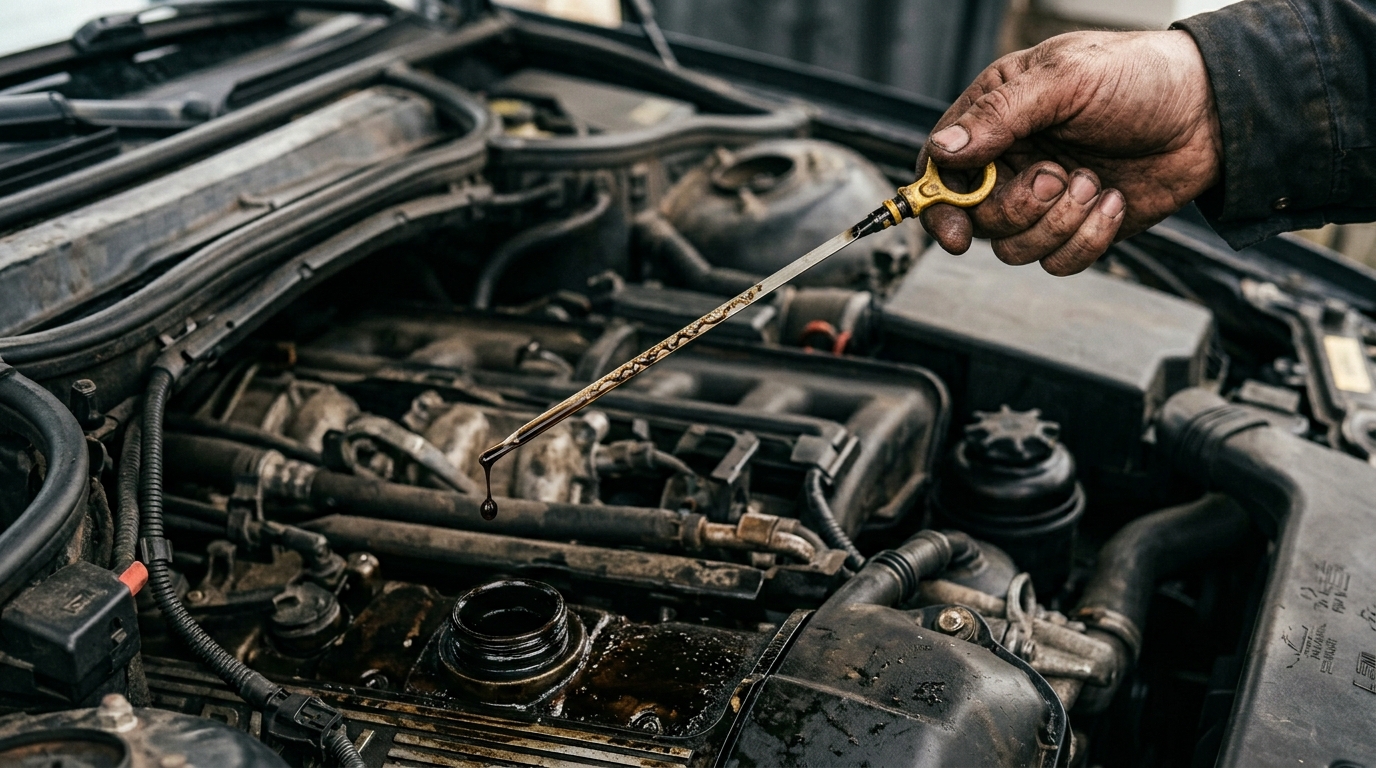
Checking your oil is easy and takes less than two minutes. Park on a flat surface and let the engine cool down for a few minutes. Then find the dipstick, pull it out, wipe it clean, put it back in, and pull it out again. Look at the oil level mark. It should sit between the two marks on the stick.
Also look at the color of the oil. Fresh oil is amber or light brown. Dark black or gritty oil means it is time for a change. If the level is low, add the right type of oil for your car. You can find this in your owner’s manual. Do not guess.
Stick to a Regular Oil Change Schedule
Most cars need an oil change every 3,000 to 7,500 miles, depending on the type of oil and the age of the car. Newer cars with synthetic oil can go up to 10,000 miles between changes. But older cars or those that run in tough conditions should get checked more often.
I set a reminder on my phone for every 5,000 miles. It takes about 30 minutes at a shop and costs very little compared to the damage you prevent. Also, check for oil leaks regularly. If you see oil spots where you park, get your gaskets and seals inspected. Catching a small leak early saves you from a big repair later.
Conclusion
Low oil consequences engine damage is not just a scary story mechanics tell to get your money. It is real, it happens fast, and it can be very expensive. From increased friction and metal wear to overheating, sludge buildup, and full engine failure, the damage builds up quietly until your engine gives out. The good news is that all of this is preventable. Check your oil regularly, change it on schedule, and pay attention to the warning signs your car gives you. A little care goes a long way when it comes to your engine.
Have you ever had a low oil problem that caused damage? I’d love to hear your experience in the comments below.
Frequently Asked Questions
What happens if I keep driving with low oil?
If you keep driving with low oil, the engine parts will grind against each other without enough lubrication. This causes fast wear, overheating, and can lead to a seized engine that cannot be repaired. Stop driving and check your oil the moment you see the warning light or hear knocking sounds.
How quickly can low oil damage an engine?
It depends on how low the oil is. In very severe cases, like running with no oil at all, an engine can seize within minutes. With just slightly low oil, the damage builds slowly over days or weeks. Either way, low oil always causes harm over time.
Can I just add oil instead of doing a full oil change?
You can top up the oil if the level is low. But adding fresh oil to old, dirty oil does not fix the whole problem. Old oil is full of contaminants and has lost its ability to lubricate properly. You still need a full oil change on schedule.
What are the first signs that my engine has low oil?
The most common early signs are a knocking or ticking noise from the engine, the oil pressure warning light turning on, a burning smell, or blue smoke from the exhaust. Any of these signs mean you should stop and check your oil right away.
How often should I check my engine oil?
You should check your oil at least once a month and before any long road trip. It only takes two minutes and can save you thousands of dollars in repairs. Most car experts also recommend checking it every time you fill up with gas if your car is older or has high mileage.