

Your check engine light just turned on, but the car starts fine, drives fine, and feels totally normal. Confusing, right? You are not alone. This happens to drivers every day, and the good news is it does not always mean something scary. But it does mean something, and ignoring it is not a great idea.
Let me walk you through exactly what is happening, what could be causing it, and what you should do next.
What the Check Engine Light Really Means
It Is Not a Breakdown Alarm
The check engine light, also called the Malfunction Indicator Lamp (MIL), is part of your car’s OBD-II system (On-Board Diagnostics). This system watches over your engine, fuel system, and emissions system all the time. When something goes out of the expected range, the computer stores a diagnostic trouble code (DTC) and turns on that amber light.
Here is what most people miss: the light is not saying your engine is about to die. It is saying the computer found something outside its normal numbers. According to the U.S. Environmental Protection Agency, all cars built after 1996 are required by law to have this OBD-II system to catch emission-related faults early.
That is why the car can feel perfectly fine. Your engine is still running. The computer is just flagging something it wants you to check.
Solid Light vs Flashing Light
This difference matters a lot.
A solid check engine light means the car found a fault, stored a code, and wants you to look into it soon. Not this second, but soon. A flashing check engine light is a different story. Flashing usually means an active engine misfire that can overheat and destroy your catalytic converter. If it is flashing, slow down right away and stop driving as soon as it is safe.
For a solid light with car runs fine behavior, you usually have time to diagnose and plan a proper fix.
Why the Check Engine Light Can Be On With No Symptoms
Your Car’s Computer Is Smarter Than You Think
Modern cars are impressive. The engine control module (ECM) constantly adjusts things like fuel trims, ignition timing, and air fuel ratio to keep the engine running smoothly. So even when a sensor starts to drift or a small part is failing, the computer quietly compensates. The car keeps running fine, but the fault code gets stored.
I once had this happen to me. My car ran perfectly for two weeks with the light on. Turned out it was a slightly weak oxygen sensor. The engine was correcting for it in the background without me feeling anything. Had I ignored it longer, the catalytic converter would have started taking damage.
Emissions Systems Are Sensitive
A big reason the check engine light on but car runs fine happens is that many fault codes come from emissions-related systems, not from power or drivability systems. The EVAP system (Evaporative Emission Control), O2 sensors, and fuel vapor systems can throw codes without you ever feeling a bump, stumble, or hesitation.
Top Causes: Check Engine Light On But Car Runs Fine
Loose or Bad Gas Cap
This is the number one cause. Your fuel system is sealed. If the gas cap is loose, cracked, or missing, the EVAP system detects a vapor leak and turns on the light. The fix is simple: tighten the cap until it clicks. If the seal looks dried out or broken, get a new cap. It costs a few dollars.
EVAP System Leak
The evaporative emissions system captures fuel vapors from your tank so they do not escape into the air. Small leaks in hoses, the purge valve, or the charcoal canister can trigger codes. You may smell a faint fuel odor after filling up, but the car will drive totally fine.
Oxygen Sensor Failure
The O2 sensor (oxygen sensor) watches how much oxygen is in the exhaust to help the engine balance the air fuel mixture. When it gets old and slow, the computer still manages to keep things running, but fuel economy drops and over time the catalytic converter gets stressed. A common related code is P0420, which points to catalyst efficiency issues.
Mass Air Flow Sensor (MAF) Problems
The MAF sensor measures how much air enters the engine. Dirt, oil from aftermarket air filters, or a weakening sensor can send off readings. In the early stages you will not feel anything. Later it can cause hesitation or rough idling.
Spark Plug or Ignition Coil Issues
Old spark plugs or a weak ignition coil can cause brief engine misfires. The car may settle right back to normal and you feel nothing, but the freeze frame data from the fault is stored. These are worth fixing before they become bigger problems.
Thermostat or Coolant Temperature Sensor
A thermostat stuck open keeps the engine cooler than it should be. A bad coolant temperature sensor sends wrong readings to the computer. Either can trigger a code. You may notice slightly lower fuel efficiency but nothing dramatic.
Vacuum Leak or PCV Valve
A small crack in a vacuum hose or a clogged PCV valve (Positive Crankcase Ventilation) tilts the air fuel balance slightly lean or rich. The computer adjusts its fuel trims to compensate, but it logs the fault. Small things like this are easy and cheap to fix early.
Battery or Alternator Voltage Issue
Low or unstable battery voltage can confuse sensors and set random-looking codes. The car still starts and runs, but the engine control module gets inconsistent signals. If you notice slow starts or dim lights, get your battery and charging system tested.
Should You Keep Driving? When It Is Safe and When It Is Not
Signs It Is Probably Safe for Now
You can usually keep driving short distances if all of these are true:
- The check engine light is solid, not flashing
- No strange noises, smells, or smoke
- Oil pressure and coolant temperature gauges look normal
- The car starts easily and idles smoothly
- No loss of power or unusual vibrations
Honestly, most solid check engine lights fall into this category. Short local trips while you plan a diagnosis are usually fine.
Stop Driving Right Away If You Notice These
Some situations need immediate action:
- The check engine light is flashing
- You see steam or smell something burning
- The oil pressure warning light comes on
- Loud knocking or metal grinding sounds
- Thick smoke from the exhaust
- A strong rotten egg smell (could mean catalytic converter overheating)
- Sudden rough running or major loss of power
In these cases, pull over safely and call for a tow. Driving further can turn a fixable problem into an engine rebuild.
How to Find Out What Code Is Stored
Use a Free OBD-II Scan
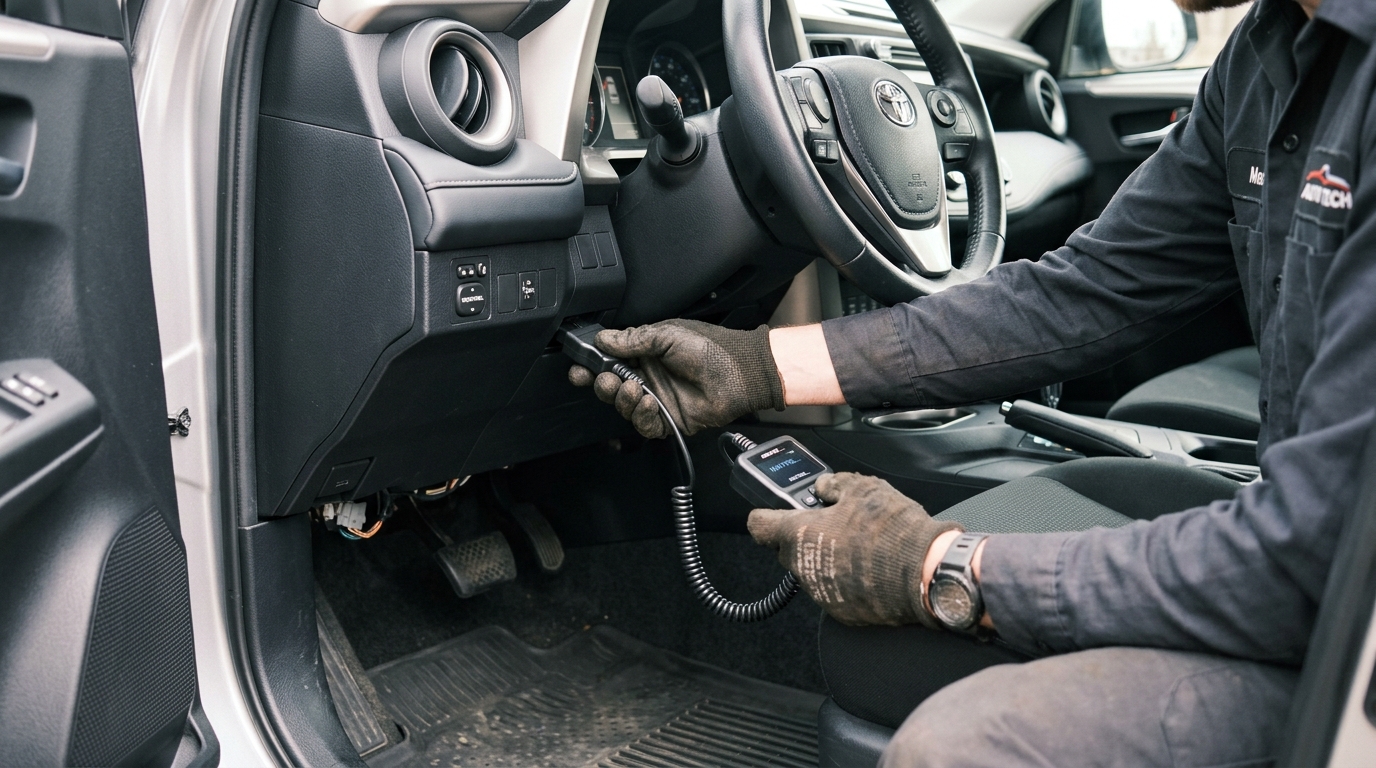
You do not have to guess. Most auto parts stores like AutoZone or O’Reilly will read your OBD-II codes for free. You can also buy a basic OBD-II scanner for under $30 online and plug it into the data link connector (DLC) under your dashboard.
The scanner shows you a fault code like P0420 or P0442. Write it down. Then search what it means. The code tells you which system is outside range, but it does not always tell you exactly which part to replace. That is where a trusted mechanic helps.
According to a study referenced by the Delaware DMV and the EPA’s OBD-II program, the MIL turns on only when the fault has been detected and confirmed, not just suspected once. So by the time you see the light, the computer has already checked and re-checked the fault.
What to Tell Your Mechanic
When you go in, give them:
- The exact fault codes you read
- When the light came on
- Any smells, sounds, or changes you noticed
- Recent repairs or new parts
- Weather conditions when it started
This saves time and money. Good mechanics look at live data, freeze frame data, and real sensor readings, not just the code number.
Conclusion
A check engine light on but the car runs fine is something you should take seriously, but not panic over. Your car’s OBD-II system caught a problem early, which is actually the best time to deal with it. Most causes like a loose gas cap, oxygen sensor, EVAP leak, or MAF sensor issue are affordable and easy to fix when caught early. Waiting too long is where small problems turn into big bills.
Get the code read, understand what system is flagged, and make a plan. If the light is solid and the car feels normal, you have time. But do not put it off too long.
Have you had this happen to you? What ended up being the cause? I would love to hear your experience in the comments.
Frequently Asked Questions
Can I drive my car if the check engine light is on but it runs fine?
Yes, usually you can drive short distances if the light is solid and the car feels completely normal. Make sure there are no strange noises, smells, or warning lights. Plan to get the code read soon rather than ignoring it. A flashing check engine light is different, that means stop driving and get it checked right away.
What is the most common reason for a check engine light with no symptoms?
The most common cause is a loose or faulty gas cap, which triggers the EVAP system to flag a vapor leak. Other very common reasons with no drivability symptoms are a slow oxygen sensor, a small EVAP system leak, or a minor fuel trim issue. These are typically inexpensive to fix.
Will the check engine light turn off on its own?
Sometimes yes. If the fault was a one-time event, like a brief sensor glitch or a loose gas cap you tighten, the light may turn off on its own after a few drive cycles. But if the underlying problem is still there, the light will stay on or come back. Getting the code read is still the right move.
How much does it cost to fix a check engine light?
It depends on the cause. A new gas cap costs a few dollars. An oxygen sensor replacement runs around $150 to $300. A catalytic converter can cost much more if it has been damaged from a long-ignored fault. The best way to keep costs low is to get the code read early and fix the root cause before it spreads.
Should I clear the check engine light myself?
You can clear codes with an OBD-II scanner, but the light will come back if the problem is still there. Clearing codes before a diagnosis also erases the freeze frame data that helps pinpoint the cause. It is better to read the code first, understand what triggered it, then decide whether to clear it after fixing or monitoring the issue.