
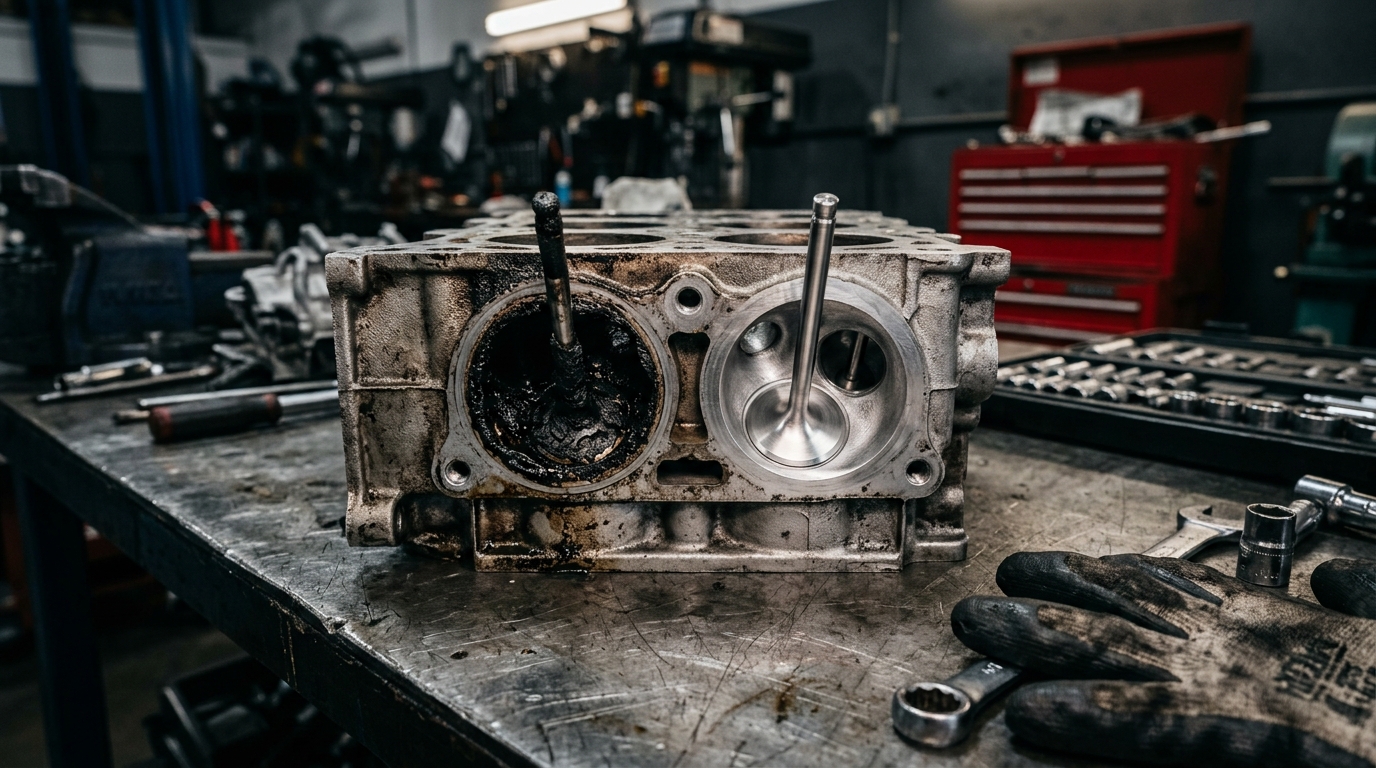
Your car is trying to tell you something. That rough shake at a red light or that knocking noise when you press the gas — those are not small problems. Those are carbon buildup engine symptoms, and if you ignore them long enough, they can cost you thousands.
What Is Carbon Buildup in an Engine?
Carbon buildup is exactly what it sounds like. Every time your engine burns fuel, it leaves behind tiny bits of black, hard carbon deposits. Over time, those bits pile up and stick to parts like your intake valves, combustion chamber, pistons, and fuel injectors.
Think of it like a chimney. Burn enough wood and the inside gets coated in black soot. Your engine works the same way. The difference is that your engine has no way to clean itself unless you help it.
These deposits slow down airflow, mess up the air-fuel mixture, and force your engine to work harder than it should. The result? Less power, more fuel used, and parts wearing out faster than they should.
Where Do Carbon Deposits Form?
- Intake valves (especially in direct injection engines)
- Combustion chamber walls
- Piston crowns
- Fuel injector nozzles
- EGR valve and PCV valve areas
Why Does Carbon Build Up in the First Place?
Honestly, some buildup is normal. But too much happens when a few things go wrong at the same time.
Incomplete fuel combustion is the biggest reason. When fuel does not burn all the way, it leaves carbon behind. Low-quality fuel makes this worse because it has more impurities. Frequent short trips are also a big problem. When your engine never gets hot enough, it cannot burn off carbon naturally.
Direct injection engines are hit especially hard. In older engines, fuel washed over the intake valves and kept them clean. In modern GDI (Gasoline Direct Injection) engines, fuel goes straight into the cylinder, so the valves never get cleaned. Carbon builds up fast.
Oil breakdown adds to the problem too. When old engine oil breaks down from heat and pressure, it burns and leaves behind carbon and varnish on engine parts. This is why oil change intervals matter so much.
Other causes include:
- Stop-and-go city driving that prevents the engine from reaching proper temperature
- Faulty EGR or PCV valves that push extra oil vapor into the intake
- Letting your car idle for long periods
- Using low-grade fuel regularly
Carbon Buildup Engine Symptoms: The Warning Signs
Here is where most car owners go wrong. They see one or two symptoms, think it is something small, and wait. By the time they take the car in, the damage is already done.
These are the key carbon buildup engine symptoms to watch for.
Rough Idling and Engine Vibration
When your car sits at a stoplight and shakes or vibrates, that is a red flag. Carbon deposits on the intake valves block airflow and stop the cylinders from firing evenly. The engine runs rough because the combustion process is no longer smooth.
I noticed this first in a friend’s car. We were stopped at traffic and the whole car was trembling at idle. It felt like it might stall any second. After a walnut blast cleaning, the idle was perfectly smooth again.
If your RPMs are jumping around or the engine feels unstable at low speed, rough idling is a clear sign of deposit buildup.
Engine Misfires and Cold Start Problems
A cold start misfire is when your car stumbles or fires unevenly in the first few seconds after starting. Carbon deposits around the spark plugs or inside the combustion chamber stop the air-fuel mixture from igniting properly.
You may also notice a hesitation or stumble when you press the gas pedal after a cold start. This is one of the earliest carbon buildup engine symptoms, and it often gets brushed off as “the car just needs to warm up.” Do not ignore it.
Loss of Power and Sluggish Acceleration
Does your car feel slower than it used to? Does it take longer to get up to highway speed?
Carbon deposits in the combustion chamber restrict airflow and reduce how efficiently the engine burns fuel. The result is a real loss of horsepower and torque. Your engine is basically trying to breathe through a clogged nose.
According to research published in AIP Conference Proceedings (2024), carbon accumulation on pistons and intake valves directly reduces engine power output and increases emissions, especially when lower-quality fuel is used. (Source)
Engine Knock or Pinging Sound
That metallic tapping or knocking noise from under the hood is one of the most serious carbon buildup engine symptoms. Here is why it happens.
Carbon deposits in the combustion chamber create hot spots. When these hot spots cause fuel to ignite before the spark plug fires, you get a condition called pre-detonation or engine knock. That knock is two explosions happening at the wrong time, and every knock puts stress on your pistons, rods, and bearings.
If you hear pinging when you accelerate, do not wait. This can cause real internal damage.
Increased Fuel Consumption
When carbon is blocking airflow and messing up the air-fuel ratio, your engine has to burn more fuel to make the same power. You might not notice it at first. Maybe you used to fill up every ten days and now it is every eight. Small changes like that add up fast.
Decreased fuel efficiency is a quiet but reliable sign that something is off inside the engine.
Black Smoke from the Exhaust
Seeing thick black or blue smoke from your exhaust on startup or under hard acceleration? That is unburned carbon leaving the combustion chamber. It is a sign of incomplete combustion and can also mean your diesel particulate filter (DPF) is getting clogged in diesel vehicles.
Check Engine Light with Misfire Codes
The check engine light alone does not mean carbon buildup. But if it comes on alongside a misfire code (P0300 to P0312) or a lean/rich fuel mixture code, carbon deposits are a very likely cause. A mechanic can read the codes with a scanner and point you in the right direction.
Failing Sensors
Carbon deposits can coat oxygen sensors, mass airflow sensors, and other components. When sensors get fouled with carbon, they send wrong signals to your engine control unit. This can trigger the check engine light and cause the engine to run poorly without any obvious mechanical failure.
How Carbon Buildup Damages Your Engine Over Time
Most people ask me: “Is it really that serious?” Yes. It is.
When carbon deposits build up and are left alone, here is what happens over time. The air-fuel ratio becomes inconsistent, causing the engine to run too rich or too lean. Both conditions create hot spots inside the combustion chamber. Those hot spots cause overheating of localized areas. Carbon holds heat instead of letting it dissipate, which makes the problem worse.
Over months and years, this leads to worn piston rings, damaged valves, scored cylinder walls, and eventually, costly engine failure. According to Hot Shot’s Secret, as carbon buildup increases, corrosion and wear severity within the engine grow at the same rate. (Source)
A small cleaning job done early costs maybe $200 to $400. Waiting until you need engine work can cost $2,000 or more.
How to Fix Carbon Buildup in Your Engine
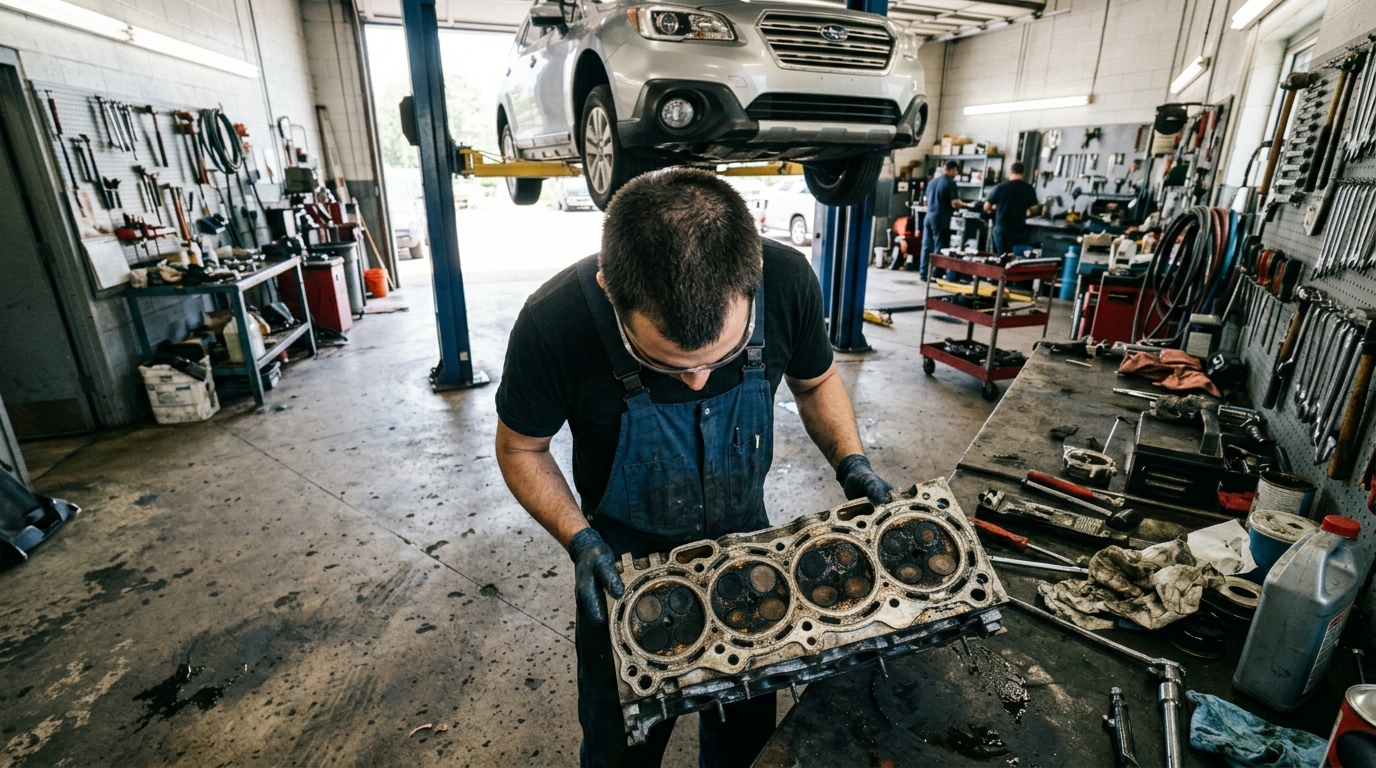
Good news: this is fixable. The method depends on how bad the buildup is.
Fuel Additives and Intake Cleaners
For mild buildup, quality fuel system cleaners and intake cleaners can help. These products contain detergents that dissolve carbon deposits as they move through the system. They work best as a preventive step or for early-stage buildup. Add them to your tank every 5,000 to 10,000 miles.
Walnut Blasting
This is the most effective method for direct injection engines with heavy carbon on the intake valves. A technician removes the intake manifold and blasts the valves with crushed walnut shells. It sounds unusual but it works very well without scratching the metal. It restores airflow to factory levels.
Manual Cleaning and Engine Teardown
For severe carbon buildup, a full manual cleaning or even an engine teardown may be necessary. This is expensive and time-consuming, but sometimes it is the only way to get things back to normal.
How to Prevent Carbon Buildup
Prevention is always cheaper than a fix. A few simple habits go a long way.
Use high-quality fuel with Top Tier certification whenever possible. These fuels contain stronger detergents that fight deposit formation. Change your engine oil on time and use the grade your manufacturer recommends. Old, broken-down oil is a major source of carbon deposits.
Take your car on the highway occasionally. A good 20-minute drive at higher RPMs helps burn off light deposits naturally. Avoid letting your car sit and idle for long periods. And if you drive a GDI engine, plan for a walnut blast cleaning every 40,000 to 60,000 miles as a regular service.
Conclusion
Carbon buildup engine symptoms start small. A little shake at idle. A slight loss of power. A knock you hear once in a while. But they do not stay small forever.
The sooner you catch these signs, the easier and cheaper the fix. Keep an eye on your idle quality, pay attention to how your car accelerates, and do not ignore warning lights with misfire codes. A clean engine runs better, uses less fuel, and lasts longer.
If any of these symptoms sound familiar, take your car in for a check. The cost of cleaning is nothing compared to the cost of waiting too long.
Have you ever dealt with carbon buildup in your car? I would love to hear what symptoms you noticed first. Drop your experience in the comments.
Frequently Asked Questions
What are the most common carbon buildup engine symptoms?
The most common symptoms are rough idling, engine misfires during cold starts, loss of power and sluggish acceleration, engine knock or pinging sounds, decreased fuel economy, black smoke from the exhaust, and the check engine light coming on with misfire codes. These symptoms usually get worse over time if not treated.
Can carbon buildup damage an engine permanently?
Yes, it can. If left untreated for a long time, carbon deposits create hot spots in the combustion chamber, accelerate wear on piston rings, valves, and cylinder walls, and can eventually lead to serious engine failure. Catching it early and cleaning it prevents long-term damage.
How often should I clean carbon buildup from my engine?
For most vehicles, a fuel system cleaner every 5,000 to 10,000 miles is a good habit. For direct injection engines, a professional walnut blasting service is recommended every 40,000 to 60,000 miles. If you notice symptoms earlier than that, do not wait for the scheduled interval.
Is carbon buildup worse in direct injection engines?
Yes. In GDI (Gasoline Direct Injection) engines, fuel is sprayed directly into the combustion chamber instead of over the intake valves. This means the valves never get the cleaning effect of fuel washing over them, so carbon builds up much faster on direct injection engines than on older port injection systems.
Can I fix carbon buildup myself at home?
You can handle mild buildup with fuel additives and intake cleaning sprays that are available at auto parts stores. These can slow down deposit formation or help with early-stage buildup. For heavier deposits, especially on intake valves in direct injection engines, professional walnut blasting or manual cleaning is needed and is not a DIY job.