
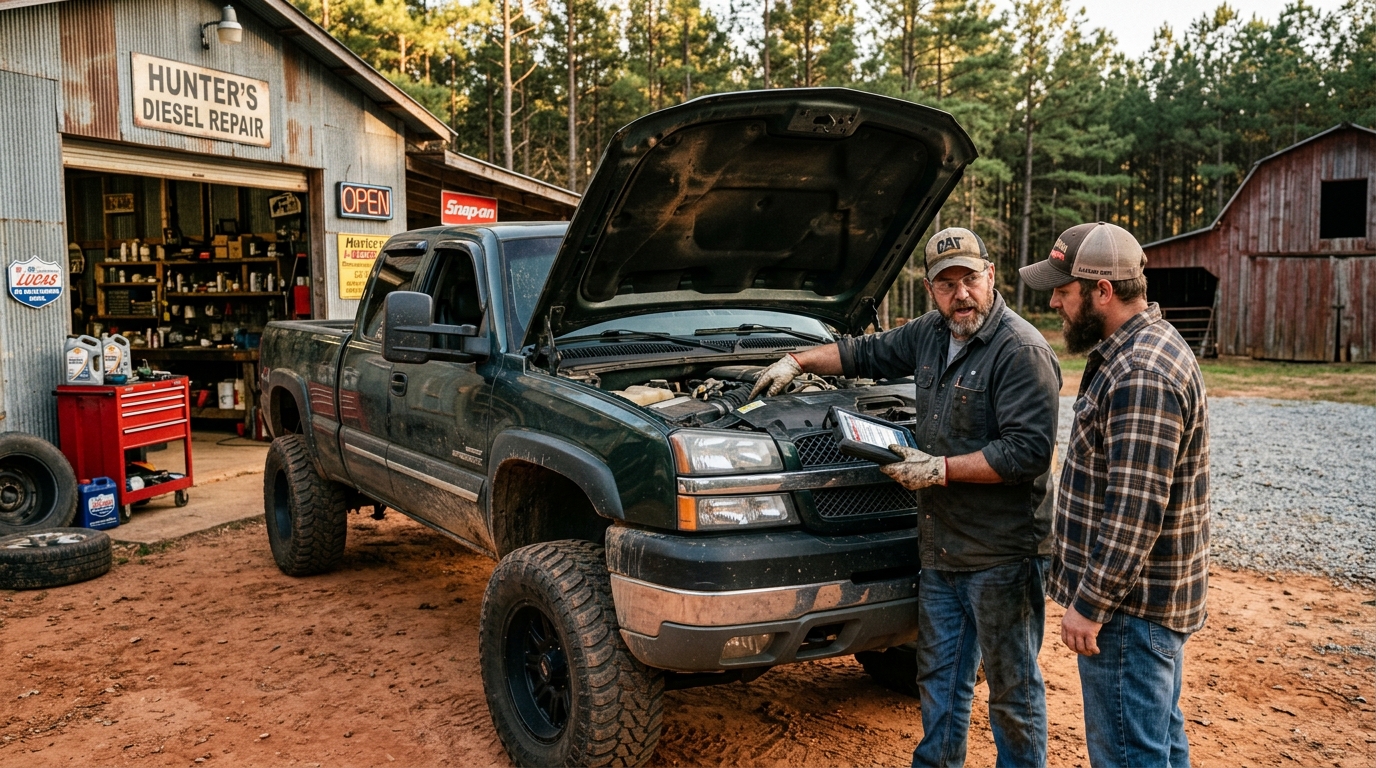
If you own a diesel truck in North Alabama, you already know one thing for sure: these trucks are tough, but they need the right care to stay that way. A skipped oil change or a missed filter replacement can turn into a very expensive problem very fast.
Diesel truck care in North Alabama matters more than most people think. The roads here, the hot summers, and the heavy loads that many trucks carry daily all put real stress on diesel engines. Taking care of your truck is not just smart. It is the difference between a truck that lasts 300,000 miles and one that breaks down at 100,000.
Whether you drive a Ford Powerstroke, a Chevy Duramax, or a Ram Cummins, the core needs are the same. Regular service, early action on warning signs, and a trusted local shop. That is really all it takes.
Why North Alabama Trucks Need Special Attention
North Alabama is a working region. Trucks here haul farm equipment, construction materials, and heavy towing loads all week long. That kind of hard use puts extra pressure on your diesel engine and every part connected to it.
The summer heat in this area, especially in cities like Huntsville, Athens, Decatur and Madison, can push your cooling system to its limit. If the radiator or coolant levels are not checked regularly, engine overheating becomes a real risk.
And it is not just the heat. The rural highways and job-site roads can wear down your suspension, brakes and steering linkage faster than city driving ever would. The good news is that with regular preventative maintenance, your truck can handle all of it without breaking a sweat.
The Most Common Diesel Engine Problems in This Region
“I once talked to a farmer near Decatur who drove his Ram for six months with a slowly worsening fuel filter. He figured it was just the truck ‘getting old.’ When he finally brought it in, the technician showed him how close the engine had come to a serious fuel system failure. A $30 filter had almost cost him $3,000.”
This kind of story is not rare. The most common diesel repair issues shops in North Alabama deal with include clogged fuel filters, dirty air filters, turbocharger wear, EGR system buildup, and failed glow plugs. Many of these can be avoided with simple scheduled maintenance every few thousand miles.
DPF (Diesel Particulate Filter) problems are also very common in this area, especially on trucks used for short local trips. The filter does not get hot enough to clean itself during short drives, so it builds up soot over time and starts choking the engine.
Knowing these common problems puts you ahead of most truck owners in North Alabama. You can catch issues early and save real money.
Essential Diesel Truck Maintenance Services You Should Never Skip
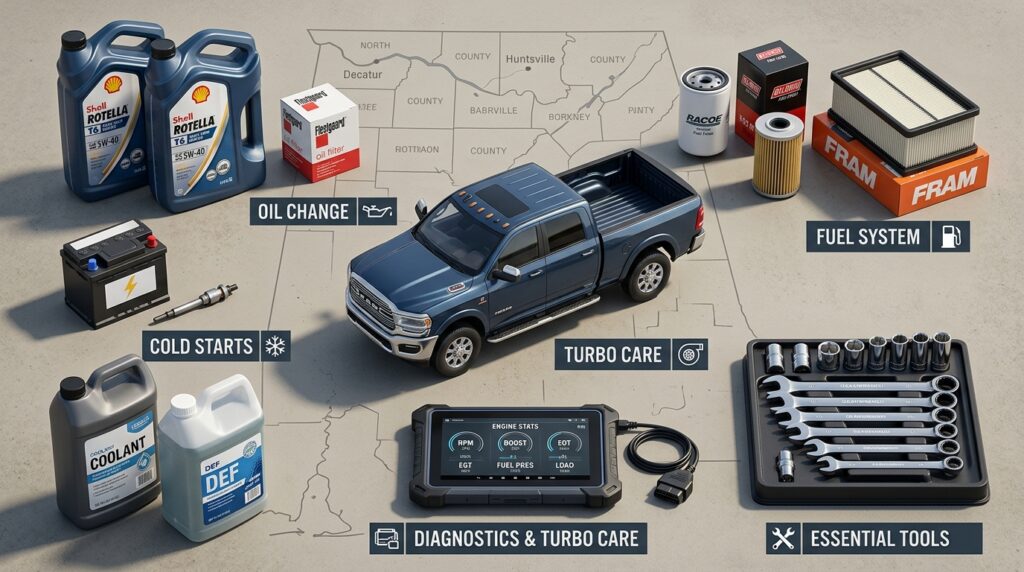
Some maintenance tasks are not optional. They are the foundation of good diesel truck care. Skip them, and you are rolling the dice every time you turn the key. Here are the two most important areas to stay on top of.
Oil Changes and Filter Replacements: The Basics That Save Big Money
Honestly, I used to push my oil changes a little longer than I should have. My old truck ran fine for a while, but a mechanic once showed me the thick sludge building up inside the engine after skipping just two oil changes. I never delayed an oil change again.
Diesel engine oil breaks down faster than gasoline engine oil because of the higher pressures and temperatures inside a diesel. A fresh oil change with a new oil filter keeps all the moving metal parts from grinding against each other. For most light-duty diesel trucks, that means an oil change every 5,000 to 7,500 miles.
Along with the oil, you need to replace the engine air filter and the fuel filter on schedule. The fuel filter is easy to forget because you cannot see it, but it is doing very important work. It keeps dirt, water, and debris out of your fuel injection system. A blocked filter will choke your engine and cause rough running, loss of power, and poor fuel mileage.
Quick Maintenance Schedule (Light-Duty Diesel)
- Every 5,000 to 7,500 miles: Engine oil and oil filter
- Every 15,000 miles: Fuel filter replacement
- Every 15,000 to 30,000 miles: Engine air filter inspection and replacement
- Every 30,000 miles: Coolant, brake fluid, and transmission fluid check
- Every 45,000 to 60,000 miles: Full drivetrain inspection, tire rotation, and brake inspection
Fuel System and Turbocharger Care: Keeping Your Power Intact
Your fuel injection system is the heart of your diesel. A dirty or failing injector will make your truck run rough, burn more fuel, and push black smoke out of the exhaust. Injector cleaning or replacement is one of the most common jobs at any good diesel repair shop in North Alabama.
The turbocharger is another part that needs regular attention. It spins at incredibly high speeds, often over 100,000 RPM, and it uses engine oil to stay lubricated. If your oil is dirty or running low, the turbo wears out fast. A failed turbo is not a cheap fix. It can cost anywhere from $1,000 to $3,500, depending on the truck and the turbo model. According to the U.S. Environmental Protection Agency, “proper engine maintenance can optimize fuel economy and extend engine life while reducing harmful emissions.”
Getting your common rail fuel system cleaned and your turbocharger inspected at regular intervals is one of the smartest investments you can make. A little money spent on maintenance now saves thousands in engine repair later.
Warning Signs Your Diesel Truck Needs Immediate Help
Your truck will usually tell you something is wrong long before it breaks down completely. The key is knowing what to look for. Catching a problem early is almost always cheaper and easier than dealing with it after it has gotten worse.
Smoke, Noise, and Lights: Signs You Cannot Ignore
White smoke coming from the exhaust when the engine is warm means there is coolant getting into the combustion chamber. That is a serious warning. Black smoke usually means the engine is burning too much fuel. This often points to a bad injector, a dirty air intake system, or a clogged DPF.
Blue smoke is the sign you do not want to see. It means engine oil is burning inside the combustion chamber. That can point to worn piston rings or a failing turbocharger seal. Either way, it needs attention right away.
If your check engine light comes on, do not wait. Modern diesel trucks from Ford, Chevy, GMC, Dodge, and Ram use complex electronic systems to track engine health. A warning light is your truck asking for help before something expensive happens.
Hard knocking from inside the engine is also a red flag. This is not normal diesel noise. A loud knock often means the high-pressure fuel pump is struggling or there is a problem with fuel pressure inside the common rail system.
Hard Starts and Power Loss: What They Really Mean
“A friend of mine in Madison had his work truck sitting for a month during a slow patch. When he tried to start it on a cold morning in January, it cranked and cranked but would not fire. It turned out his glow plugs had given out. He had no idea what glow plugs even were before that morning. Now he checks them every winter.”
Glow plugs heat the combustion chamber so the diesel fuel can ignite properly in cold weather. When they fail, your truck will crank slowly or not start at all, especially on cold North Alabama mornings. This is one of the most overlooked parts of any diesel truck.
Loss of power while driving, especially on hills or while towing, can come from several places. A clogged DPF (diesel particulate filter), a failing turbocharger, a weak fuel pump, or a dirty EGR system are all common causes. None of these is cheap to fix if you ignore them for too long.
The U.S. EPA notes that diesel engines can operate for 30 years or more when properly maintained. Most premature engine failures come from skipping routine service or ignoring early warning signs.
How to Find the Right Diesel Truck Care Shop in North Alabama
Not every mechanic can work on diesel trucks. Gasoline and diesel engines are very different animals. Your truck needs a shop that understands the difference and has the right tools and training to back it up.
What to Look for in a Diesel Repair Shop
Always look for shops with ASE-certified technicians who specialize in diesel engine repair. ASE certification means the technician has been trained and tested on real diesel systems, not just general auto repair. It is a good first filter when you are deciding who to trust.
A good shop will also have advanced diagnostic tools. Modern diesel trucks use layered computer systems. Without the right scanning equipment, a shop is just guessing. The best shops in cities like Huntsville, Athens, and Decatur invest in these tools because they know their customers depend on them.
Look for shops that offer a written estimate before they start any work. This is one of the simplest signs of an honest shop. A shop that is transparent about cost is a shop that respects your money and your time. Also, check if they offer a warranty on their work. Some shops in North Alabama offer a 12-month or even 36-month warranty on repairs, which is a strong sign of quality and confidence.
Questions to Ask Before You Hand Over Your Keys
The funny part is that most truck owners never ask a single question before dropping off their truck. They just hand over the keys and hope everything works out. That is not a great strategy when you are dealing with a complex diesel engine.
Here are some simple things to ask before you commit to a shop. Do your technicians specialize in light-duty diesel trucks, or do you work on all vehicles equally? What is your warranty policy on parts and labor? Can I see the old parts after the job is done? These questions will tell you a lot about how the shop operates.
A shop that is proud of its work will answer every one of those questions without hesitation. One that gets defensive or vague is probably not the right fit for your truck.
The demand for quality diesel truck care in North Alabama has never been higher. With more work trucks, farm vehicles, and commercial trucks on the roads every year, finding a trusted local shop and sticking with them is one of the best things you can do for your vehicle and your wallet.
Conclusion
Diesel truck care in North Alabama is not complicated, but it does take consistency and a little attention. Change your diesel engine oil on time. Replace your fuel filters and air filters before they become a problem. Listen to what your truck is telling you through smoke, sounds, and warning lights. And find a qualified diesel repair shop with ASE-certified technicians that you can actually trust.
Your diesel engine is one of the most powerful and long-lasting pieces of machinery you will ever own. Treat it right, and it will carry you for hundreds of thousands of miles across North Alabama and beyond. I know from experience that a little attention now saves a massive headache later. The trucks that last the longest are not always the newest ones. They are the ones who were cared for the best.
If you have questions or want to share your own experience with diesel truck maintenance, drop a comment below. I would love to hear what has worked for you and what mistakes you have learned from along the way.
Frequently Asked Questions
How often should I service my diesel truck in North Alabama?
For most light-duty diesel trucks, you should change the engine oil every 5,000 to 7,500 miles and replace the fuel filter around every 15,000 miles. Trucks that do a lot of towing, hauling or short-trip driving may need more frequent service. Always check your owner’s manual first, and ask your ASE-certified technician what schedule fits your specific truck and driving habits.
What are the warning signs that my diesel truck needs repair right away?
Watch for white, black, or blue smoke from the exhaust, a lit check engine light, hard starts, rough running, loss of power, and hard knocking from inside the engine. A sudden change in fuel mileage is also a sign that something is off. If you notice any of these, take your truck to a diesel repair shop as soon as possible. Waiting usually makes it worse and more expensive.
Can any mechanic in North Alabama work on my diesel truck?
Not really. Diesel engines are much more complex than gasoline engines and require specialized training and advanced diagnostic tools. Always look for shops with ASE-certified technicians who have real experience with your specific truck brand, whether it is Powerstroke, Cummins, or Duramax. A general shop without diesel experience may miss problems that a specialist would catch in the first five minutes.
Is diesel truck maintenance more expensive than maintaining a gas truck?
Each individual service can cost a little more because diesel engine oil and fuel filters carry a higher price tag than their gasoline counterparts. But diesel trucks are also more fuel efficient and tend to last much longer with proper care. Most experienced diesel truck owners find that over the full life of the vehicle, a well-maintained diesel truck is actually more cost-effective because the engine can go much longer without major engine repair or replacement.
What is a DPF, and why does it need maintenance on my diesel truck?
DPF stands for Diesel Particulate Filter. It is part of your exhaust system, and its job is to trap soot and harmful particles before they leave the tailpipe. Over time, especially on trucks used for lots of short local trips, the DPF gets clogged with built-up soot. A blocked DPF causes reduced power, poor fuel economy, and sometimes a warning light. A qualified diesel technician can clean or replace it to bring your truck’s performance back to where it should be.