
When to replace spark plugs is one of those questions most drivers ignore until something goes wrong. I get it. You’re busy. The car starts, it drives. Why worry? But here’s the thing, your engine depends on those tiny parts every single time you turn the key. And when they start to fail, you feel it right away: rough starts, poor fuel economy, a shaky idle, and sometimes a very unhappy check engine light staring back at you.
What Are Spark Plugs and What Do They Do?
The Simple Job Behind a Big Impact
A spark plug is a small part that sits inside your car’s engine cylinder. Its job is very simple: it makes a tiny electric spark. That spark lights up the air-fuel mixture inside the combustion chamber. That little explosion pushes the piston down and makes your car move.
Most cars have one spark plug for each cylinder. So a 4-cylinder engine has four spark plugs. A V6 engine has six. Each one fires hundreds of times every minute you drive. That’s a lot of work for such a small part.
When spark plugs are healthy, you won’t notice them at all. Your car starts fast, runs smooth, and uses fuel properly. But when they start to wear out? You notice fast.
How Spark Plugs Wear Out Over Time
Over time, the electrode at the tip of the plug slowly gets smaller from all that sparking. Heat, carbon deposits, and normal use all take a toll. The gap between the electrodes gets bigger. The spark gets weaker. And that means the fuel doesn’t burn as cleanly as it should.
This is totally normal. It happens to every car. The only question is: when do you replace them before they become a real problem?
When to Replace Spark Plugs: Mileage Intervals by Type
Not All Spark Plugs Are the Same
Knowing when to replace spark plugs starts with knowing what kind you have. There are four main types, and each one lasts a different amount of time. Here’s a simple breakdown:
| Spark Plug Type | Replacement Interval | Cost Per Plug (Approx.) |
| Copper spark plugs | 20,000 – 30,000 miles | $3 – $10 |
| Platinum spark plugs | 60,000 – 100,000 miles | $15 – $25 |
| Iridium spark plugs | 80,000 – 120,000 miles | $20 – $40 |
| Ruthenium spark plugs | Up to 150,000 miles | $25 – $50 |
Honestly, the best source for your exact car is always the owner’s manual or the maintenance schedule in your glove box. Every car brand has its own recommended replacement interval. Don’t guess.
According to TestingAutos.com: conventional spark plugs need replacement every 30,000 to 50,000 miles, while long-life iridium or platinum-tipped plugs are designed to go 60,000 to 150,000 miles depending on the vehicle.
Should You Replace Them Early?
This is a question I asked my mechanic a while back, and his answer surprised me. He said: “If your engine runs great and you’re nowhere near the recommended mileage, wait.” But if you’re getting close, don’t push your luck just to save a few dollars.
One thing is clear though: even long-life spark plugs can fail early if your car burns oil between oil changes, runs mostly short trips, or has a problem in the cooling system. In those cases, they may get covered in carbon deposits or show signs of overheating long before the mileage limit.
6 Warning Signs It’s Time to Replace Spark Plugs
Symptoms You Should Never Ignore
Here’s the list of signs that tell you it’s probably time to replace spark plugs right now. Even if you haven’t hit the mileage mark, these symptoms mean something is wrong.
Sign 01
Check Engine Light is on. Your car’s computer detects every time an engine cylinder misfires. A worn spark plug is one of the top causes of misfire codes. Don’t ignore that light — it’s telling you something real.
Sign 02
Rough idle or engine shaking. If your car vibrates or shakes when sitting still at a red light, your ignition system may not be firing properly. A bad plug means one cylinder isn’t doing its job.
Sign 03
Hard to start, especially in the cold. Spark plugs are the first step in starting your engine. If they’re worn, the combustion chamber won’t fire up easily, especially on cold mornings.
Sign 04
Poor fuel economy. Worn plugs make the engine work harder to burn fuel. If you’re visiting the gas station more often with no change in your driving habits, bad spark plugs could be burning your money.
Sign 05
Slow acceleration or hesitation. When you press the gas and the car takes a moment to respond, or stutters, that’s a classic sign of weak spark. The air-fuel mixture isn’t igniting fast enough.
Sign 06
Knocking or rattling engine sounds. Strange noises from the engine bay while driving or at idle often mean the fuel isn’t burning at the right time. This is called engine knock, and it puts stress on your engine.
According to the AutoZone DIY Guide, signs of wear on spark plugs should prompt immediate replacement so your vehicle’s performance and fuel economy don’t suffer.
What Fouled or Damaged Plugs Actually Look Like
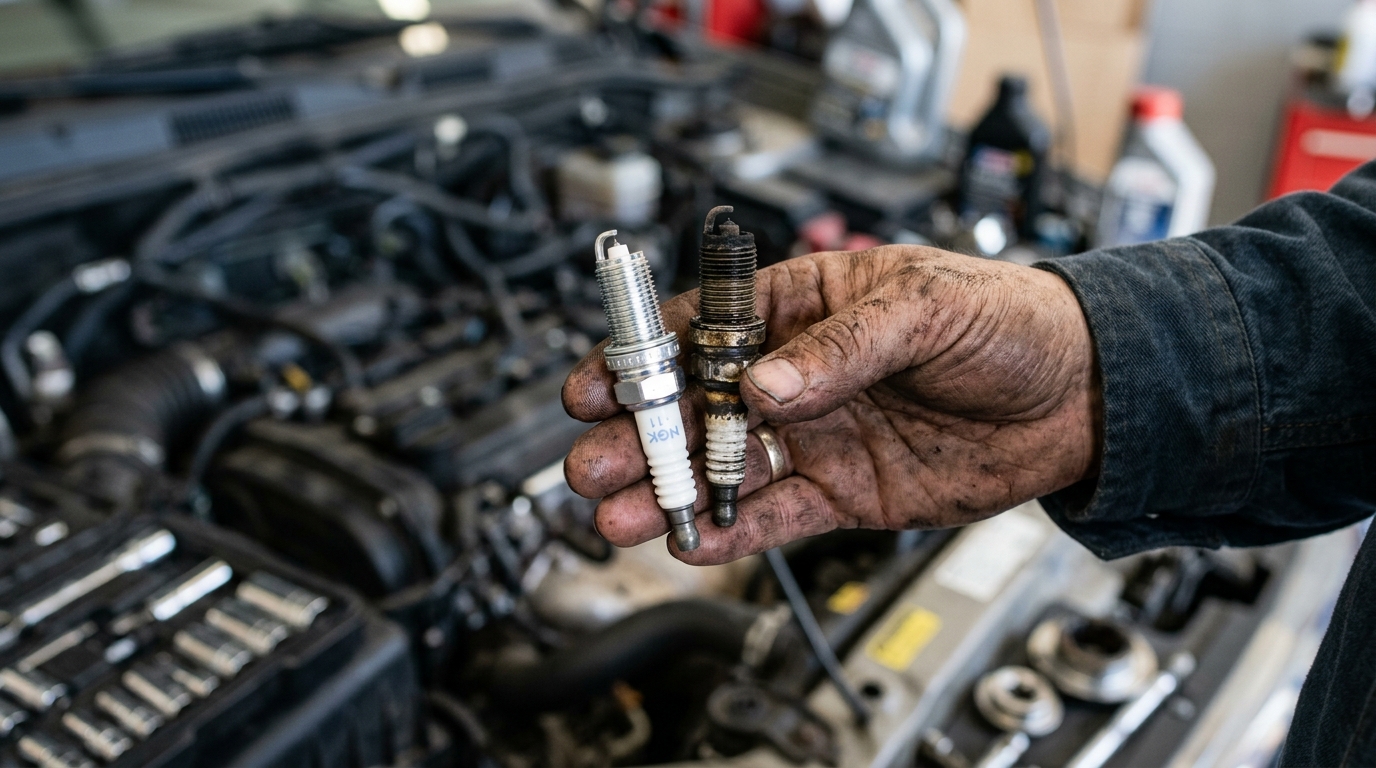
I had a mechanic pull a spark plug out of my old Honda Civic once, and it was completely black with oily deposits. That’s called a fouled spark plug. It means oil was getting into the combustion chamber, which is a bigger problem than just the plug itself.
A healthy old plug will look grayish or tan with just a bit of wear on the tip. But if you see:
Black oily deposits — oil is leaking into the cylinder. White or blistered tip — the engine is running too hot. Heavy carbon buildup — too much rich fuel mixture. These are all signs to replace the plug immediately and check what’s causing the underlying problem.
Why Replacing Spark Plugs on Time Actually Saves You Money
“Faulty spark plugs can cut your fuel efficiency by as much as 30% — that’s money you’re burning every single trip.”
National Institute for Automotive Service Excellence
The Real Cost of Waiting Too Long
Most people think of a spark plug replacement as an extra expense. But honestly, it’s the opposite. Waiting too long costs more in the long run.
First, your fuel economy drops. According to the National Institute for Automotive Service Excellence (ASE), spark plug misfiring can reduce your fuel efficiency by up to 30%. If you’re driving 1,000 miles a month, that adds up fast at the pump.
Second, worn plugs force your ignition coil to work much harder than it was designed to. The ignition coil generates the high-voltage spark. When a plug wears out, the coil has to push more electricity just to get a weak spark. That extra strain can cause the ignition coil itself to fail — and ignition coil replacement is much more expensive than just swapping plugs.
Third, a misfiring engine puts stress on the catalytic converter. Unburned fuel gets pushed into the exhaust system and can damage the converter over time. Catalytic converter repairs can cost $1,000 or more.
The U.S. Environmental Protection Agency (EPA) notes that proper engine tune-ups, including timely spark plug replacements, reduce harmful emissions and improve gas mileage. Learn more at EPA.gov.
What Does Spark Plug Replacement Actually Cost?
Good news: it’s one of the cheaper maintenance jobs on a car.
Copper Plug
$3–10
Per plug
Iridium Plug
$20–40
Per plug
Labor Cost
$50–200
At a shop
Total Range
$100–500
Full job
If you have a standard 4-cylinder engine, a mechanic will typically charge about 0.8 to 1.2 hours of labor. But some V6 engines with difficult access — like certain Ford models — can require more work and cost more. The point is: compared to a catalytic converter or ignition coil repair, spark plugs are cheap.
Should You Replace All Spark Plugs at the Same Time?
Yes — Always Replace the Full Set
This is a question I see all the time. The answer is always yes. Even if only one plug looks bad, replace them all at once.
Here’s why: if one spark plug has worn down after 60,000 miles, the others are almost at the same point. They’ve all been through the same heat, the same vibration, and the same number of firings. Replacing just one and leaving the others in will only delay the problem by a few months.
It also saves you labor costs. Getting a mechanic to pull everything apart twice is more expensive than doing it all in one visit.
Pro Tip
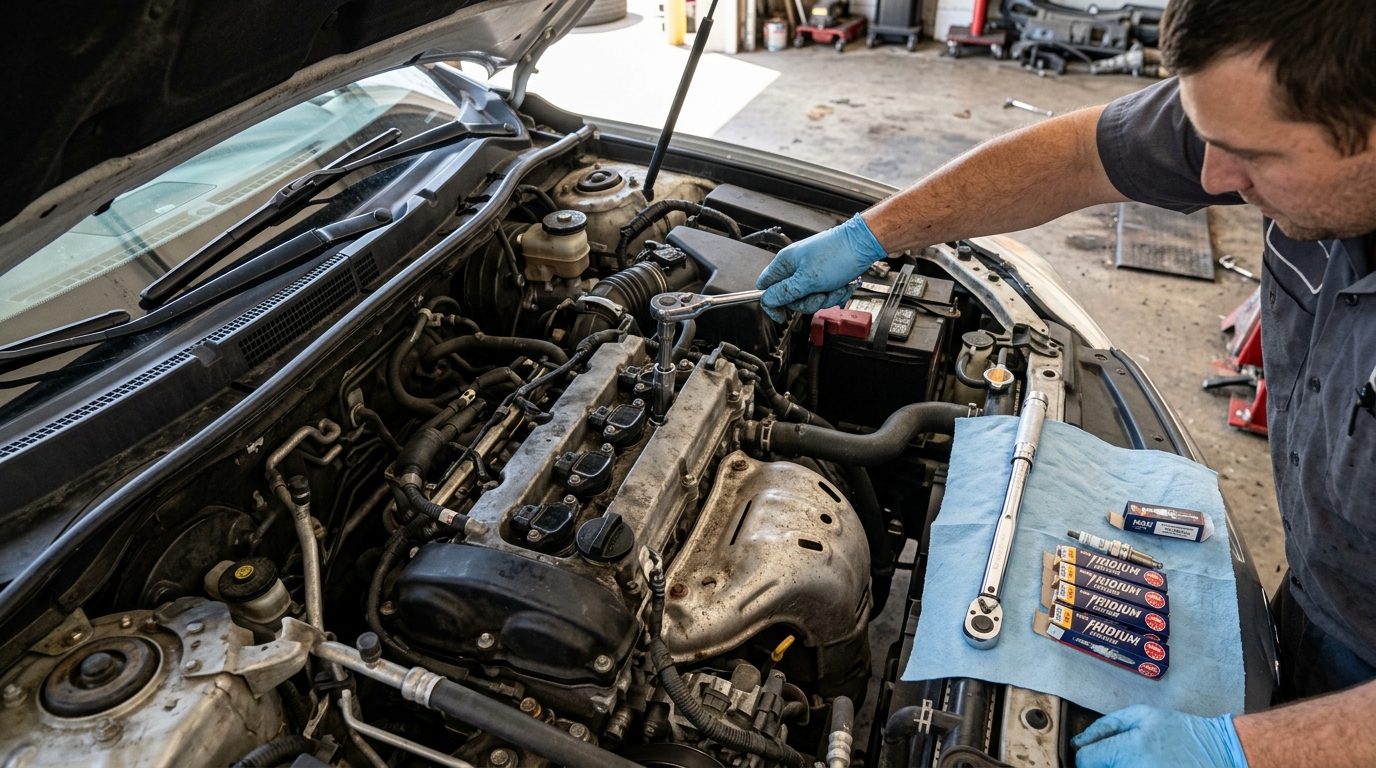
Always replace one spark plug at a time if you’re doing it yourself. Don’t pull all of them out at once. If the spark plug wires get mixed up or crossed, the engine won’t run and you’ll have a much bigger headache on your hands.
Also check your plug wires while you’re at it. Old wires crack and break down over time, and replacing them together makes sense.
Can You Check Spark Plugs Without Replacing Them?
Yes. A mechanic can pull the plugs and read them like a story. The color, deposits, and condition of the tip tell a lot about what’s happening inside each cylinder. This is often done when an engine is misfiring, hesitating, or running rough.
But here’s the thing: in modern cars, long-life plugs are not really designed to be cleaned and re-used. In older cars from the 1970s and 80s, people used to clean and re-gap plugs as routine maintenance. Today, it’s simpler and safer to just replace them.
How to Know Which Spark Plugs Are Right for Your Car
Check the Owner’s Manual First
Every car manufacturer sets a specific spark plug type and gap size for each engine. Using the wrong plug can actually cause problems — poor performance, misfires, or even engine damage in some cases.
The fastest way to find the right plug is to open your owner’s manual or check the maintenance schedule that came with the car. If you lost it, search your car’s year, make, model, and engine size online. Most auto parts stores also have lookup tools where you enter your vehicle details and they show you the exact recommended plug.
One more thing: always check the spark plug gap before installing a new plug, even if it comes pre-gapped from the factory. A gap tool or feeler gauge costs almost nothing. The wrong gap means a weak spark. Simple as that.
Copper vs Iridium: Which Should You Choose?
If your car originally came with copper plugs, stick with copper unless the manufacturer says otherwise. Upgrading to iridium in a car not designed for it won’t always give you a benefit.
On the other hand, if your car calls for iridium or platinum plugs, don’t downgrade to copper to save money. The shorter service life means you’ll replace them more often, and you may end up spending more over time. The more durable electrode materials in iridium plugs resist wear better, and the sharper tip creates a more consistent spark.
Conclusion
So when should you replace spark plugs? The short answer: follow your owner’s manual, and don’t ignore the warning signs. A rough idle, trouble starting, poor fuel economy, hesitation, or a flashing check engine light are all your car’s way of asking for help.
When to replace spark plugs is not a complicated question, but it’s one that matters a lot for your engine’s long-term health. Fresh plugs mean better combustion, smoother starts, cleaner emissions, and money saved at the gas station. That’s a good deal for something that costs less than $500 even at a shop.
I’d love to hear your experience. Have you ever driven too long on old plugs and felt the difference after swapping them out? Let me know in the comments below. And if this helped you, share it with someone who drives.
Frequently Asked Questions
How do I know if my spark plugs need to be replaced right now?
The clearest signs are a rough idle, hard starting, slow acceleration, poor fuel economy, or a check engine light that stays on. If your car shakes at idle or hesitates when you press the gas, worn spark plugs are often the reason. You can also check your owner’s manual and compare your current mileage to the recommended replacement interval for your plug type.
What happens if I don’t replace spark plugs on time?
Waiting too long can lead to engine misfires, which puts stress on the catalytic converter and the ignition coils. Both of those repairs cost much more than a simple plug replacement. You’ll also notice worse fuel economy, sluggish acceleration, and eventually the car may struggle to start or stall without warning.
Can I replace spark plugs myself at home?
Yes, for most standard 4-cylinder engines it is a fairly simple DIY job. You need a spark plug socket, a ratchet wrench, and a torque wrench. The most important rules are: replace one plug at a time so wires don’t get mixed up, don’t over-tighten, and always check the plug gap before installation. Some V6 and V8 engines have harder-to-reach plugs and may be better handled by a mechanic.
Do iridium spark plugs really last longer than copper ones?
Yes. Iridium is much harder than copper and resists wear from heat and electrical firing much better. Copper plugs may last 20,000 to 30,000 miles while iridium plugs can go 80,000 to 120,000 miles or more. Iridium costs more per plug, but since you replace them far less often, the long-term cost difference is usually small. Always use whatever type your car’s manufacturer recommends.
Should I replace spark plug wires at the same time as the plugs?
It is often a good idea, especially if your car has older-style plug wires and not the newer coil-on-plug design. Old plug wires become brittle, crack, and can cause misfires even with fresh plugs in place. Since the mechanic is already in there doing the plugs, adding the wires at the same time saves extra labor costs later. Check the condition of the wires when the plugs come out and decide from there.