
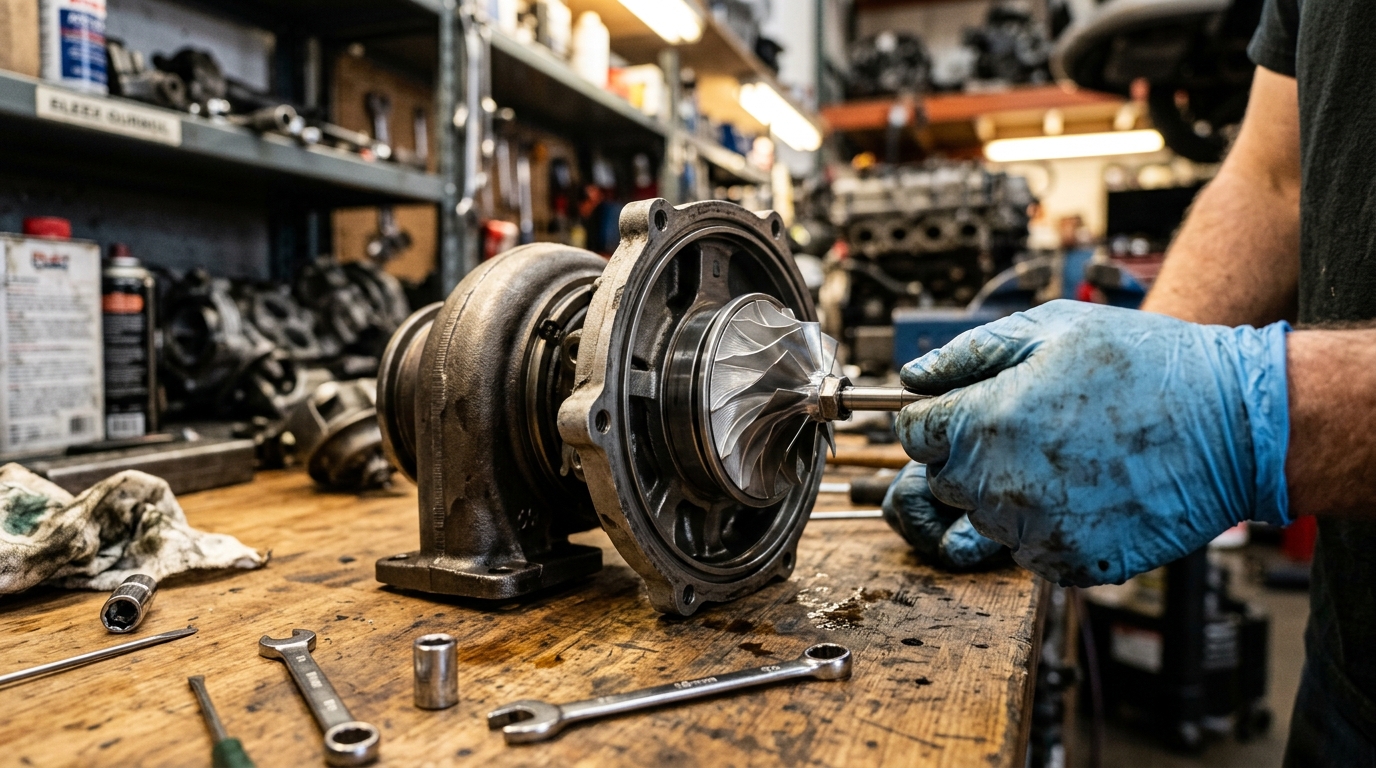
Your engine felt slow this morning. Then came a loud whine. Then blue smoke from the exhaust. Sound familiar? Turbocharger problems and maintenance might be the last thing on your mind — but when a turbo starts acting up, it can destroy your whole engine fast. The good news? Most issues are easy to catch early if you know what to look for.
How a Turbocharger Actually Works
The Basic Job of a Turbocharger
A turbocharger pushes extra air into your engine. More air means more fuel can burn at once. That gives you more power output without using a bigger engine. It is a smart and simple idea.
The turbine wheel is powered by exhaust gases leaving your engine. Those hot gases spin the turbine. The turbine turns a shared shaft connected to the compressor wheel. The compressor draws in fresh air, squeezes it tight, and pushes it into the intake manifold. Your engine gets a big gulp of dense air every time you press the gas.
The wastegate is like a safety valve. It controls how much exhaust goes to the turbine so the boost pressure does not get too high. The actuator opens and closes the wastegate to keep everything balanced.
Why Turbos Run So Hot and So Fast
Here is the part that surprises most people. Some turbos spin at over 300,000 RPM. That is not a typo. At that speed, even a small piece of dirt hitting the compressor wheel can cause serious damage.
All that spinning creates heat. Your turbo needs a steady flow of clean engine oil to stay cool and lubricated. It also needs time to cool down after you switch off the engine. Skip these two things and problems start fast.
Most Common Turbocharger Problems
Oil Starvation and Lubrication Failures
This is the number one killer of turbos. A study on turbo lubrication and failure causes found that around 50% of all turbo failures come from lubrication problems. About 30% happened because oil was slow to reach the turbo, and 20% were from too little oil overall.
Source: Goldfarb Inc., Common Turbocharger Issues (2025)
Your turbo bearings spin at crazy speeds. They need a steady flow of clean oil every single second. If your oil is dirty, too thin, or slow to reach the turbo, those bearings grind down fast. Once a bearing failure happens, the turbine or compressor wheel rubs the housing and the whole unit can be destroyed.
I once ignored an oil change for way too long on an old diesel van. The turbo started making a faint whine. I thought it was just road noise. Three weeks later the turbo was dead. Lesson learned the hard way.
Watch for: Slow oil pressure at startup, oil contamination, or low oil level. These are early warning signs of future bearing wear.
Excessive Smoke from the Exhaust
Smoke from your exhaust tells a story. You just have to learn to read the color.
Blue smoke means engine oil is getting into the combustion chamber. This usually points to a damaged turbo seal or worn piston rings. Oil is burning where it should not be. Black smoke means there is not enough air to burn the fuel. The turbo is not sending enough boost. This could be a worn turbo, a boost leak, or a blocked intercooler. White smoke sometimes points to coolant leaking into the engine, possibly from turbo damage.
Any colored smoke that keeps coming after the engine warms up is a red flag. Do not ignore it.
Signs Your Turbo Needs Attention Right Now
Unusual Noises: Whining, Grinding, and Rattling
A healthy turbo makes a smooth whooshing sound under load. If you start hearing something different, pay attention.
A loud whining noise usually means bearing wear or a drop in airflow or lubrication to the unit. A grinding sound can mean a damaged compressor blade or turbine blade, often from foreign object damage. A rattling sound near the turbo area might mean loose parts or internal damage.
Honestly, any new sound from your turbo area should make you pull over and investigate. These noises often come right before total turbo failure.
Loss of Power and Turbo Lag
If your car feels sluggish and does not pull like it used to, your turbo might not be making enough boost pressure. This is called reduced acceleration and it is one of the first signs people notice.
Turbo lag is the delay between pressing the gas and the power actually arriving. A small delay is normal. A big delay means the turbo is struggling. It could be a clogged air filter, a stuck wastegate, or a boost leak in the piping.
Also keep an eye on your dashboard. The Check Engine Light (CEL) or Malfunction Illumination Light (MIL) can fire when sensors detect issues with boost pressure, airflow, or exhaust gas flow. A quick diagnostic scan with a reader can tell you exactly what is wrong.
According to the Essex Turbos maintenance guide (2024), ignoring early warning lights and performance drops often leads to far more expensive repairs later. A small fix today can prevent a full engine rebuild tomorrow.
Turbocharger Maintenance Tips That Actually Work
Oil Changes, Air Filters, and Warm-Up Habits
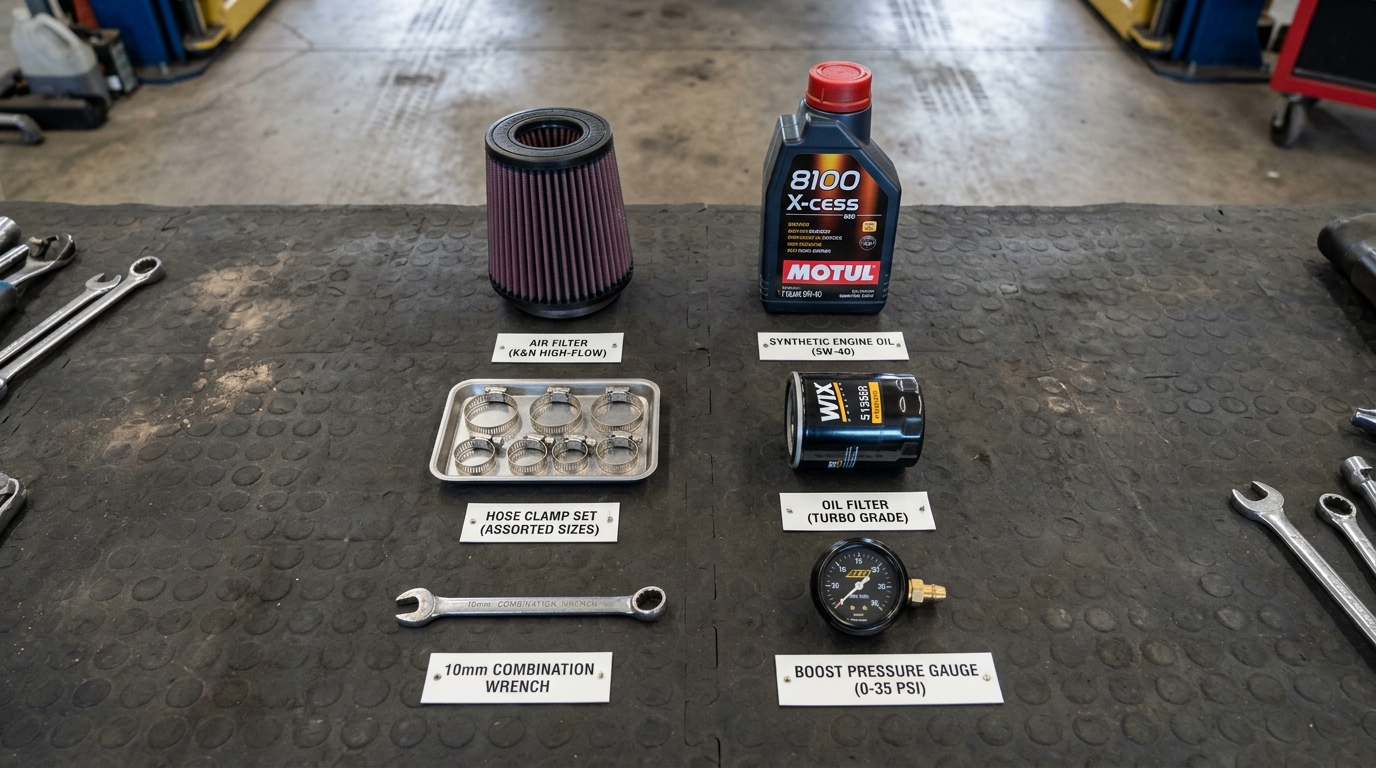
The single best thing you can do for your turbo is change your engine oil on time. Use good quality oil that matches your engine specs. Dirty oil contamination destroys turbo bearings faster than anything else.
Replace your air filter regularly. Over the past 13+ years, foreign object ingestion from dirty or failed air filters is the second biggest cause of turbo damage, right behind oil problems. A stray piece of debris hitting a compressor wheel spinning at high speed can destroy it instantly.
Source: TurboRepair.com, Turbocharger Maintenance Guide
Also, let your engine warm up for a minute or two before driving hard. Cold oil is thick and slow. Give it time to reach the turbo before you ask the engine to work hard.
Cool Down, Hose Checks, and Boost Pressure Monitoring
Here is one most people forget. After a long drive or highway run, do not switch off the engine straight away. Let it idle for one to two minutes. The turbo keeps spinning after you lift off the gas, and it needs oil flow to cool down. If you kill the engine immediately, the oil stops but the turbo keeps spinning hot. This cooks the oil inside and creates carbon deposits that can block the oil supply lines.
Check your hose couplers and intercooler connections regularly. Most turbo systems run at over 12 PSI of boost. A tiny crack or loose clamp creates a boost leak that makes your turbo work much harder than it needs to. Standard passenger applications target between 8 to 15 PSI of boost. Performance models can go above 20 PSI.
Tip: Use a boost gauge or connect a diagnostic scanner to check your boost pressure against the factory specs. Low readings almost always point to a boost leak, faulty wastegate, or worn turbo internals.
How to Troubleshoot Turbocharger Issues Yourself
Step-by-Step Basic Diagnosis
You do not need to be a mechanic to do a first check. Start by listening. With the engine running, stand near the turbo area and listen for any whining, rattling, or grinding noises. Then look. Check around the turbo housing and oil lines for any wet patches or dark staining. That is an oil leak.
Next, check your shaft play. A small amount of movement is normal. Manufacturer specs usually allow between 0.002 and 0.004 inches of movement. Anything more than that means the bearings are wearing out. This check needs the turbo removed and a dial indicator, so a mechanic will need to do it properly.
Also inspect the MAP sensor (Manifold Absolute Pressure) and MAF sensor (Mass Air Flow) for fault codes. These sensors control how the turbo responds. A faulty reading from them will mess up boost control and engine performance.
When to Call a Professional
Some things you can check yourself. Other things need proper tools and training. If you hear internal damage, see consistent blue or black smoke, or your check engine light keeps coming back after reset, it is time to see a specialist.
Internal turbo damage, electronic control faults, and cracked housings need the right equipment to diagnose. The question of whether to rebuild or replace is one a good mechanic will help you answer based on the age of the unit and the cost of parts.
To be fair, early professional action almost always saves money. A turbo rebuild might cost a few hundred dollars. A replacement turbo plus engine repairs from ignoring the problem can cost several thousand.
Conclusion
Keeping your turbo healthy is not complicated. It comes down to clean oil, fresh air filters, good warm-up and cool-down habits, and listening for anything that sounds wrong. Turbocharger problems and maintenance go hand in hand — the better you understand what can go wrong, the easier it is to stop it before it gets expensive.
Check your boost pressure, watch the exhaust smoke color, replace filters on time, and never skip an oil change. Your turbo does a tough job every single day. Give it the basic care it needs and it will give you years of strong performance.
I would love to hear your thoughts. Have you dealt with a turbo problem before? Drop a question or share your experience — what helped you catch the issue early?
Frequently Asked Questions
What are the most common signs of turbocharger problems?
The most common signs include reduced engine power, excessive exhaust smoke (especially blue or black), unusual whining or grinding noises from the engine bay, increased oil consumption, and the check engine light coming on. If you notice any of these, get your turbo checked as soon as possible.
How often should I change the oil to protect my turbocharger?
Follow your manufacturer’s recommended oil change schedule. For most modern turbocharged engines this is every 5,000 to 7,500 miles, but some diesels and high-performance engines may need it more often. Always use the oil grade your owner’s manual specifies. Dirty or degraded oil is the number one cause of turbo bearing failure.
Why does my turbocharged car produce blue smoke?
Blue smoke almost always means oil is entering the combustion chamber. In a turbocharged engine this is usually caused by a damaged turbo seal, worn piston rings, or a failing valve seal. The turbo is leaking oil into the intake or exhaust side. This needs to be fixed quickly to prevent further damage to the engine.
Can I drive with a failing turbocharger?
It is not a good idea. A failing turbo can send metal fragments into your engine or cause a complete bearing failure while you are driving. You might be able to drive gently for a short distance to reach a garage, but hard acceleration with a failing turbo can destroy the engine very quickly. Get it checked right away.
What is the best way to make a turbocharger last longer?
The best habits are: change your oil on time with the right grade, let the engine warm up briefly before driving hard, let it idle for one to two minutes before switching off after long drives, replace air filters regularly, and inspect hose connections for boost leaks. These simple steps keep the lubrication system and air intake in good shape, which is all a turbo really needs to run for a long time.