
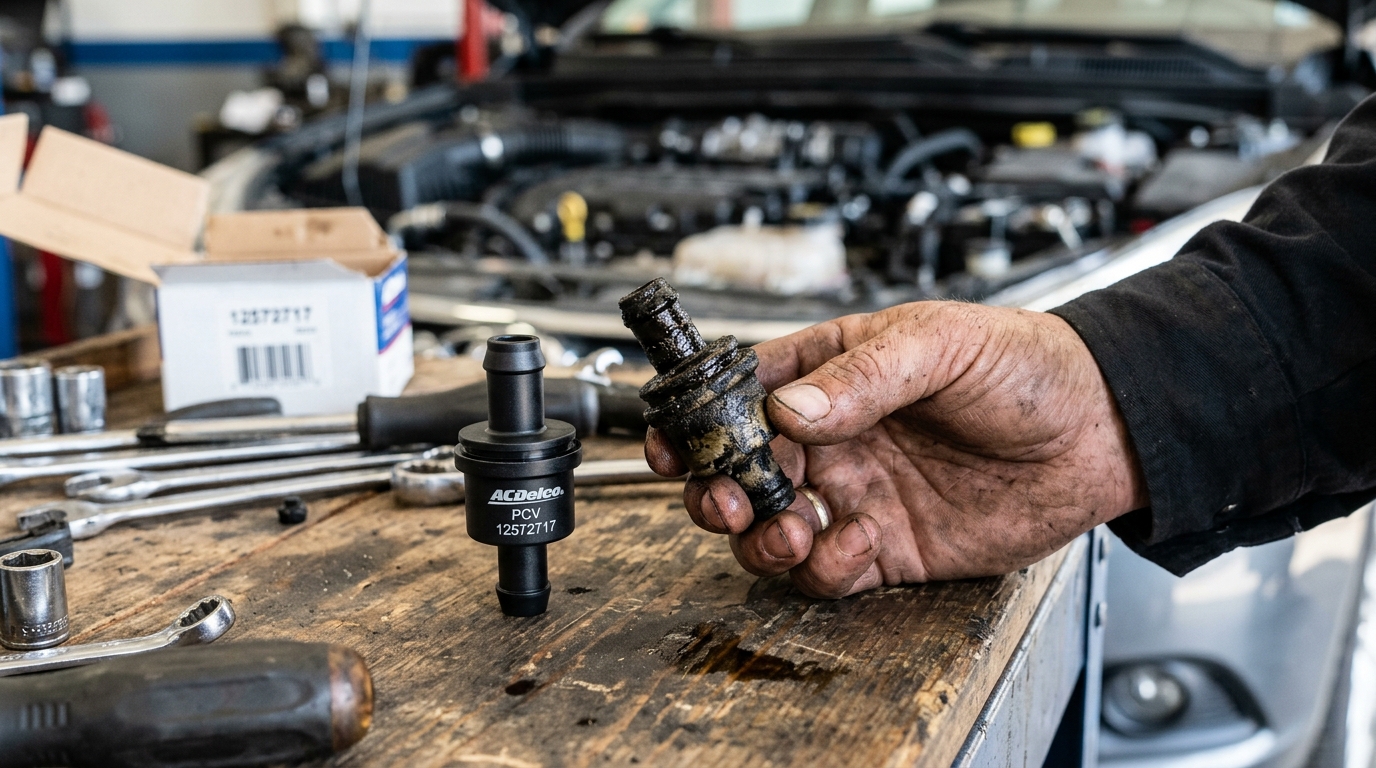
Your car felt totally fine last week. Now it shakes at red lights, smells like oil, and the check engine light just came on. That little part called the PCV valve might be the reason for all of this.
What Is a PCV Valve and Why Does It Matter?
PCV stands for Positive Crankcase Ventilation. It is a small valve in your engine that does a big job. Every engine makes gases inside the crankcase as it runs. These gases are called blowby gases. They sneak past the piston rings and build up pressure.
If those gases stay inside, bad things happen. Oil can get pushed out past gaskets and seals. Your engine oil can mix with moisture and turn into sludge. Your car’s emissions go up.
The PCV valve fixes all of this. It pulls the blowby gases out of the crankcase and sends them back into the intake manifold, where they burn again during normal operation. According to the U.S. EPA, this system has been required on all vehicles since 1963 because it helps reduce harmful hydrocarbon emissions by up to 20%. So when the PCV valve fails, your whole engine feels it.
How Does a PCV Valve Work?
Think of the PCV valve like a one-way door with a spring inside. When your engine is off, the spring pushes the plunger shut. When the engine starts, manifold vacuum pulls the plunger open.
At idle, the vacuum is very high, so the valve opens just a little. This lets a small amount of crankcase gases flow through. When you press the gas, the vacuum drops and the valve opens more to handle the bigger load. If your engine ever backfires, the valve snaps shut to stop fire from getting into the crankcase.
It is a simple system. But when it fails, things go wrong fast.
7 Common PCV Valve Failure Symptoms
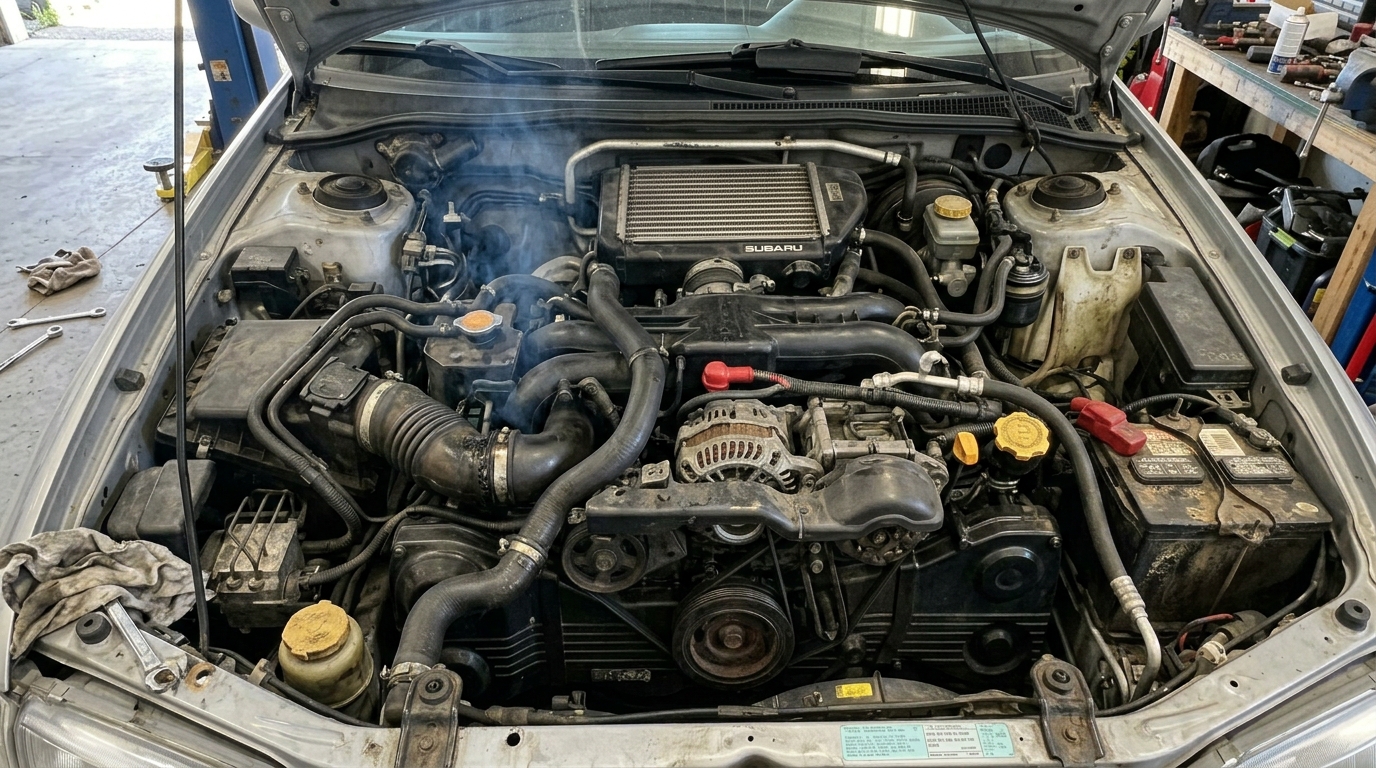
1. Check Engine Light Comes On
The most obvious sign of PCV valve failure symptoms is the check engine light showing up on your dashboard. Modern cars have a powertrain control module (PCM) that watches the air-fuel mixture through oxygen sensors.
When the PCV valve is stuck open or clogged, it messes up the air-fuel balance. The PCM detects this and turns on the light. You will likely see trouble codes like P052E (Positive Crankcase Ventilation Regulator Valve Performance) or P0171 (Fuel System Too Lean Bank 1).
I once ignored a check engine light for two weeks. It turned out to be a bad PCV valve causing a lean mixture. The fix cost me $40 for the part. But I had also worn out one of my spark plugs by then. Lesson learned.
Use an OBD2 scanner to check the trouble code first before guessing the cause.
2. Rough Idle or Engine Stalling
If your car shakes or trembles when you stop at a light, a bad PCV valve could be causing it. When the valve is stuck open, too much air enters the engine through the crankcase ventilation path. This creates an unplanned air leak, similar to a vacuum leak.
The result? Your air-fuel ratio goes wrong. The engine does not know how to handle the extra air, so it shakes and stutters. Some cars even stall completely.
This is one of the most noticeable PCV valve failure symptoms in everyday driving.
3. Oil Leaks Under the Car
Find oil spots where you park your car? A clogged PCV valve could be the reason. When the valve is blocked, crankcase pressure builds up with nowhere to go. That pressure pushes oil out past the valve cover gasket, seals, and other weak spots in the engine.
You might see oily residue around the oil cap, or a film on the underside of it. You might also find oil leaking from the valve cover or near the intake manifold.
If left alone, this oil leak can foul your spark plugs and cause even bigger problems.
4. Increased Oil Consumption
Are you adding oil more often than before? A PCV valve stuck in the open position can suck oil right out of the crankcase when engine vacuum is very high. This oil gets burned inside the combustion chambers.
Your car uses oil faster than normal. You notice the dipstick reading drops quicker between oil changes. This is a quiet PCV valve failure symptom that many people miss for months.
5. Smoke Coming From the Exhaust
Colored smoke from your tailpipe is never a good sign. With PCV valve problems, you can see:
Blue smoke means oil is burning in the combustion chamber. This happens when a clogged valve pushes oil vapor up into the cylinders. White or gray smoke can mean the air-fuel mixture is off because of a bad valve. Black smoke sometimes happens when the mixture becomes too rich.
If you see blue smoke and your oil level keeps dropping, your PCV system is a strong suspect.
6. Sludge Buildup Inside the Engine
This one is sneaky. A clogged PCV valve stops moisture from leaving the crankcase. That moisture mixes with your engine oil over time. What you get is a thick, dark, sticky mess called engine sludge.
Sludge is very bad. It blocks oil passages and starves engine parts of lubrication. It can cause serious and expensive engine damage. If you pop open your oil filler cap and see a thick brownish gunk, sludge has likely started to form.
According to a technical overview by the American Automobile Association (AAA), engine sludge is one of the leading causes of premature engine failure in vehicles with poor maintenance routines.
7. Whistling or Hissing Sounds From the Engine
Do you hear a strange whistling or hissing sound near your engine? That sound often comes from the PCV hose or valve area. It usually means there is a partial blockage or a cracked hose causing a small vacuum leak.
The sound might be soft and easy to miss when music is playing. But if you turn off the radio and listen while the car idles, you might catch it. A hissing near the valve cover or intake area is a classic sign the PCV system needs attention.
What Happens When You Ignore PCV Valve Failure Symptoms?
Short-Term vs. Long-Term Damage
In the short term, a bad PCV valve might just give you a rough idle or a check engine light. Not too scary. But if you keep driving with it, here is what can happen over weeks and months:
Blown gaskets from excessive crankcase pressure. Fouled spark plugs from oil entering the combustion chamber. Catalytic converter damage from oil burning in the exhaust. Engine sludge building up and blocking oil flow. Worn piston rings from increased blow-by and pressure.
The longer you wait, the more expensive the repair gets.
Can You Drive With a Bad PCV Valve?
Honestly, you can drive short distances. But driving long distances or at highway speeds with a bad PCV valve is not smart. The higher RPMs increase crankcase pressure faster. Oil leaks can worsen quickly. The engine can start misfiring or losing power.
Most mechanics will tell you to fix it right away. A PCV valve replacement costs between $50 and $250 total, including parts and labor. The valve itself is usually just $10 to $50. That is a very small price to avoid a $1,000 engine repair later.
How to Diagnose a Bad PCV Valve at Home
Simple Tests You Can Try Yourself
You do not need fancy tools to get a good idea of what is going on.
The hose suction test: Start the engine and let it warm up. Disconnect the PCV hose from the valve cover and place your finger over the end of it. You should feel a gentle suction pulling at your finger. If you feel nothing, the valve or hose might be clogged. If the engine idle drops dramatically, the valve might be stuck open.
The rattle test: With the engine off, remove the PCV valve and shake it. A good valve rattles because the spring and plunger move freely inside. No rattle usually means it is clogged or stuck.
Visual inspection: Look at the PCV hose for cracks, soft spots, or oil buildup. Check the valve for heavy black deposits or oil gunk. Squeeze the hose to see if it collapses easily.
If you find any of these problems, it is time to replace the valve. Most PCV valves are easy to access and replace in under 15 minutes. Manufacturers usually recommend replacing the valve every 20,000 to 50,000 miles, though many last much longer.
Conclusion
PCV valve failure symptoms are not always easy to spot right away. A shaky idle here, an oil spot there. But these small clues are your engine trying to tell you something. The PCV valve is one of the cheapest parts in your car. Fixing it early saves you from expensive engine damage later.
If you notice blue exhaust smoke, rough idling, oil leaks, or a check engine light showing lean mixture or crankcase ventilation codes, check your PCV valve first. It might just be a $20 fix.
Have you ever dealt with a bad PCV valve in your car? I would love to hear how it showed up for you. Drop a comment below and share your experience.
Frequently Asked Questions
What are the most common PCV valve failure symptoms?
The most common PCV valve failure symptoms include rough idle, blue exhaust smoke, oil leaks, increased oil consumption, engine sludge buildup, a check engine light, and hissing sounds near the engine. Any one of these can point to a faulty PCV valve or clogged PCV hose.
How do I know if my PCV valve is stuck open or stuck closed?
If your PCV valve is stuck open, you will usually notice a rough idle, poor air-fuel mixture, misfires, and higher oil consumption because too much vacuum sucks oil out of the crankcase. If it is stuck closed, you will see oil leaks, sludge buildup, and possibly blue exhaust smoke because pressure has nowhere to escape.
Is it safe to drive with a bad PCV valve?
You can drive short distances, but it is not safe long term. A bad PCV valve causes growing crankcase pressure, which leads to gasket damage, oil leaks, and engine sludge. The longer you drive with it, the more expensive the repairs become. Replace it as soon as possible.
How often should I replace my PCV valve?
Most car makers suggest replacing the PCV valve every 20,000 to 50,000 miles. Some valves last well over 100,000 miles. A good rule is to inspect it at every major tune-up. If you hear rattling when you shake it and feel good suction from the hose, it is likely still working fine.
Can a bad PCV valve cause engine sludge?
Yes. A clogged PCV valve traps moisture and blowby gases inside the crankcase. This moisture mixes with engine oil and forms thick, dark sludge over time. Engine sludge blocks oil passages and can cause serious engine damage. Regular PCV valve maintenance helps prevent sludge buildup.