
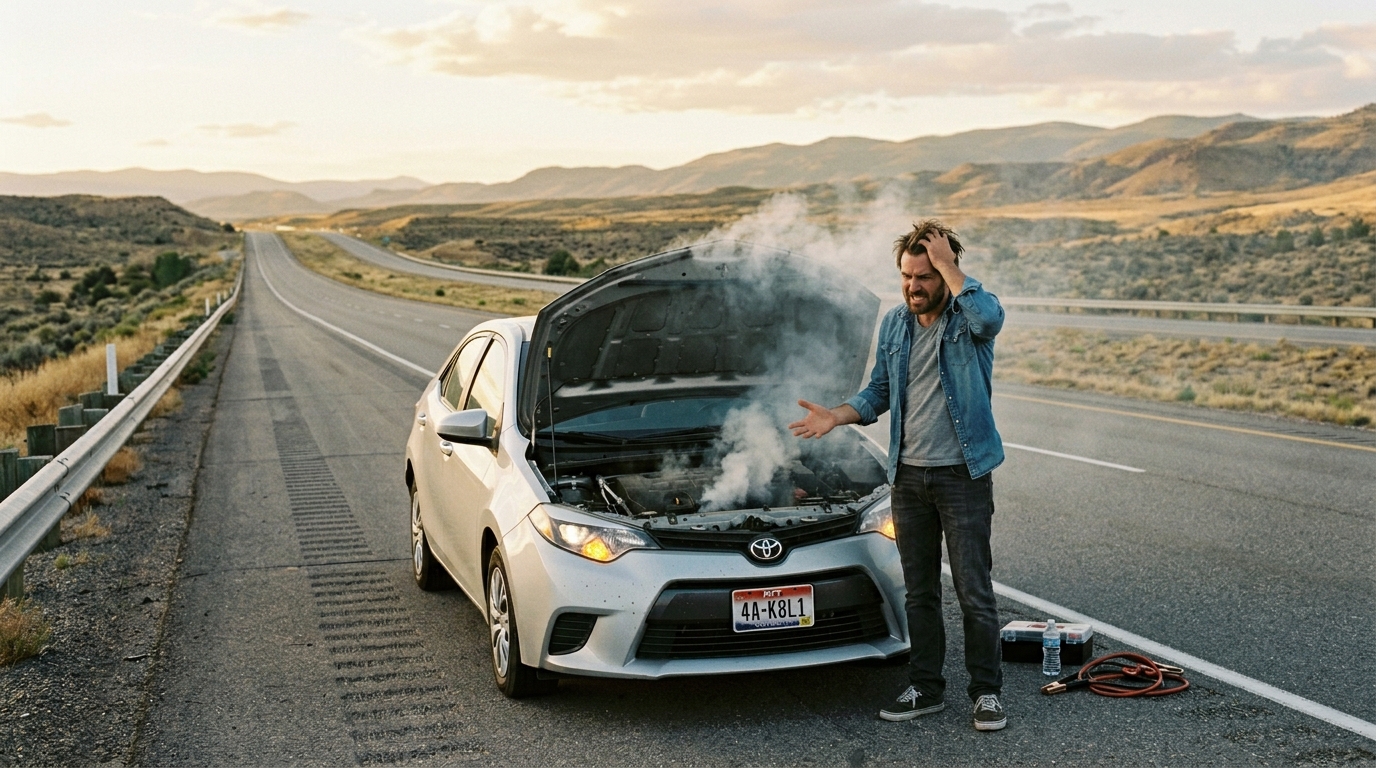
The most common causes of engine failure are things most car owners never think about until it is too late. One day, your car runs fine. The next day, you hear a knock, see smoke, or just sit on the side of the road with no idea what went wrong. I have seen this happen to friends who thought their car was “fine” because it started every morning. Spoiler: starting is the lowest bar. Your engine can be slowly dying and still start just fine.
Why Engine Health Matters More Than You Think
Your engine is basically a very expensive, very precise machine that spins thousands of times every minute. Everything inside has to work together perfectly. When one part fails, it usually takes a few others down with it. Engine repair costs in the US can go from a few hundred dollars for small fixes to over $10,000 for a full rebuild or replacement.
The sad truth? Most engine breakdowns are totally avoidable. They do not happen because of bad luck. They happen because of skipped maintenance schedules, ignored warning signs, or just not knowing what to watch out for.
How One Small Problem Can Destroy a Big Engine
Think of your engine like a line of dominoes. One falls, and the rest follow fast. A small oil leak leads to low oil pressure. Low oil pressure means parts rub against each other with no protection. That heat builds up, causing overheating. Overheating can blow a head gasket. A blown head gasket can crack the engine block. Now you need a new engine. It all started with a small leak you could have fixed for under $100.
1. Low or Dirty Engine Oil: The #1 Killer
CAUSE #1
If there is one thing every car owner must understand, it is this: engine oil is not optional. It is the difference between an engine that lasts 200,000 miles and one that dies at 80,000. And yet, skipping oil changes is one of the most common things people do.
Why Oil Matters So Much
Motor oil does three big jobs. It lubricates moving parts so metal does not scrape against metal. It carries heat away from hot engine parts. And it picks up tiny bits of dirt and carries them to the oil filter, which catches them before they cause damage. When your oil is old or low, it stops doing all three jobs properly.
Honestly, I have talked to mechanics who say that at least half of the engine seizures they see are directly tied to dirty oil or low oil levels. Half. That is a huge number for something so easy to fix.
Warning
According to a 2025 report from automotive service experts, modern engines are far less forgiving of missed oil changes than older engines. Sludge buildup, varnish, and micro-particles form much faster in today’s tight-tolerance engines, and the damage can become permanent quickly. Source: CleverdDude, April 2026
What Happens When You Skip Oil Changes
When you skip an oil change, the oil breaks down. It gets thick and dark. It stops flowing properly through the tiny passages inside your engine. Sludge formation starts to block lubrication pathways. Parts that should be swimming in oil are now running dry. The friction creates heat. The heat creates more damage. It is a cycle that only ends one way: catastrophic engine failure.
If your car has a turbocharger, this is even more serious. Turbos spin at incredible speeds and depend on a constant flow of clean oil. Turbo failure from neglected oil changes can cost $2,000 to $4,000 on its own, before you even look at what else broke. Source: Matt’s Automotive Service Center
Quick Fix
Check your oil every month. Use the right oil viscosity that your car manufacturer recommends. Change it at the interval in your manual, usually every 5,000 to 7,500 miles for conventional oil or every 10,000 miles for full synthetic oil.
2. Engine Overheating: Silent but Deadly
CAUSE #2
Your engine runs hot by design. But there is a limit. When it gets too hot, metal parts warp. Gaskets fail. Coolant boils. And things that were never meant to touch start grinding against each other. Engine overheating is one of the most dangerous things that can happen to your car.
I remember my cousin driving through a desert highway in Arizona one summer. He noticed the temperature gauge was high but thought it would go back down. It did not. He drove another 15 minutes. By the time he pulled over, the head gasket was blown, and one of the cylinder walls was cracked. The repair cost more than the car was worth.
What Causes an Engine to Overheat?
The cooling system is what keeps your engine from getting too hot. It uses coolant (also called antifreeze), a water pump, a radiator, and a thermostat to move heat out of the engine. When any one of these parts fails, the whole system stops working.
The most common reasons your engine overheats:
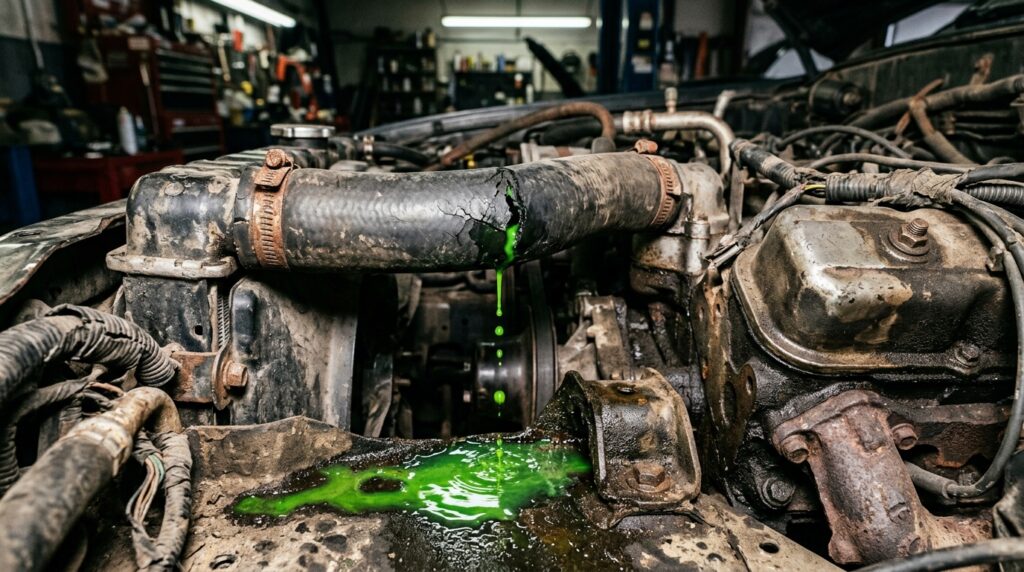
- Low coolant levels — A leak in the hose or radiator means not enough fluid to carry heat away
- Faulty thermostat — A stuck thermostat blocks coolant circulation completely
- Radiator blockages — Clogged radiators trap heat inside
- Water pump failure — No pump means no coolant movement
- Broken cooling fan — At low speeds, the fan must push air through the radiator
How to Stop Overheating Before It Starts
Check your coolant level every month. It takes two minutes. Look at the small plastic tank under the hood marked “MIN” and “MAX.” If it is close to MIN, top it off. Have the cooling system inspected once a year. And if your temperature gauge ever goes into the red, pull over right away and turn off the engine. Do not keep driving.
In-Content Image Prompt #2
A close-up, realistic photograph of a car engine bay showing a cracked radiator hose with green coolant dripping from it. The engine is dirty and slightly worn, showing real use. Overhead shop lighting. Slightly dramatic contrast to highlight the leak. No people in the frame, just the engine with the focus on the damaged hose and the puddle forming below.
3. Timing Belt or Chain Failure
CAUSE #3
This one is scary because it often happens with zero warning. One second, everything is fine. Next, the engine makes a terrible sound and dies. Timing belt failure is one of the most destructive engine failures you can have.
Why the Timing Belt Is So Important
Your engine has many parts that have to move in perfect time together. The camshaft opens valves. The crankshaft moves the pistons. The timing belt (or timing chain) connects them and keeps everything in sync. If the belt breaks or slips, the valves and pistons collide. Bent valves, broken pistons, and a wrecked engine can all happen in less than a second.
Warning Signs of a Failing Timing Belt
Sometimes there are warning signs. Listen for a ticking or rattling noise from the top of the engine. Watch for loss of power or rough running. But often, there are no signs at all. That is why you need to follow your manufacturer’s timing belt replacement schedule, usually between 60,000 and 100,000 miles depending on the car.
Important: Many modern cars use a timing chain instead of a belt. Chains are more durable but can still stretch or fail over time, especially if engine oil is not changed regularly. Keep your oil clean, and your chains will last much longer.
4. Fuel System Problems
CAUSE #4
Your engine needs the right amount of fuel at the right pressure at the right time. When the fuel system fails, the engine does not get what it needs to run properly. Over time, this causes wear and can lead to full engine failure.
Clogged Injectors and Fuel Pump Failure
Dirty fuel injectors cannot spray fuel properly into the combustion chamber. The engine misfires, runs rough, and burns more fuel than it should. A weak fuel pump cannot keep up with the engine’s demand, especially at high speed. You might feel the car sputtering or losing power when you accelerate hard. These are signs the fuel system needs attention.
How Bad Fuel Destroys Engines Slowly
Contaminated fuel is a bigger problem than most people realize. Water in the fuel tank, old fuel that has gone stale, or resin deposits from low-quality gas can clog fuel filters and injectors. Replace your fuel filter according to your service schedule. Use fuel from busy, reputable stations where the fuel does not sit in underground tanks for too long.
Pro Tip
Use a fuel system cleaner once or twice a year. It removes carbon deposits and keeps injectors spraying properly. Just make sure to use one made for your engine type (petrol vs. diesel).
5. Engine Knocking and Detonation
CAUSE #5
If your engine makes a knocking or pinging noise, do not turn up the radio and hope it goes away. That sound is your engine telling you something is very wrong. Engine detonation is a serious condition that can destroy internal parts fast.
What Is Engine Detonation?
Detonation (also called knocking) happens when the air-fuel mixture in the combustion chamber ignites at the wrong time or in the wrong way. Instead of one smooth, controlled burn, you get multiple small explosions. These send a strong blow to the top of the piston. Over time, this cracks piston rings, damages the pistons themselves, and can even blow the head gasket.
Common causes of detonation include using fuel with the wrong octane rating, a bad oxygen sensor, a faulty EGR system (exhaust gas recirculation), or incorrect ignition timing. Detonation is often confused with pre-ignition, where a hot spot in the chamber (like a hot spark plug or sharp edge) ignites the fuel too early.
Why You Should Never Ignore That Knocking Sound
To be fair, sometimes a light knock can be from low-octane fuel. Fill in the correct grade and see if it goes away. But if the knock is heavy, rhythmic, or gets louder when you accelerate, get it checked immediately. Rod bearing failure, which causes a deep, heavy knock, is one of the most expensive repairs you can face. It often means a full rebuild. Prolonged detonation will crack rings, damage pistons, and destroy the engine.
6. Ignoring Warning Signs Until It Is Too Late
CAUSE #6
This one is not a mechanical failure. It is a human failure. And honestly, it is the most common cause of all. People see a warning light and think, “It is probably nothing.” They hear a strange noise and think, “It will sort itself out.” It will not. Engines do not heal themselves.
Dashboard Warning Lights and What They Mean
Your car’s check engine light is not a decoration. When it comes on, the computer has detected a problem. It could be small, like a loose gas cap. Or it could be serious, like a bad oxygen sensor causing the engine to run with the wrong air-fuel mixture. An oil pressure warning light is an emergency. Pull over. Turn off the engine. Call for help. Driving even a few miles with low oil pressure can cause permanent damage.
Strange Noises Your Engine Should Not Be Making
A healthy engine is relatively quiet. You should know what “normal” sounds like for your car. Any new sound, especially knocking, ticking, squealing, or grinding, deserves attention. Ticking near the top of the engine often points to low oil or a valve issue. Rattling on startup can mean the timing chain is stretched. A deep knock usually means serious internal damage. None of these sounds “go away on their own.”
Final Advice
Get a professional diagnostic the moment you see a warning light or hear something new. A $100 diagnostic visit is always better than a $6,000 engine repair. Prevention is not just smart; it is cheap.
Conclusion
So, what are the most common causes of engine failure? Mostly, they come down to neglect. Low or dirty engine oil, overheating from a failing cooling system, a broken timing belt, bad fuel system parts, detonation, and ignoring warning signs are the big ones. None of these are mysteries. They all have clear causes and clear solutions.
The engines that last 200,000 miles or more are not lucky. They are well cared for. Regular oil changes, coolant checks, following the manufacturer’s maintenance schedule, and listening to your car make the difference. I would love to hear your experience. Have you had an engine problem? What caused it? Drop a comment below. Your story might help someone else catch a problem early.
Frequently Asked Questions
What is the single most common cause of engine failure?
The most common cause is a lack of proper lubrication. This usually comes from low engine oil, dirty oil that has broken down, or a skipped oil change. Without oil, metal parts rub together, overheat, and can seize completely. It is preventable with simple, regular maintenance.
Can overheating permanently damage my engine?
Yes, absolutely. Severe or repeated overheating can warp metal parts, blow the head gasket, crack the engine block, and cause cylinder wall damage. Some of this damage cannot be repaired and requires a full engine replacement. Always stop driving immediately if your temperature gauge goes into the red.
How do I know if my timing belt is about to fail?
Warning signs include a ticking or rattling sound from the engine, rough idling, difficulty starting, and loss of power. However, timing belt failure often happens with no warning at all. The safest approach is to replace it at the manufacturer’s recommended interval, typically between 60,000 and 100,000 miles.
Does using low-quality fuel cause engine failure?
Contaminated fuel or consistently using the wrong fuel grade can cause fuel injector clogging, detonation, and, over time, serious engine damage. Always use the octane rating your car manufacturer recommends and fill up at reputable stations. Using a periodic fuel system cleaner also helps keep injectors clean.
What should I do when my check engine light comes on?
Do not ignore it. Get a professional diagnostic scan as soon as possible. The check engine light can signal anything from a loose gas cap to a serious engine performance issue. If the light is flashing (not steady), pull over and call for help, as a flashing light usually means active engine misfires that can cause serious damage quickly.