
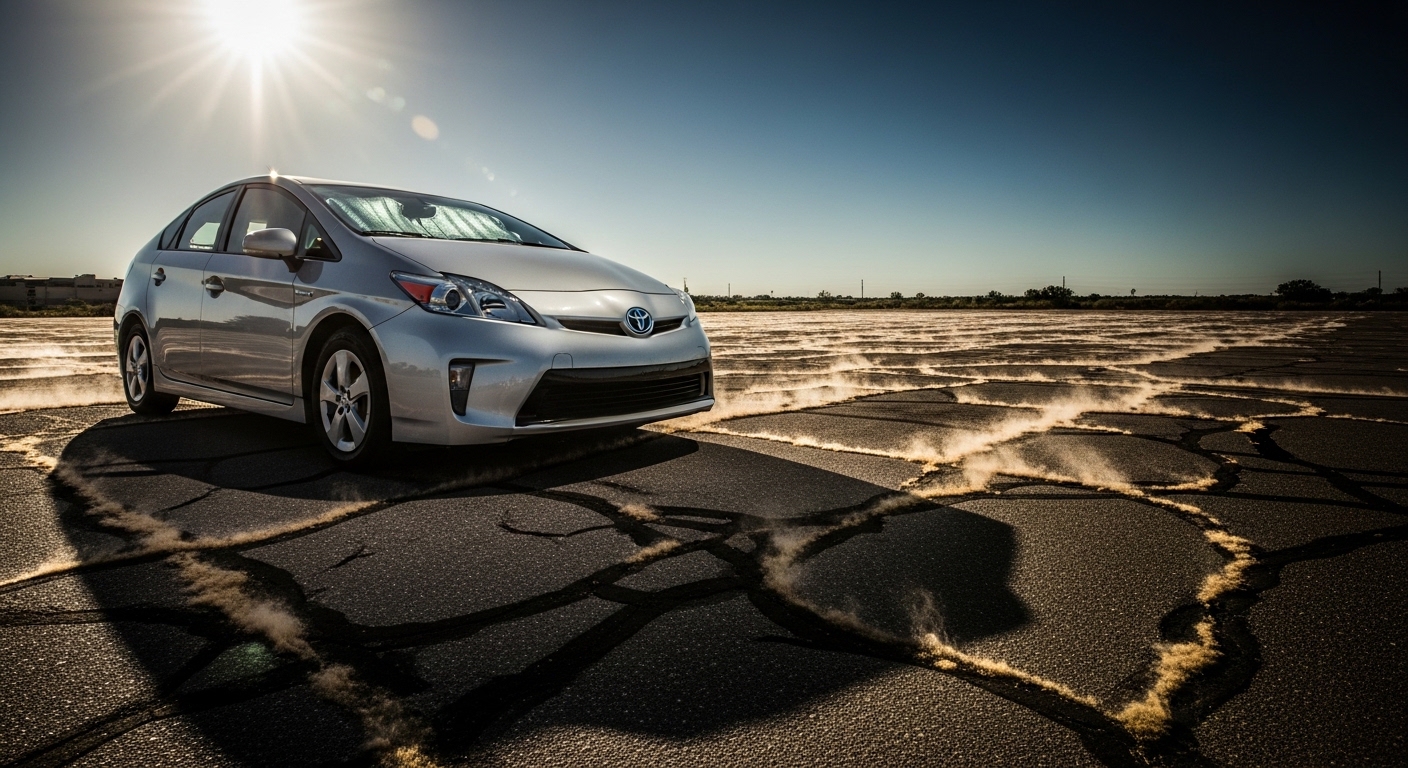
What Happens Inside a Hybrid Battery When It Gets Too Hot
Your hybrid battery runs on science. Inside it, tiny chemical reactions happen every time you drive. These reactions move energy in and out of the battery. That is totally normal. But here is the problem. When extreme heat hits, those same reactions speed up way too fast. It is like cooking something on high heat when it was meant to cook slowly.
When the battery temperature gets too high, the electrolytes inside the battery can start to dry out or break down. In older nickel-metal hydride (NiMH) batteries, you can even get battery swelling or bubbling. That means the battery loses its ability to hold a charge properly. Over time, this leads to battery degradation, which means your battery gets weaker even if the car looks fine on the outside.
I had a friend in Houston who drove a Toyota Prius for years. He never thought twice about his battery. Then one summer, his fuel economy started dropping. He later found out his battery cells had already taken serious heat damage. It was an expensive lesson.
Quick fact: According to AAA, battery life in hot southern regions averages only 41 months, compared to 58 months in cooler northern states. That is nearly 17 fewer months of battery life just because of where you live.
How Hot Is Too Hot for a Hybrid Battery?
You might be wondering, “Okay, but how hot is actually dangerous?” Most hybrid batteries perform best at around 80 degrees Fahrenheit. Once the air temperature climbs to 95 degrees Fahrenheit, things get tricky fast.
According to the Les Schwab tire experts, once it hits 95 degrees outside, you can lose up to 17% of your battery performance. Now think about a summer day in Texas, Georgia, or Florida, where temps easily hit triple digits. Your battery is working hard while also slowly getting worn down. That is a double hit to your battery life.
Warning Signs Your Hybrid Battery Is Struggling in Southern Heat
Dashboard Warnings and What They Mean
Your car is actually pretty good at telling you something is wrong. You just have to know what to look for. One of the first signs of battery degradation in hot climates is a drop in your fuel efficiency. If you are suddenly using more gas than normal, your electric motor is probably not doing its job like it used to.
Other warning signs include dashboard warnings that show up out of nowhere, especially after a long, hot drive. You might also notice that the car feels sluggish when starting or that the electric range feels shorter than it used to be. Some drivers also hear the hybrid battery fan running constantly. Honestly, if that fan seems like it never stops, that is your car basically yelling at you to check the battery.
According to AAA’s automotive engineering director Greg Brannon, when your miles per gallon drops by 10 to 15 percent, it is time to book a service visit. Do not wait until the car breaks down on a hot highway. That is not fun for anyone.
How to Check Your Battery Health Without a Mechanic
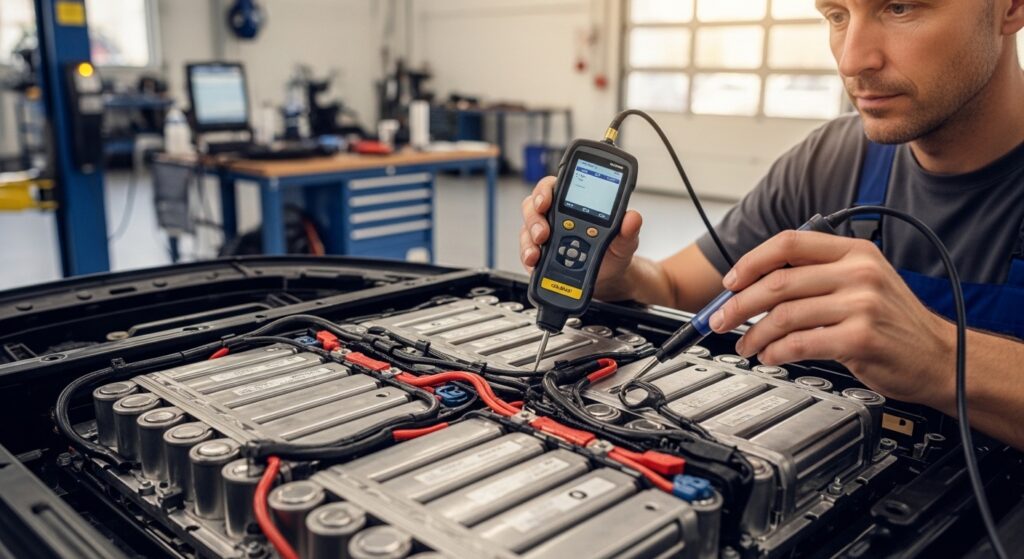
You do not always need to go to a shop to get a basic idea of how your battery is doing. Most modern hybrids come with a battery health monitoring display inside the car. Check your dashboard or infotainment screen for any battery temperature readings or energy flow displays.
Also, watch your gas pump. Seriously. If you are suddenly filling up more often without driving more, that is a sign. Your battery capacity may be shrinking. The internal combustion engine (ICE) is picking up the slack that your battery can no longer handle. That means more fuel, more cost, more trips to the gas station.
Honestly, this is the part most hybrid owners in the South skip. They assume the car will just tell them when something is seriously wrong. But by then, the damage is already done, and the repair bill is not small.
How Long Does a Hybrid Battery Last in the South?
North vs South: The Battery Life Gap Is Real
Let me put this simply. If you drive the same hybrid car in Minnesota versus Miami, the battery in Miami will likely die sooner. That is just the truth. Hot climates cause battery stress that builds up slowly over time, and there is no way to completely stop it. You can only slow it down.
Most hybrid battery warranties cover 8 years or 100,000 miles. Under normal conditions in moderate climates, a hybrid battery can last 8 to 15 years or even 100,000 to 200,000 miles. But in warm places like Arizona, that same battery might need replacement within just 8 years, according to data shared by The Battery Tips. In cooler states like New York, the same car might push closer to the 15-year mark.
The difference comes down to battery chemistry. Heat speeds up the natural aging of lithium-ion (Li-ion) and NiMH batteries. Every day parked in the blazing southern sun causes tiny amounts of wear. Add up thousands of those days, and you get a battery that gives out years too soon.
Battery Replacement Cost and What to Expect
So what happens when the battery finally gives out? Well, replacing a hybrid battery pack is not cheap. Depending on the make and model, you are looking at anywhere from $1,000 to $6,000 for a replacement. Some models, like the Toyota Prius, are on the lower end, while luxury hybrids like the Lexus RX 450h can push toward the top.
The good news is that in newer vehicles, it may sometimes be possible to replace individual battery cells rather than the whole pack. This can save money. But for most older hybrids, you will likely need to replace the entire battery pack. Either way, the best move is to catch problems early through regular battery inspections and routine maintenance.
How to Protect Your Hybrid Battery from Southern Heat
Simple Parking and Charging Habits That Actually Help
The easiest thing you can do for your hybrid battery life in the South is change where and how you park. Parking in the shade or inside a garage makes a real difference. When your car sits in direct sunlight on a 100-degree day, the inside can reach 150 degrees or more. That heat travels to your battery compartment and bakes it from the outside in.
If you cannot find shade, use a windshield sunshade. It sounds like a small thing, but it keeps the cabin noticeably cooler. And since most hybrid batteries sit under the back seats rather than under the hood, keeping the cabin temperature down actually protects the battery directly.
When it comes to charging, try to avoid leaving the battery at 100% charge for long periods. Aim to keep your state of charge (SOC) between 20% and 80%. A full battery in extreme heat produces more internal heat, which adds to the stress. A smart charger can help you manage this automatically.
Pro tip: Get ceramic window tint installed on your hybrid if you live in a hot state. It does not just look good. It seriously reduces how hot your car gets when parked outside. Many southern hybrid owners swear by it for protecting both their comfort and their battery health.
The Role of Thermal Management in Hot Climates
Most modern hybrid and electric vehicles come with a thermal management system. This is basically a built-in cooling system designed to keep the battery temperature within a safe range. It uses air or liquid to pull heat away from the battery while you drive.
But here is something important. That system has limits. In really extreme southern heat, the thermal management system works overtime. And if the hybrid battery fan or vent ports get clogged with dust, pet hair, or debris, the whole system struggles. Make sure those vents stay clean. A blocked fan can lead to overheating even when the weather is not that extreme.
I think a lot of hybrid owners in the South trust the car to take care of itself too much. The technology is good, but it is not magic. A little bit of attention to battery maintenance goes a long way. I would love to hear if you have had any issues with your hybrid battery in the heat. Drop your thoughts below or share your experience with other southern drivers.
Conclusion
Hybrid battery life in the South is shorter than in cooler states, but that does not mean you are stuck with big repair bills. The key is knowing what the heat does to your battery, watching for warning signs early, and making simple changes to how you park, drive, and charge.
Park in the shade. Keep your cabin cool. Clean your battery fan vents. Avoid full charges in hot weather. And get a battery inspection every year once your car hits 100,000 miles. These steps will not stop aging, but they will slow it down and save you real money in the long run.
Southern driving is tough on batteries. But a well-cared-for hybrid can still give you many years of great fuel efficiency and comfortable driving, even under the blazing southern sun.
Frequently Asked Questions
Does southern heat really shorten hybrid battery life?
Yes, it really does. Hot climates speed up the chemical reactions inside a hybrid battery, which causes it to wear out faster. Studies show that batteries in hot southern states can last as few as 41 months compared to 58 months in cooler northern climates. So yes, where you live matters a lot when it comes to battery lifespan.
How can I tell if my hybrid battery is damaged by heat?
Watch for a drop in your fuel efficiency, dashboard warning lights, or a battery fan that seems to run all the time. If your gas mileage drops by 10 to 15 percent without any change in how you drive, your battery may be struggling from heat-related degradation. Book a battery inspection right away if you notice these signs.
What is the best way to protect a hybrid battery in hot weather?
The best things you can do are park in shade or a garage, use a windshield sunshade, get ceramic window tint, and avoid leaving your battery at a full 100% charge when it is hot outside. Also, keep your battery fan vents clean so the thermal management system can do its job properly.
How much does it cost to replace a hybrid battery in the South?
Hybrid battery replacement costs typically range from $1,000 to $6,000, depending on the make and model of your car. Vehicles like the Toyota Prius tend to be on the lower end. Luxury hybrids like the Lexus RX 450h can be much more expensive. Getting regular battery inspections can help you catch problems before they become full replacements.
Do newer hybrid cars handle southern heat better than older ones?
Yes, newer models have much better thermal management systems and improved battery chemistry that help them handle extreme heat more effectively. Lithium-ion batteries in newer hybrids generally last longer than older NiMH batteries in hot conditions. But no matter the model, regular maintenance and smart habits are still important for protecting your battery life in the South.