
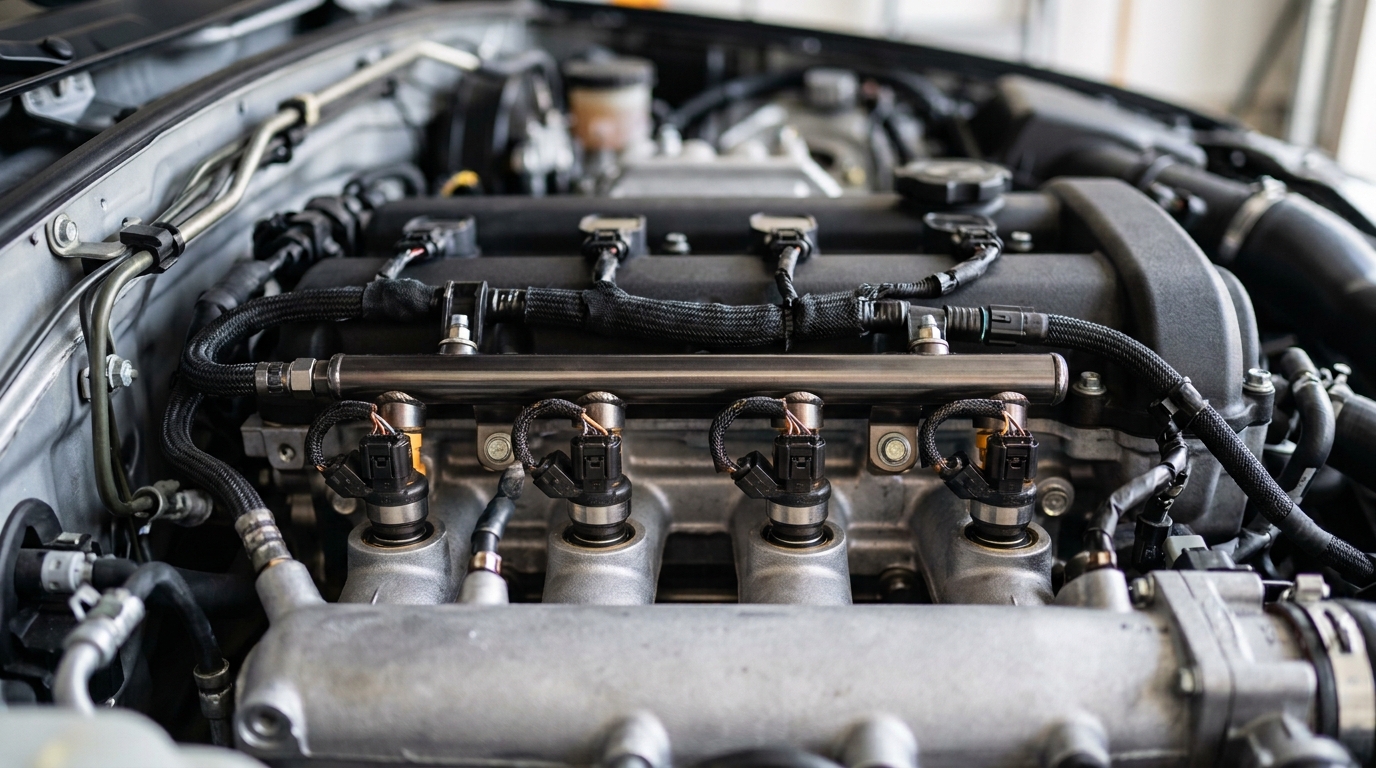
Fuel injector problems symptoms often start small, like a tiny shake at a red light or one bad fill-up where your gas seems to vanish too fast. You shrug it off. Then it gets worse. I have seen this exact thing turn a cheap fix into a huge repair bill, and honestly, it did not have to. Your engine is talking to you. This guide helps you listen before it costs you.
What Does a Fuel Injector Actually Do?
The Simple Job Inside Your Engine
Think of a fuel injector as a tiny spray nozzle. It takes gas and turns it into a fine mist, then sprays it into the combustion chamber at just the right moment.
Each injector works like a small electronically controlled valve. A spring holds it shut, and an electromagnet pulls it open when your car’s computer says go.
Why One Tiny Part Causes Big Trouble
Your engine needs the perfect mix of fuel and air to run smoothly. When one injector sprays too much or too little, that balance breaks.
Most cars have one injector per cylinder. So even one bad part can make the whole engine feel sick. That is why these little pieces matter so much.
Common Symptoms of a Bad Fuel Injector

Engine Misfire, Rough Idle, and Shaking
An engine misfire is one of the most common signs. When the air-fuel ratio is off, the fuel may not burn the right way, and your engine stutters or jerks.
You may also feel rough idling. Your car should sit calm and steady at a stop sign. If it shakes, sputters, or feels like it might stall, a clogged or leaking injector could be the reason.
Well, I will be honest with you. The first time my old sedan started shaking at a red light, I thought it was the whole engine dying. It was just one dirty injector. A simple clean fixed it. The funny part is I had ignored it for weeks.
These vibrations happen because a cylinder is not getting the right amount of fuel. The motor runs uneven, and you feel it through the seat and the wheel.
Poor Gas Mileage and Strange RPM Movement
Are you filling up more often without driving any differently? That poor fuel economy is a classic clue. A stuck-open injector can dump too much fuel, or your engine burns extra to make up for a weak cylinder.
Watch your tachometer too. That is the gauge showing your RPM, or engine speed. A bad injector can make the RPM needle jump around on its own, even when you are not changing gears.
To be fair, lots of things can hurt gas mileage. But when bad mileage shows up with shaking and a rough idle, your injectors move to the top of the suspect list.
More Warning Signs You Should Never Ignore
Hard Starting, Stalling, and Engine Surge
Sometimes your car cranks longer than normal before it starts. In worse cases, it may not start at all. When fuel does not reach the right cylinders, the engine cannot burn it, and starting gets hard.
You might also feel an engine surge. This is when your car lunges or speeds up a little on its own during driving. It happens because the injector sprays fine one second and wrong the next.
I once had a truck that would hesitate, then jump forward like it got spooked. Not fun in traffic. That hesitation and surge combo is a strong injector warning sign.
Fuel Smell, Leaks, and the Check Engine Light
A gasoline smell inside or around your car is a red flag. If an injector or its O-ring seal cracks, fuel can leak out. You may even see fuel pooling under the car.
Please take leaks seriously. Fuel near a hot engine is a fire hazard, so get it checked fast.
The check engine light is the other big one. Modern cars use sensors that watch the injectors. When something looks wrong, the light comes on, sometimes steady and sometimes flashing.
What Causes Fuel Injectors to Go Bad?
Dirty Fuel, Carbon Buildup, and Clogging
The number one enemy is dirt. Over time, carbon deposits and contaminants in your fuel build up and clog the tiny injector opening. This blocks the spray and ruins the mist pattern.
Water is the worst offender. It does not burn, it causes rust, and in bad cases it leads to corrosion inside your fuel system. Old gas station tanks and long storage can sneak water and sediment into your tank.
This is why fuel quality matters more than most people think. According to the U.S. Department of Energy, regular gasoline already contains detergent additives meant to limit deposit buildup in your engine.
Electrical Faults, Cracks, and Bad O-Rings
Not every problem is dirt. Sometimes the wiring or solenoid fails, so the injector never opens right.
Other times the body cracks from heat, or an internal O-ring wears out and lets fuel seep. These small parts cause big headaches.
How to Diagnose a Bad Fuel Injector
Simple Checks You Can Do at Home
Start with your eyes and nose. Look for wet spots, fuel stains, or leaking fuel around each injector. Check the electrical connectors to make sure none are loose or cracked.
If your check engine light is on, an OBD-II scanner can pull the trouble codes. Injector and misfire codes point you in the right direction fast.
Here is my honest take. Most guides tell you to rush to a shop right away. But a quick visual check and a cheap code scan at home can save you money and tell you a lot before you ever pay for labor.
Tests a Mechanic Will Run
A pro can go deeper. They may use an oscilloscope to check the electrical pulse going to each injector.
The best test is a spray pattern test, where a shop watches how each injector sprays. This is hard to do at home, so this part is worth leaving to the experts.
How to Prevent Fuel Injector Problems
Good Fuel and Regular Cleaning Habits
Prevention is cheaper than repair, every single time. Use good-quality gas, keep your fuel filter fresh, and do not let your tank run on empty, since that stirs up sediment.
A bottle of fuel injector cleaner can help too. According to Cars.com, for many drivers, using quality gasoline plus the occasional bottle of injector cleaner is enough to keep injectors working properly, and routine professional cleaning is often not even listed in maker maintenance schedules. .
I learned this the slow way. After one winter where my car sat for months, I started adding a cleaner before a long highway drive. The warm engine and steady fuel flow help the cleaner do its job. My idle smoothed out within a tank.
When to Clean and When to Replace
So when should you act? Many cleaners are made to be used around every 3,000 to 5,000 miles, often paired with an oil change so it is easy to remember.
But cleaning has limits. A cleaner can dissolve soft carbon buildup, yet it cannot fix metal that is worn or a body that is cracked. When chemical cleaning fails and the symptoms stay, that usually means replacement time.
Most injectors are built to last a long stretch, often tens of thousands of miles. Treat them well and they will rarely let you down. Have you checked yours lately? I would love to hear what symptoms led you here.
Conclusion
Fuel injector problems symptoms are your early warning system. A shake at idle, bad gas mileage, a stubborn start, a fuel smell, or a glowing check engine light all deserve a second look.
The good news is simple. Catch these signs early, use clean fuel, and act before small issues grow. Your wallet and your engine will both thank you. If something here matched your car, do not wait. A quick check today beats a big repair tomorrow.
Frequently Asked Questions (FAQs)
What are the first signs of a bad fuel injector?
The earliest signs are usually a rough idle, light shaking at stops, and slowly dropping fuel economy. A misfire or a check engine light often follows. Catching it early keeps the fix small.
Can I drive with a bad fuel injector?
You can, but you should not for long. A bad injector can make your engine run lean, which over time may damage a piston or other parts. It is safer and cheaper to fix it quickly.
Will fuel injector cleaner fix my problem?
Sometimes. A fuel injector cleaner can clear soft carbon buildup and improve a rough idle. But it cannot repair a cracked body or a worn part. If symptoms stay after cleaning, you likely need a deeper fix.
How much does it cost to replace a fuel injector?
Prices vary a lot by car. A single injector can run from around fifty dollars to a few hundred, and most engines have one per cylinder. Catching problems early helps you avoid replacing all of them at once.
How often should fuel injectors be cleaned?
It depends on your car and fuel. Many drivers use a bottle of cleaner every 3,000 to 5,000 miles as easy upkeep. Always check your owner’s manual first, since some makers prefer you skip extra additives.