
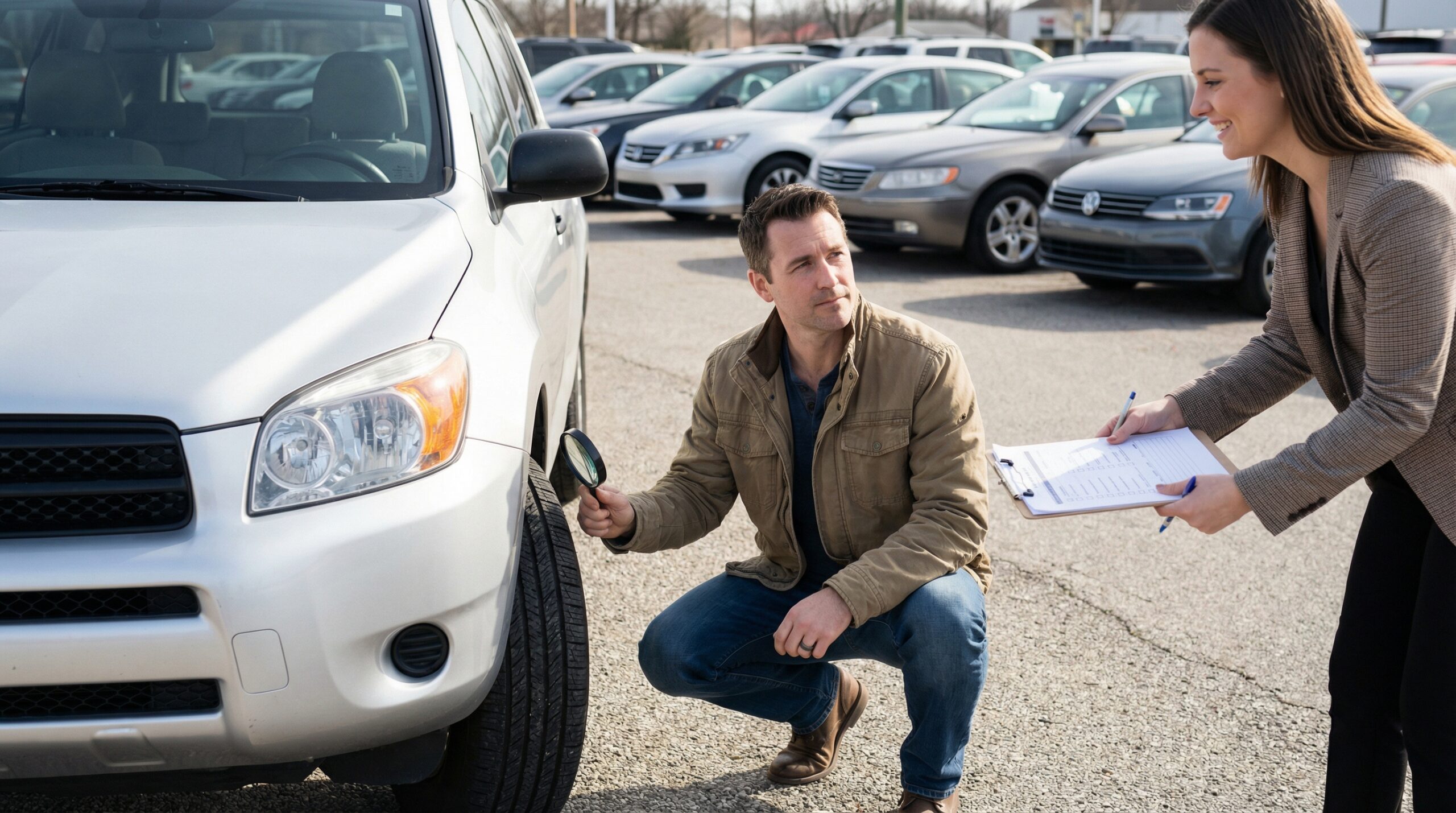
Buying a used car can save you thousands of dollars, but it can also turn into a nightmare if you’re not careful. In Madison County, the market is full of honest dealers and private sellers, but there are also people who’ll try to sell you a lemon. I’ve seen friends get burned, and I’ve made mistakes myself. That’s why I’m writing this guide—to help you avoid the traps and find a reliable vehicle without losing sleep or money.
Why Buying a Used Car in Madison County is Different
Madison County isn’t like buying in a big city. The market here is smaller, more personal, and sometimes that works in your favor. Other times, it means fewer options and sellers who know each other.
You might find a great deal from a local dealer who’s been in business for 20 years. Or you could meet a private seller at a gas station who just wants to get rid of their old sedan fast.
Understanding the Local Market and Pricing Trends
Here’s the thing about Madison County: prices can be all over the place. A truck that’s $8,000 in one county might be $10,000 here just because demand is higher.
I remember looking at a used SUV last year. The seller wanted $12,500, but when I checked Kelly Blue Book, the fair market value was closer to $10,800. I showed him the numbers, and we settled at $11,200.
Always check tools like KBB, Edmunds, or TrueCar before you make an offer. These sites give you a realistic range based on mileage, condition, and local demand.
What Makes Madison County Dealerships Unique
Most dealerships here are small and family-owned. That can be good because they care about their reputation. But it also means they might not have the huge inventory you’d find at a big-city lot.
Some dealers are certified and follow strict standards. Others? Not so much. I’ve walked into places where the cars looked good on the outside, but the paperwork was messy and the vehicle history reports were missing.
If a dealer won’t show you a Carfax or AutoCheck report, that’s a red flag. Walk away.
Red Flags to Watch Out for When Buying a Used Car
Let me be honest: there are scammers out there. And even honest sellers sometimes hide problems because they want to make a sale.
I once test-drove a sedan that seemed perfect. Smooth ride, clean interior, no weird noises. But when I took it to my mechanic, he found frame damage from an old accident. The seller never mentioned it.
Signs of Accident or Flood Damage
Look for paint mismatches. If the hood is a slightly different color than the doors, that car was in an accident.
Check for rust in weird places like under the seats or in the trunk. That could mean flood damage.
Open the hood and look for fresh welds or bent metal. If the frame looks crooked, don’t buy it. According to a study by the National Highway Traffic Safety Administration (NHTSA), vehicles with frame damage are much more likely to have safety issues down the road.
Odometer Fraud and How to Spot It
Odometer fraud is when someone rolls back the miles to make the car seem newer than it is.
Here’s how to catch it: check the wear on the pedals, steering wheel, and seats. If the car has 50,000 miles but the brake pedal is worn down to nothing, something’s wrong.
Also, look at the maintenance records. If the last oil change was at 80,000 miles but the odometer now says 60,000, you’ve got a problem.
How to Check a Used Car’s History Before You Buy
Never, ever skip the vehicle history report. I can’t stress this enough.
A report tells you if the car was in an accident, if it has a salvage title, if it was flooded, or if there are any open recalls.
Why a Vehicle History Report is Non-Negotiable
You need the VIN (vehicle identification number). It’s usually on the dashboard near the windshield or on the driver’s side door.
Plug that VIN into Carfax or AutoCheck. It’ll cost you about $40, but that’s cheap compared to buying a car with hidden damage.
According to Carfax data, about 1 in 5 used cars has a hidden problem that shows up on a history report. Don’t gamble with your money.
Understanding Clean Titles vs. Salvage Titles
A clean title means the car has never been declared a total loss by an insurance company.
A salvage title means the car was damaged so badly that the insurance company wrote it off. Maybe it was in a serious crash or flooded.
Some people rebuild salvage cars and sell them cheap. That’s fine if you know what you’re getting into. But a salvage title will hurt the resale value, and some insurance companies won’t cover them fully.
Where to Buy a Used Car in Madison County
You’ve got three main options: local dealerships, private sellers, or online marketplaces.
Each has pros and cons, and I’ve tried all three.
Trusted Local Dealerships vs. Private Sellers
Dealerships are convenient. They handle the paperwork, they might offer financing, and some even give you a short warranty.
But you’ll pay more. Dealers need to make a profit, so they add a markup.
Private sellers usually sell cheaper because they’re cutting out the middleman. But you’re on your own with the paperwork, and there’s no warranty.
I bought my last car from a private seller. He was honest, had all the service records, and even let me take it to my mechanic before I paid. It saved me about $1,500 compared to dealer prices.
Online Marketplaces: Are They Safe?
Sites like Craigslist, Facebook Marketplace, and AutoTrader are popular, but you need to be smart.
Never send money before seeing the car in person. Meet in a public place. Bring a friend if you can.
If the seller pressures you to decide fast or won’t let you do a test drive, walk away. According to the Federal Trade Commission (FTC), scams are more common on online platforms, especially with sellers who ask for wire transfers or upfront deposits.
The Pre-Purchase Inspection: Your Best Defense
This is the step most people skip, and it’s the biggest mistake you can make.
A pre-purchase inspection costs between $100 and $200, but it can save you thousands.
What a Mechanic Should Check During Inspection
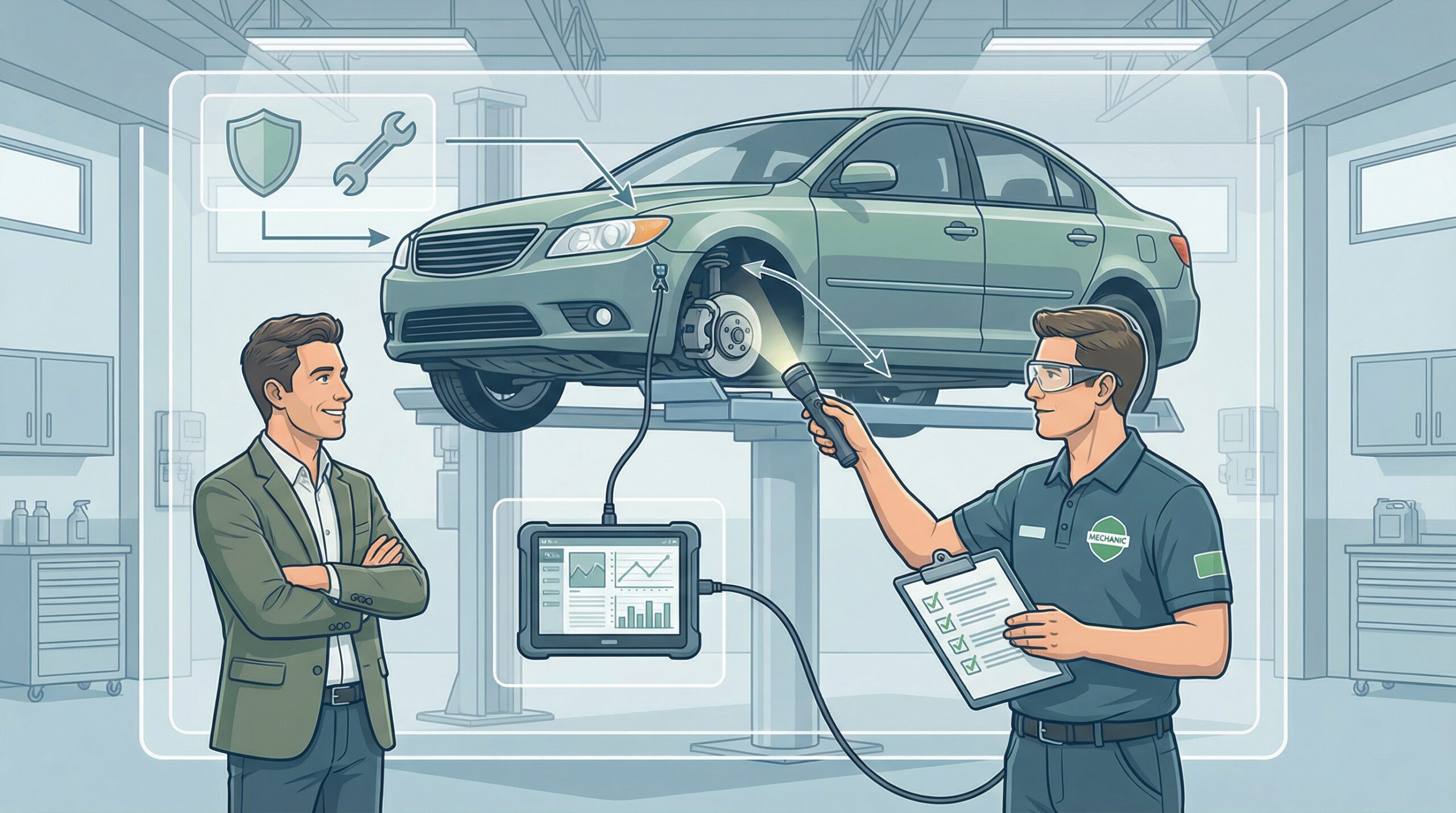
A good mechanic will check the engine, transmission, brakes, tires, suspension, and fluids.
They’ll also look under the car for leaks, rust, or damage. They might plug in a scanner to check for error codes.
I had a mechanic find a bad timing belt on a car I almost bought. The seller swore everything was fine, but replacing that belt would’ve cost me $800. I walked away and found a better car the next week.
How Much Does a Pre-Purchase Inspection Cost?
Most shops in Madison County charge $100 to $150 for a basic inspection. Some charge up to $200 if they do a really detailed check.
It’s worth every penny. Think of it as cheap insurance.
Negotiating the Best Price on a Used Car
Nobody likes haggling, but if you don’t negotiate, you’re leaving money on the table.
I used to be terrible at this. I’d see a price and just accept it. Then I learned a few tricks.
How to Research Fair Market Value
Before you make an offer, know what the car is actually worth.
Check Kelly Blue Book, Edmunds, and NADA guides. Look at similar cars for sale in your area.
If the seller is asking $9,000 but the market value is $8,200, you’ve got room to negotiate.
Tactics to Get the Dealer to Lower the Price
Point out flaws. If the tires are worn, the brakes squeak, or there’s a scratch on the bumper, use that to justify a lower offer.
Be willing to walk away. Seriously. If the seller won’t budge and you’re not comfortable with the price, leave. Half the time, they’ll call you back with a better offer.
I once walked out of a dealership because they wouldn’t drop the price by $500. Two days later, the salesman called and agreed to my number.
Financing and Payment Options in Madison County
If you’re not paying cash, you need to think about financing.
This is where people get tricked into bad deals.
Should You Finance Through the Dealer or Your Bank?
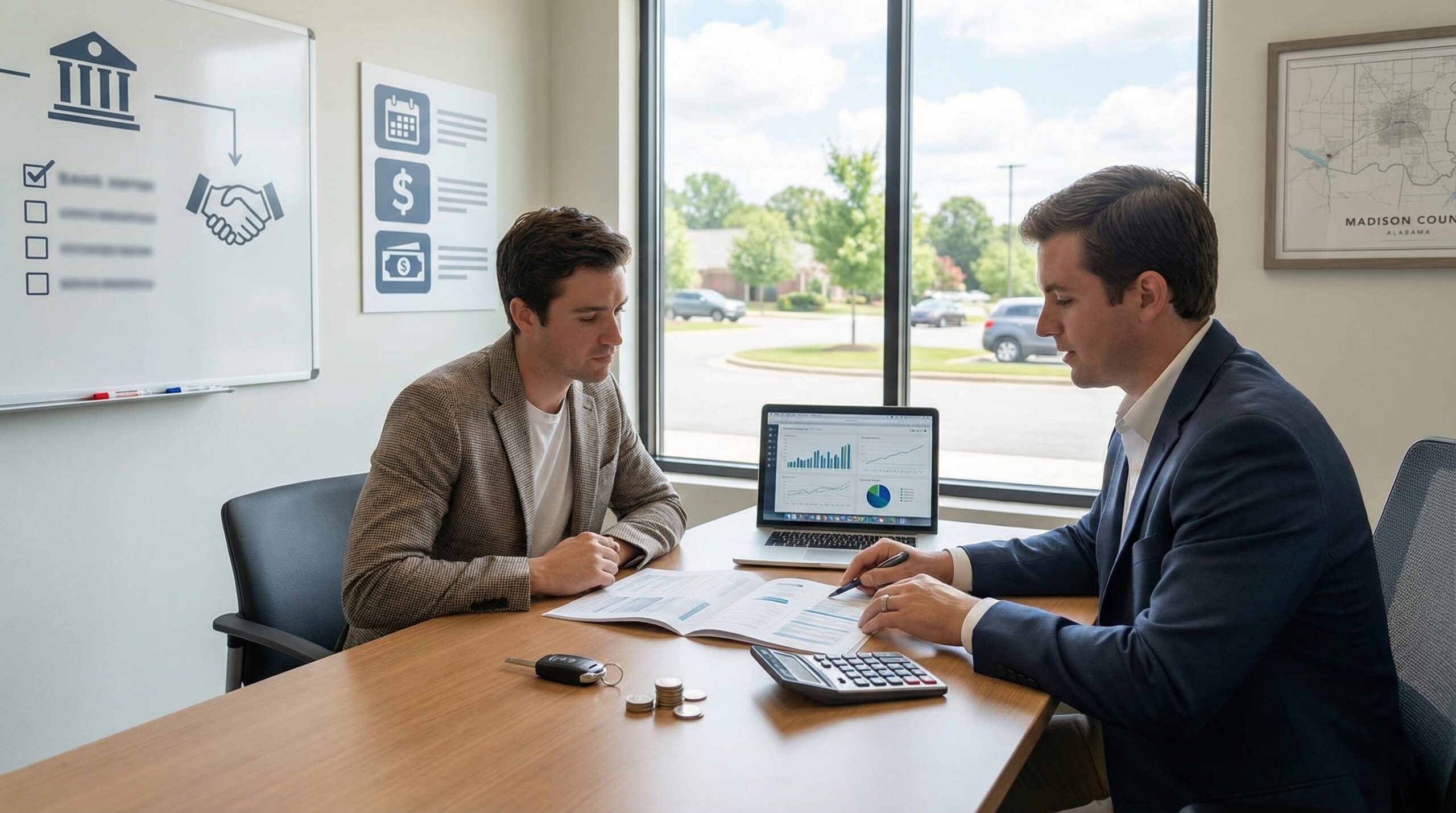
Dealers will offer you financing, but their interest rates are often higher than what you can get from a bank or credit union.
Before you go car shopping, get pre-approved for a loan from your bank. That way, you know your rate and your budget.
According to the Consumer Financial Protection Bureau (CFPB), buyers who get pre-approved loans tend to pay lower interest rates and have more negotiating power.
Hidden Fees to Watch Out for at Closing
Watch out for documentation fees, dealer fees, and random charges like “reconditioning” or “advertising fees.”
Some dealers add $500 to $1,000 in junk fees at the last minute. Ask for an itemized breakdown before you sign anything.
If something looks fishy, question it. Don’t let them pressure you into signing fast.
Finalizing the Deal: Paperwork and Legal Steps
You’ve found the car, you’ve negotiated the price, and now it’s time to close the deal.
Don’t rush this part. Bad paperwork can haunt you later.
What Documents You Need to Complete the Sale
You’ll need the title, a bill of sale, and proof of insurance.
If you’re buying from a private seller, make sure the title is signed over to you correctly. Any mistakes mean a trip to the DMV.
Keep copies of everything: the bill of sale, the title transfer, and any warranty paperwork.
Understanding Madison County DMV Registration Requirements
In Madison County, you have 30 days to register your car with the DMV after you buy it.
You’ll need to bring the title, proof of insurance, a valid ID, and payment for the registration fee and sales tax.
If you miss the deadline, you could get fined. Don’t wait until the last day—just get it done.
Conclusion
Buying a used car in Madison County doesn’t have to be stressful. If you do your homework, check the vehicle history, get a pre-purchase inspection, and negotiate smartly, you’ll walk away with a good deal.
I’ve learned all this the hard way—by making mistakes and seeing others make them too. But now you don’t have to. Use this guide, trust your gut, and don’t let anyone rush you into a bad decision.
Take your time, ask questions, and remember: there’s always another car out there if this one doesn’t feel right.
FAQs
What is the best time of year to buy a used car in Madison County?
The best time is usually late fall or early winter, especially around the end of the year. Dealerships want to clear out inventory, and private sellers are less motivated to haggle in cold weather. You’ll have more negotiating power when demand is lower.
Do I need a vehicle history report if I’m buying from a dealership?
Yes, absolutely. Even if the dealer seems trustworthy, you should always run your own report. Some dealers might not disclose everything, and it’s your money on the line. A $40 report is worth the peace of mind.
Can I return a used car if I find a problem later?
In most cases, no. Used car sales are usually “as-is,” meaning you accept the car in its current condition. That’s why a pre-purchase inspection is so important. Some certified pre-owned cars come with return policies, but those are rare.
How much should I budget for a pre-purchase inspection?
Plan to spend $100 to $200. It’s a small cost compared to the thousands you could lose if you buy a car with hidden problems. Some mechanics charge less for basic checks, but a thorough inspection is worth paying for.
Are certified pre-owned cars worth the extra cost?
It depends on your budget and risk tolerance. Certified pre-owned (CPO) cars come with a warranty and have been inspected by the manufacturer. They cost more, but you get peace of mind. If you’re buying a regular used car, just make sure to get it inspected by your own mechanic.