
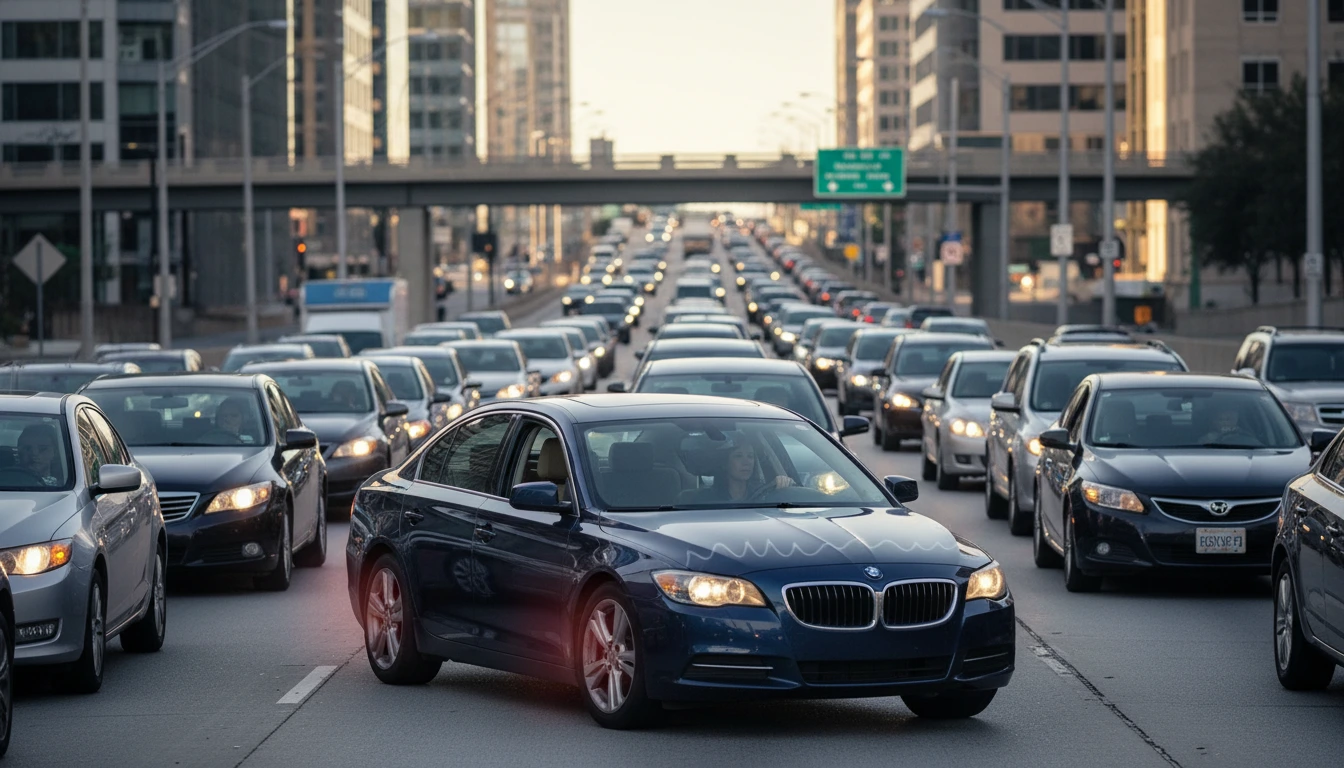
You sit in your car. The light turns green. You move forward for five seconds. Then you stop again. This happens over and over. Your hands grip the wheel. You feel tired. But something else is happening too. Your car is quietly breaking down, bit by bit, and most people never notice until it’s too late.
What Is Stop-and-Go Traffic?
Why Stop-and-Go Traffic Happens Every Day
Stop-and-go traffic means you keep starting and stopping your car. You drive a little, then brake. Then drive again, then brake again. It happens when too many cars try to use the same road at the same time. Rush hour brings this problem every morning and evening in big cities. You might also see it near construction zones where workers fix roads. Accidents cause it too. When one car crashes, other cars slow down to look, and that creates more stopping and starting.
I live near a busy highway. Every morning, I watch cars crawl along. They move so slowly that walking might be faster. The funny part is, sometimes there’s no real reason for the jam. One person brakes, the next person brakes harder, and suddenly everyone is stuck. That’s how traffic works.
How Traffic Jams Form So Quickly
Traffic jams grow fast because of how we drive. When you see brake lights ahead, you hit your brakes too. The person behind you does the same. Before long, hundreds of cars are stopping and starting together. Lane closures make things worse. When three lanes become two, cars bunch up like water in a narrow pipe. Special events like concerts or sports games add even more cars to roads that already can’t handle them.
According to a 2023 study, drivers in big American cities spend about 50 hours stuck in traffic every year. That’s more than one full work week just sitting still. Your car hates this as much as you do.
The Hidden Damage to Your Engine
Why Your Engine Never Gets Hot Enough
Your engine needs to reach a certain temperature to work properly. When it’s too cold, bad things happen inside. In normal driving, your engine warms up and stays warm. But in stop-and-go traffic, it never gets there. You drive for a minute, then stop. The engine starts to cool down. Then you drive again, but not long enough to heat up properly.
This matters because your engine oil only works well when it’s warm. Cold oil can’t clean out dirt and water the way hot oil can. Moisture gets trapped inside your engine. Over time, this water can make holes in your tailpipe and muffler. It can also hurt your catalytic converter, which is expensive to replace. I learned this the hard way when my old car needed a new muffler after two years of daily traffic. The mechanic showed me the rust damage inside. It looked like someone had been pouring water through my exhaust.
How Moisture Builds Up Inside Your Engine
Every time your engine runs, it makes a little bit of water vapor. This is normal. On long drives, this vapor burns off and goes out the exhaust. But in traffic, you never drive long enough for this to happen. The vapor stays inside. It mixes with your oil. It sits in the cylinders. Day after day, more moisture builds up.
This moisture creates acids that eat away at metal parts. Your engine’s insides get damaged slowly. You won’t see it happening, but your car feels it. The engine might start running rough. It might use more fuel. You might notice it takes longer to start on cold mornings. These are all signs that moisture has been building up for too long.
Your Brakes Take the Biggest Hit
Why Brake Pads Wear Out Faster in Traffic
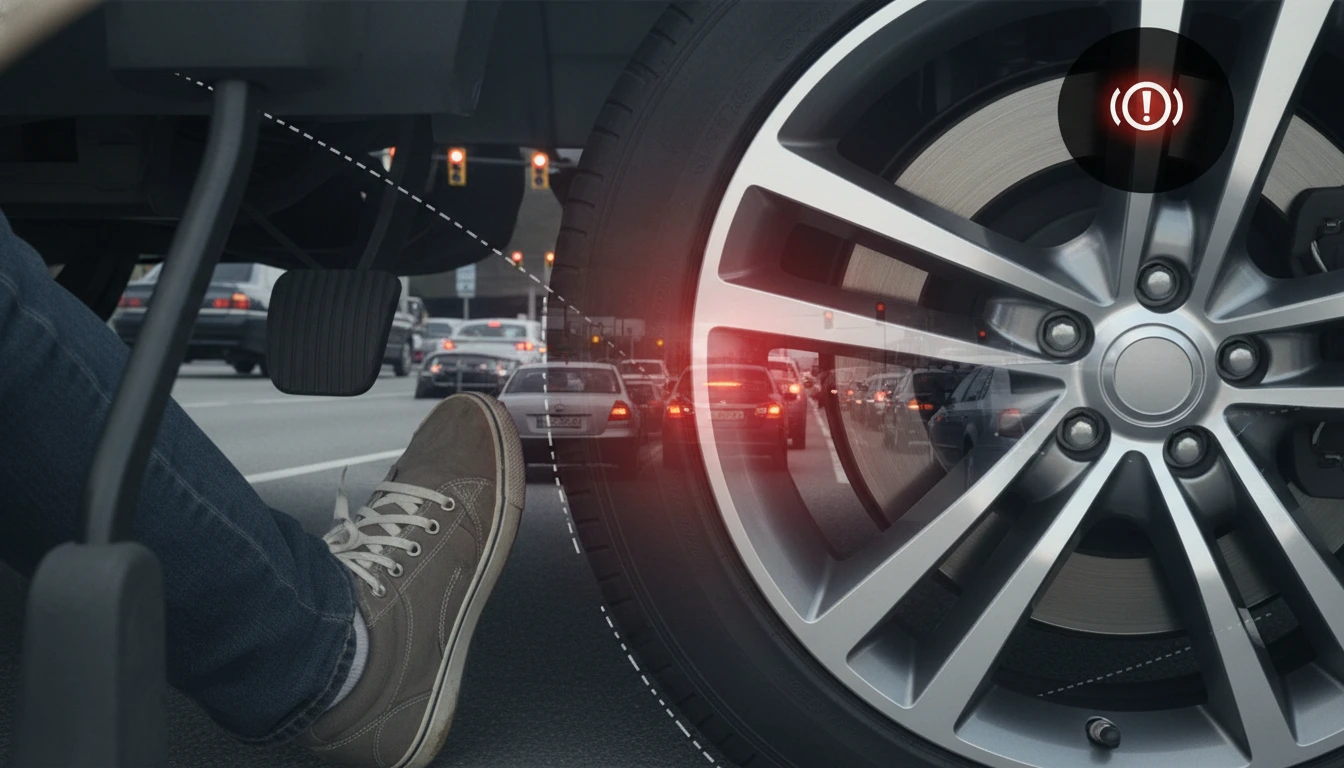
Your brakes work by pressing brake pads against metal rotors. Every time you press the brake pedal, the pads rub against the rotors. This rubbing slows you down. In normal driving, you might brake 20 or 30 times per trip. In traffic, you might brake 200 times. That’s a huge difference.
More braking means more rubbing. More rubbing means your brake pads wear down faster. Simple math. I once talked to a mechanic who sees this all the time. He told me that people who drive in heavy traffic need new brake pads every year or two. People who mostly drive on highways can go four or five years. That’s double the life, just from avoiding traffic when possible.
The heat from constant braking also causes problems. When brakes get too hot, they don’t work as well. You have to press the pedal harder. This is called brake fade, and it can be scary when it happens.
The Heat Problem No One Talks About
Each time you brake, friction creates heat. Normally, brakes cool down between stops. But in traffic, there’s no time to cool. The heat builds and builds. Your brake pads can get so hot that they start to change shape. This is called glazing. Glazed pads don’t grip as well, so you need more distance to stop.
The rotors can warp from too much heat, too. When rotors warp, you feel a pulsing or vibration when you brake. It feels like the pedal is pushing back against your foot. Warped rotors need to be replaced, and that costs money.
How Stop-and-Go Driving Hurts Your Transmission
Why Automatic Transmissions Suffer the Most
Your transmission changes gears so your engine can move your car at different speeds. In an automatic transmission, this happens without you doing anything. But in traffic, your transmission works overtime. It shifts up when you speed up. It shifts down when you slow down. Over and over and over.
All this shifting creates heat and friction inside the transmission. The transmission fluid that keeps everything running smoothly gets hotter and hotter. Hot fluid breaks down faster. It loses its ability to protect the gears and clutches inside. When the fluid goes bad, metal parts start grinding against each other. This leads to transmission failure, which can cost thousands of dollars to fix.
I remember my neighbor had to replace his transmission after just 80,000 miles. He drove the same route to work every day through terrible traffic. The repair shop told him his transmission fluid looked like black tar. It should have been red. All that heat from traffic had destroyed it.
Signs Your Transmission Fluid Needs Changing
How do you know if your transmission fluid is going bad? Look for these signs. If your car hesitates when you press the gas, that’s a clue. If it shifts roughly or makes clunking sounds, pay attention. You might also notice a burning smell. That’s the smell of fluid that’s gotten too hot for too long.
Check your owner’s manual to see how often to change transmission fluid. If you drive in heavy traffic every day, change it more often than the book says. Maybe every 30,000 miles instead of 60,000. This small change can save you from a huge repair bill later.
The Oil Problem Most Drivers Miss
Fuel Dilution: The Silent Killer
Here’s something most people don’t know. When you drive in traffic, gasoline can leak into your engine oil. This is called fuel dilution. It happens because your engine never gets hot enough to burn all the fuel completely. Some of it seeps past the pistons and mixes with the oil.
When gas mixes with oil, the oil gets thinner. Thin oil can’t protect your engine parts the way it should. It’s like trying to use water instead of honey. The oil slips off the metal surfaces too easily. This causes more wear on your engine’s moving parts. Over time, your engine wears out faster.
Most drivers never think about this. They change their oil when the sticker on the windshield tells them to. But if you sit in traffic every day, that schedule isn’t enough. Your oil is getting diluted and dirty much faster than normal.
Why You Need More Frequent Oil Changes
If you drive in stop-and-go traffic regularly, you need to change your oil more often. The manufacturer might say every 7,500 miles or 10,000 miles. But for traffic drivers, every 3,000 to 5,000 miles is better. Yes, that means more oil changes. But it also means your engine lasts longer.
Use synthetic oil if you can. It handles heat better than regular oil. It doesn’t break down as quickly when temperatures go up and down. Check your oil more often, too. Once a month, pop the hood and look at the oil level and color. If it looks dark and dirty before your next oil change is due, get it changed early. Your engine will thank you.
Your Suspension System Is Quietly Breaking Down
How Weight Transfer Damages Shocks and Struts
Every time you brake, the weight of your car shifts forward. The front of the car dips down. When you hit the gas again, the weight shifts back. The rear goes down a little. Your suspension system handles these weight changes. Shock absorbers and struts control how fast the weight moves.
In traffic, this weight transfer happens hundreds of times per trip. Each shift puts pressure on your shocks and struts. The fluid inside them breaks down from all the work. The metal parts wear out. Bushings that are made of rubber start to crack and tear. Ball joints that connect different parts get loose.
I never thought about my suspension until I hit a bump one day and heard a loud clunking noise. The mechanic said my front struts were shot. He showed me the old parts. The rubber bushings had completely fallen apart. He explained that all my city driving had worn them out faster than normal.
Why Bushings and Ball Joints Fail Early
Bushings are small rubber parts that cushion where metal parts connect. They allow some movement while keeping things stable. But rubber doesn’t last forever, especially when it’s constantly compressed and released. Traffic driving means constant compression. The bushings wear out, crack, and eventually fail.
Ball joints let your wheels move up and down while still steering left and right. They have to handle a lot of force. All the weight shifting in traffic puts extra stress on them. When they wear out, your car doesn’t steer properly. You might hear squeaking or feel the steering wheel pull to one side. Bad ball joints are also dangerous. They can break completely, which can cause you to lose control of your car.
Regular inspections catch these problems early. If you drive in traffic often, have your suspension checked every year or every 15,000 miles. It’s cheaper to replace worn parts before they break completely.
The Real Cost: Fuel and Money Down the Drain
Why Traffic Jams Kill Your Gas Mileage
When you sit still with your engine running, you get zero miles per gallon. You’re burning gas but not going anywhere. Every minute idling in traffic wastes fuel. When you do move, you’re accelerating from a stop. Acceleration uses way more fuel than driving at a steady speed.
Think about it this way. On the highway, you might get 30 or 35 miles per gallon. In stop-and-go traffic, that drops to 15 or 20 miles per gallon. You’re using almost twice as much gas to cover the same distance. That’s money straight out of your wallet.
A Department of Transportation study found that traffic congestion costs American drivers billions of dollars in wasted fuel every year. That’s not counting the time lost or the extra wear on your car. Just the fuel alone is a huge expense.
How Much Extra Money You’re Actually Spending
Let’s do some quick math. Say you drive 15,000 miles per year. Half of that is in traffic. With good gas mileage, you’d use about 500 gallons of gas. But with traffic cutting your mileage in half, you might use 650 gallons instead. At $3.50 per gallon, that’s an extra $525 per year just in fuel costs.
Now add the extra maintenance. More frequent oil changes cost maybe $200 more per year. Brake replacements come twice as often, adding another $400 every few years. Transmission service happens sooner. Engine parts wear faster. When you add it all up, traffic driving can cost you an extra $1,000 or more per year compared to highway driving.
That’s real money. You could spend the money on something fun instead of car repairs. This is why understanding traffic damage matters. It helps you make smarter choices about driving and maintenance.
Smart Driving Tips to Reduce the Damage
The Spacing Technique That Saves Your Brakes
Here’s a simple trick that can save your brakes and reduce stress. Leave more space between you and the car ahead. Most people drive too close in traffic. They speed up to close gaps, then brake hard when the car ahead stops. This constant gas-brake-gas-brake cycle is terrible for your car.
Instead, leave three or four car lengths ahead of you. Yes, other cars will cut in front sometimes. Let them. It doesn’t matter. With more space, you can keep moving at a slow, steady speed even when traffic is bad. You won’t have to brake as hard or as often. Your brake pads last longer. Your transmission doesn’t shift as much. You use less fuel, too.
I started doing this a few years back. At first,t it felt strange to have so much space. But then I noticed I barely touched my brakes. The car ahead would slow down, and I’d just ease off the gas. They’d speed up a little, and I’d gently press the gas. No sudden moves. No hard braking. It made driving in traffic way less stressful, and my brake pads lasted 40,000 miles instead of 25,000.
How to Drive Smoother and Waste Less Fuel
Smooth driving saves fuel and reduces wear. When the light turns green or traffic starts moving, don’t floor it. Press the gas gently. Let your speed build slowly. This is easier on your transmission, easier on your engine, and uses less fuel.
Before you brake, try engine braking first. That means taking your foot off the gas and letting the engine’s natural resistance slow you down. You might be surprised how much you can slow down without touching the brake pedal. This technique keeps your brakes cooler and makes them last longer.
Watch the traffic far ahead, not just the car in front of you. If you see brake lights several cars up, you can start slowing down early. Gentle, early slowing beats hard, late braking every time. It’s better for your car and better for the people behind you, ou too.
Maintenance Schedule for Traffic-Heavy Drivers
What to Check Every Month
If you drive in heavy traffic often, check these things monthly. First, look at your engine oil. Pull out the dipstick, wipe it clean, put it back in, then pull it out again. The oil should be between the low and high marks. It should look amber or light brown, not black. If it’s really dark or smells burnt, change it soon.
Check your brake fluid too. There’s a reservoir under the hood, usually near the back on the driver’s side. The fluid should be between the min and max lines. It should look clear or slightly yellow. If it’s dark brown, it needs to be changed.
Look at your tires. Traffic driving means lots of stopping and starting, which wears tires unevenly. Check the tread depth by sticking a penny upside down into the grooves. If you can see all of Abraham Lincoln’s head, the tread is too low. Als,o check tire pressure. Under-inflated tires wear faster and hurt your gas mileage.
Services You Need More Often Than You Think
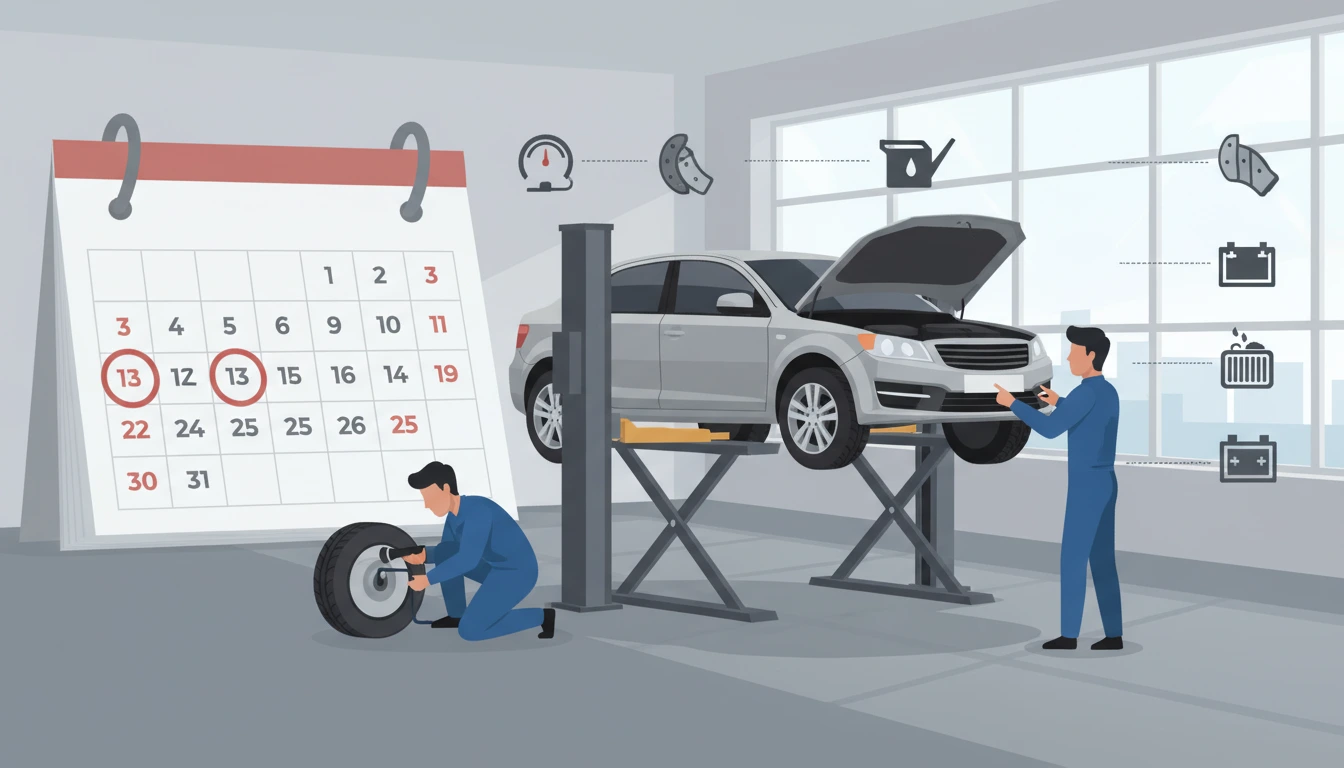
For traffic drivers, some services need to happen more frequently. Oil changes should happen every 3,000 to 5,000 miles, not the 7,500 to 10,000 miles your manual might say. Transmission fluid should be changed every 30,000 to 40,000 miles instead of 60,000 or later.
Have your brakes inspected twice a year instead of once. The mechanic should check pad thickness, rotor condition, and fluid quality. Replace pads before they get too thin. It’s cheaper than replacing torsion springs too.
Get your air filter checked more often. Traffic means you’re breathing in more dust and pollution, and so is your engine. A clogged air filter makes your engine work harder and use more fuel. Replacing it is cheap and easy.
Finally, have your suspension checked annually. Ask the mechanic to look at shocks, struts, bushings, and ball joints. Catching wear early prevents bigger problems and keeps your car safe.
Conclusion
Stop-and-go traffic does more than waste your time. It quietly damages your engine, wears out your brakes, stresses your transmission, and costs you money in extra fuel and repairs. Most commuters never realize how much harm daily traffic causes until something breaks. But now you know better.
The good news is you can fight back. Drive smarter by leaving more space and accelerating gently. Maintain your car more often with earlier oil changes and regular inspections. Pay attention to warning signs like rough shifting or squealing brakes. These simple steps can add years to your car’s life and save you thousands in repairs. Your car works hard for you every day. Give it the care it needs, especially if you spend a lot of time stuck in traffic.
Frequently Asked Questions
How much faster do brakes wear out in stop-and-go traffic?
Brakes in traffic can wear out 50% to 100% faster than brakes used mainly for highway driving. The constant stopping and starting creates more friction and heat, which breaks down brake pads and rotors much quicker. Most city drivers need new brake pads every 20,000 to 30,000 miles, while highway drivers might get 40,000 to 60,000 miles or more from the same parts.
Does stop-and-go traffic damage electric cars too?
Electric cars handle stop-and-go traffic better than gas cars in some ways. They have regenerative braking that captures energy when slowing down, which reduces wear on brake pads and improves efficiency. However, electric cars still experience extra stress on their suspension, tires, and other mechanical parts from constant weight transfer. The battery and electric motor are less affected by traffic than a traditional engine and transmission would be.
How often should I change my oil if I drive in heavy traffic daily?
If you drive in heavy stop-and-go traffic every day, change your oil every 3,000 to 5,000 miles. This is much more frequent than the 7,5010,000-mile intervals many manufacturers recommend. Traffic driving causes moisture buildup and fuel dilution in your oil, which breaks it down faster. Using full synthetic oil can help protect your engine better between changes.
Can cruise control help reduce wear in slow traffic?
Adaptive cruise control in newer cars can help reduce wear because it maintains smoother, more consistent speeds than most human drivers. It accelerates and brakes more gently, which is easier on your transmission and brakes. However, regular cruise control should never be used in unpredictable stop-and-go traffic because it can’t react properly to sudden changes in traffic flow.
What type of engine oil is best for stop-and-go driving?
Full synthetic oil is best for stop-and-go driving conditions. It maintains better protection at both high and low temperatures, resists breaking down from heat cycling, and handles fuel dilution better than conventional oil. Look for oils labeled for “severe” or “extreme” driving conditions, which are specifically designed for the kind of stress that traffic creates.