
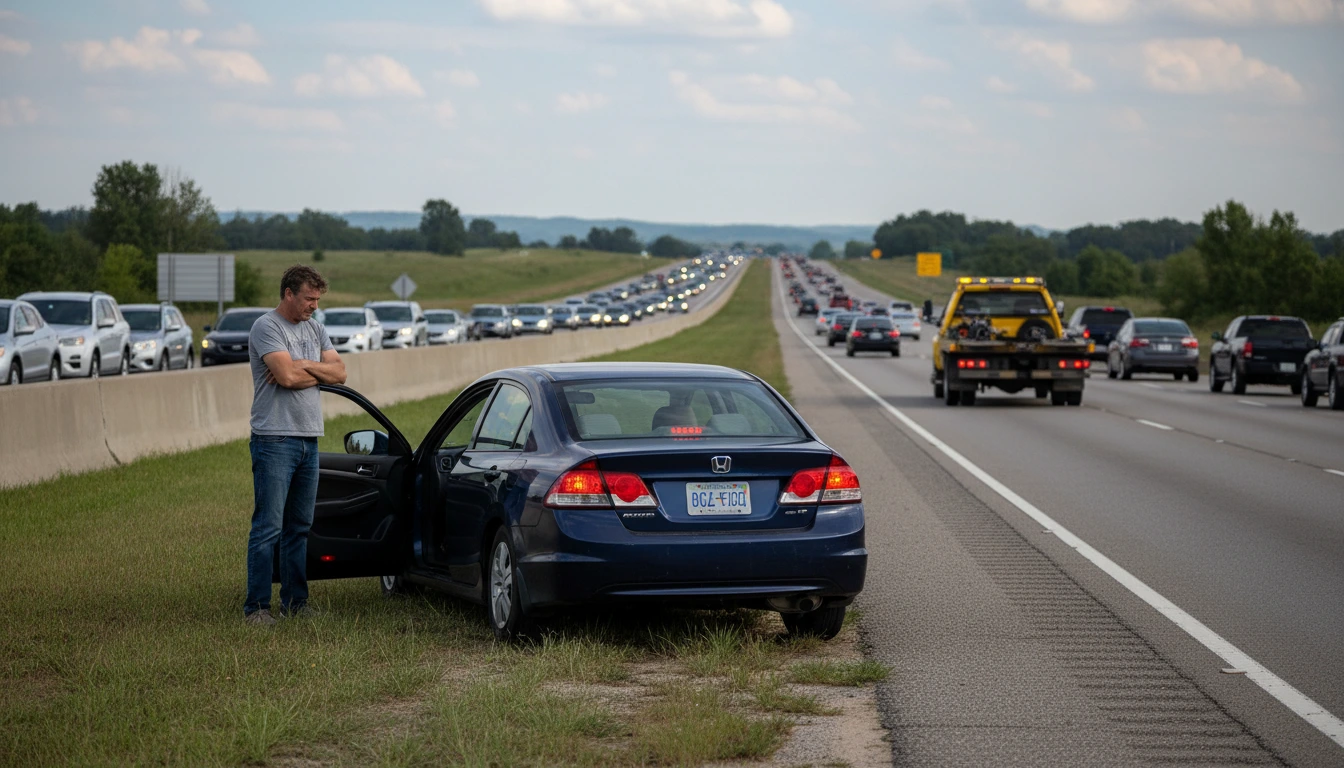
If you drive through Huntsville, you know the feeling. You’re stuck in I-565 traffic, cars barely moving, and you’re already running late. Then your car starts making a weird noise.
I remember the first time my car broke down on I-565. I was heading to work, traffic was thick, and suddenly my engine light came on. My heart started racing faster than the cars around me. I didn’t know what to do. Should I pull over? Keep driving? Call someone?
That day taught me something important. Highway breakdowns are scary, but they’re way worse when you don’t know what to do. According to a study published by the Department of Transportation, rear-end crashes during congested times make up a big chunk of I-565 accidents. When your car stops working in heavy traffic, you need to act fast and smart.
This guide will show you exactly what to do if your car breaks down on I-565. You’ll learn how to stay safe, who to call, and how to prevent breakdowns before they happen.
Why I-565 Traffic Makes Breakdowns Extra Dangerous
Heavy Traffic Creates Higher Risk
I-565 is not like a quiet country road. This interstate connects Huntsville, Madison, and Decatur, and thousands of people use it every single day.
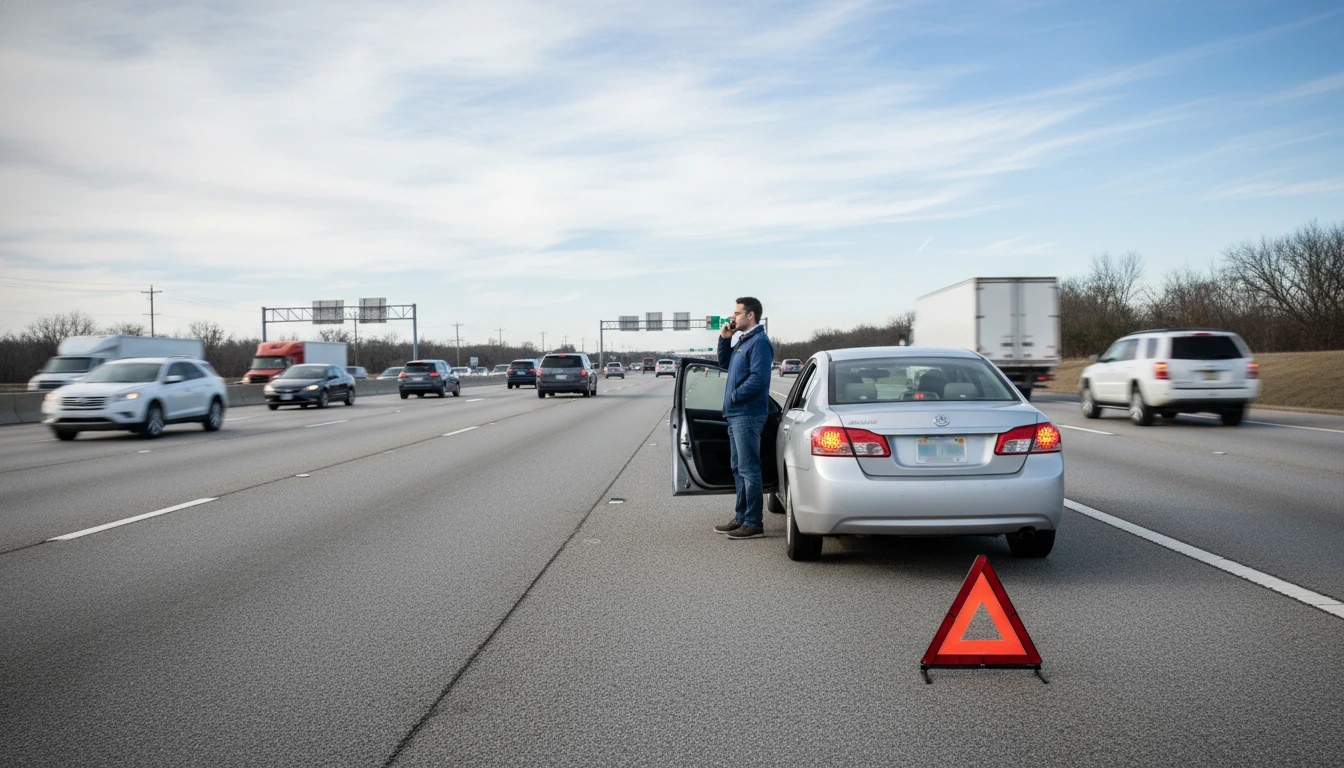
When traffic is heavy, cars move close together. People drive fast, even when they shouldn’t. If your car suddenly stops, the cars behind you might not have time to slow down. That’s how multi-vehicle accidents happen.
I once saw a breakdown turn into a five-car crash. A truck couldn’t stop in time. The sound was terrible. Everyone was okay, but it could have been much worse.
According to the Alabama Department of Transportation, about 12.5% of all car accident deaths in Alabama happen on interstates. That’s higher than regular roads. Why? Because cars go faster, and when something goes wrong, it goes wrong quickly.
I-565 has a speed limit of 70 mph in some areas. At that speed, even a few seconds can mean the difference between a safe stop and a bad crash.
Construction Zones Add Extra Hazards
If you drive I-565 regularly, you’ve seen the orange cones. Construction seems never-ending. Right now, crews are working to widen parts of the highway from County Line Road to Wall Triana Highway.
Construction zones make breakdowns even more dangerous. Lanes get narrow. Traffic patterns change. Drivers get confused.
Last summer, I got stuck in a construction zone on I-565. The shoulder was blocked off. When my tire went flat, I had nowhere to pull over safely. I had to drive slowly on the rim until I found a spot. Not fun.
What to Do the Moment Your Car Breaks Down on I-565
Stay Calm and Turn On Your Hazard Lights
The first thing you need to do is breathe. I know that sounds simple, but panic makes everything worse.
Your hands might shake. Your mind might race. That’s normal. But you need to think clearly.
Turn on your hazard lights right away. Don’t wait. Don’t think about it. Just do it.
Hazard lights tell other drivers, “Hey, something’s wrong with my car.” They give people behind you time to slow down and move around you.
I learned this the hard way. Once, I didn’t turn on my hazards fast enough. A car almost hit me from behind. The driver was angry, honking and yelling. I don’t blame him. He didn’t know I was in trouble until the last second.
Move to the Shoulder Safely
If your car can still move, get it off the road. The shoulder is your friend.
Don’t brake hard. Don’t make sudden movements. Just ease your car over to the right side, nice and slow.
But what if you can’t move your car? What if it just dies in the middle of a lane?
Stay in the car. Keep your hazard lights on. Call for help immediately. Do not get out to push your car. That’s how people get hurt.
On I-565, traffic moves fast. Trying to push a car in heavy traffic is like playing with fire.
Safety Steps After Pulling Over
Should You Stay in Your Car or Get Out?
This is the question everyone asks. The answer? It depends.
If you’re on a busy highway with cars flying past, stay inside. Keep your seatbelt on. Lock your doors. Wait for help.
Why? Because people get distracted. They drift toward things that catch their eye. It’s called the “moth effect.” If you’re standing outside your car, a distracted driver might hit you.
But if you’re in a safe spot—like a rest area or a wide shoulder away from traffic—getting out might be okay. Just make sure you exit from the passenger side, away from moving cars.
I remember one time I stayed in my car for almost an hour. Cars whizzed past so close I could feel my car shake. It was uncomfortable, but it was safe.
Making Your Vehicle Visible to Other Drivers
Once you’re stopped, you need to make sure people can see you.
Raise your hood. This is a universal signal that says, “I need help.”
If you have warning triangles or flares, use them. Place them about 10 feet, 100 feet, and 200 feet behind your car. This gives drivers plenty of warning.
Don’t have triangles? Tie a white cloth to your antenna or door handle. Anything that makes you more visible helps.
At night, visibility is even more important. Turn on your interior lights if you’re staying in the car. Use a flashlight to signal for help if you need to.
A study from Zero Deaths MD shows that making your vehicle visible reduces the chance of a secondary crash by a lot (https://zerodeathsmd.gov/how-you-can-help/roadside-emergencies/). People can’t avoid what they can’t see.
Who to Call When You Break Down
Roadside Assistance vs. Towing Services
When your car won’t move, you need help. But who do you call?
If you have roadside assistance, call them first. Many insurance companies offer this. Some car brands, like Ford, include it for the first few years you own the car.
Roadside assistance can help with small problems. Dead battery? They’ll jump-start it. Flat tire? They’ll change it. Out of gas? They’ll bring you some.
But if your car has a serious problem—like engine failure or major damage—you’ll need a tow truck. Roadside assistance can arrange that too.
I keep my roadside assistance number saved in my phone. I also wrote it on a piece of paper in my glove box, just in case my phone dies.
When to Call 911
If anyone is hurt, call 911 right away. Don’t wait.
If your car is in a dangerous spot and you can’t move it, call 911. The police can help direct traffic and keep you safe.
Also, if you feel unsafe for any reason—like if someone approaches your car and makes you nervous—call 911. Your safety comes first.
Some people worry about bothering the police. Don’t. They’d rather help you stay safe than respond to a crash later.
Common Causes of Highway Breakdowns
Dead Batteries and Flat Tires
The two most common reasons cars break down? Dead batteries and flat tires.
Batteries die when you least expect it. Maybe you left your lights on. Maybe your battery is just old. Either way, it’s annoying.
A dead battery won’t let your car start. But the good news? It’s usually an easy fix. Roadside assistance can jump-start you and get you moving again in minutes.
Flat tires are even more common. You hit a nail, a sharp rock, or a pothole. Next thing you know, your tire is flat.
If you know how to change a tire, great. But if your flat is on the side facing traffic, don’t risk it. Call for help instead.
Engine Overheating on Hot Alabama Days
Alabama gets hot. Really hot. And when temperatures climb, engines can overheat.
If your temperature gauge starts climbing, pull over as soon as you safely can. Don’t keep driving. Overheating can seriously damage your engine.
Once you’re stopped, let the engine cool down. Don’t open the hood right away. Hot steam can burn you.
I learned about overheating the hard way one summer. I was driving on I-565 in 95-degree heat. My gauge hit the red zone. I panicked and kept driving, thinking I could make it home. Big mistake. My engine blew, and I ended up paying way more for repairs than I would have if I’d just stopped.
Keep your coolant topped off, especially in summer. Check it regularly. A little prevention goes a long way.
How to Prevent Breakdowns Before Hitting I-565
Regular Maintenance is Your Best Defense
The best way to handle a breakdown? Don’t have one in the first place.
I know, easier said than done. But regular maintenance really does help.
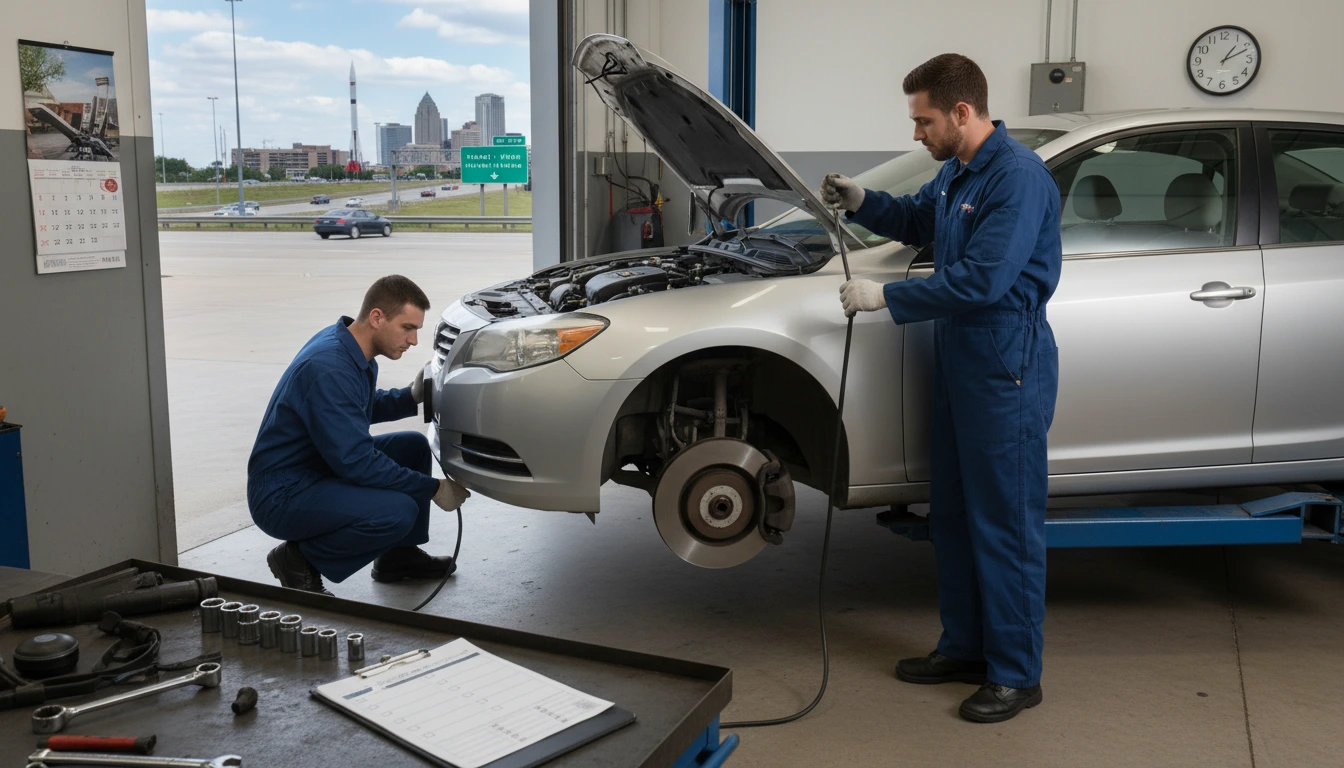
Change your oil on time. Check your tires for wear and proper air pressure. Make sure your battery is in good shape.
Brakes, fluids, coolant—all of it matters. When you take care of your car, your car takes care of you.
I used to skip oil changes because I was “too busy.” Then my engine started making noise. Turns out, skipping maintenance cost me way more money and time than just getting the oil changed would have.
If you’re planning a long trip, get your car checked first. A quick inspection can catch small problems before they turn into big ones.
What to Keep in Your Emergency Kit
Every car should have an emergency kit. Not just for breakdowns, but for any roadside problem.
Here’s what I keep in mine:
- Jumper cables (for dead batteries)
- Flashlight with extra batteries (for nighttime)
- First aid kit (just in case)
- Warning triangles or flares (to stay visible)
- Tire pressure gauge (to check air)
- Reflective vest (so people can see me)
- Blanket (for cold weather)
- Water and snacks (in case I’m stuck for a while)
- Portable phone charger (to keep my phone alive)
You can buy pre-made kits, or you can put one together yourself. Either way, having these things in your car gives you peace of mind.
One time, my phone died right before my car broke down. I couldn’t call for help. I had to flag down another driver. It was embarrassing and stressful. Now, I always have a charger in my car.
Conclusion
I-565 traffic is tough enough without dealing with a breakdown. But if your car stops working, you can handle it.
Stay calm. Turn on your hazard lights. Move to the shoulder if you can. Call for help. And most important, keep yourself safe.
Prevention is your best tool. Take care of your car, keep an emergency kit handy, and know who to call when trouble hits.
Driving on I-565 doesn’t have to be scary. With the right preparation and knowledge, you’ll be ready for anything.
Frequently Asked Questions
What should I do first if my car breaks down on I-565?
The first thing you should do is stay calm and turn on your hazard lights right away. This warns other drivers that something is wrong. Then, if your car can still move, carefully guide it to the shoulder on the right side of the road. Don’t brake hard or make sudden movements. If your car won’t move at all, stay inside with your seatbelt on and call for help immediately.
Is it safer to stay in my car or exit the vehicle?
It depends on where you are. If you’re on a busy highway like I-565 with fast-moving traffic, it’s usually safer to stay inside your car with your seatbelt on. Cars might drift toward you, and standing outside puts you at risk. But if you’re in a safe spot, like a rest area or a wide shoulder far from traffic, you can exit through the passenger side door (away from traffic). Always lock your doors if you stay inside.
How long does roadside assistance usually take on I-565?
Roadside assistance times vary. In busy areas like Huntsville during rush hour, it might take 30 to 60 minutes. In less crowded times, help could arrive in 15 to 30 minutes. When you call, the service will give you an estimated time. Make sure you give them your exact location, like the nearest exit or mile marker, so they can find you quickly.
Can I fix a flat tire myself on the highway shoulder?
You can change a flat tire yourself if you know how and if it’s safe to do so. But if your flat tire is on the side facing traffic, don’t risk it. Cars passing by could hit you. It’s safer to call roadside assistance and let professionals handle it. If you do decide to change it yourself, make sure you’re far from traffic, use warning triangles, and work as quickly as possible.
What items should I always keep in my car for emergencies?
Every car should have an emergency kit with these items: jumper cables, a flashlight with extra batteries, a first aid kit, warning triangles or flares, a tire pressure gauge, a reflective vest, water, snacks, a blanket, and a portable phone charger. You can buy a pre-made kit or build your own. Having these supplies means you’re ready for breakdowns, bad weather, or any other roadside problem.