
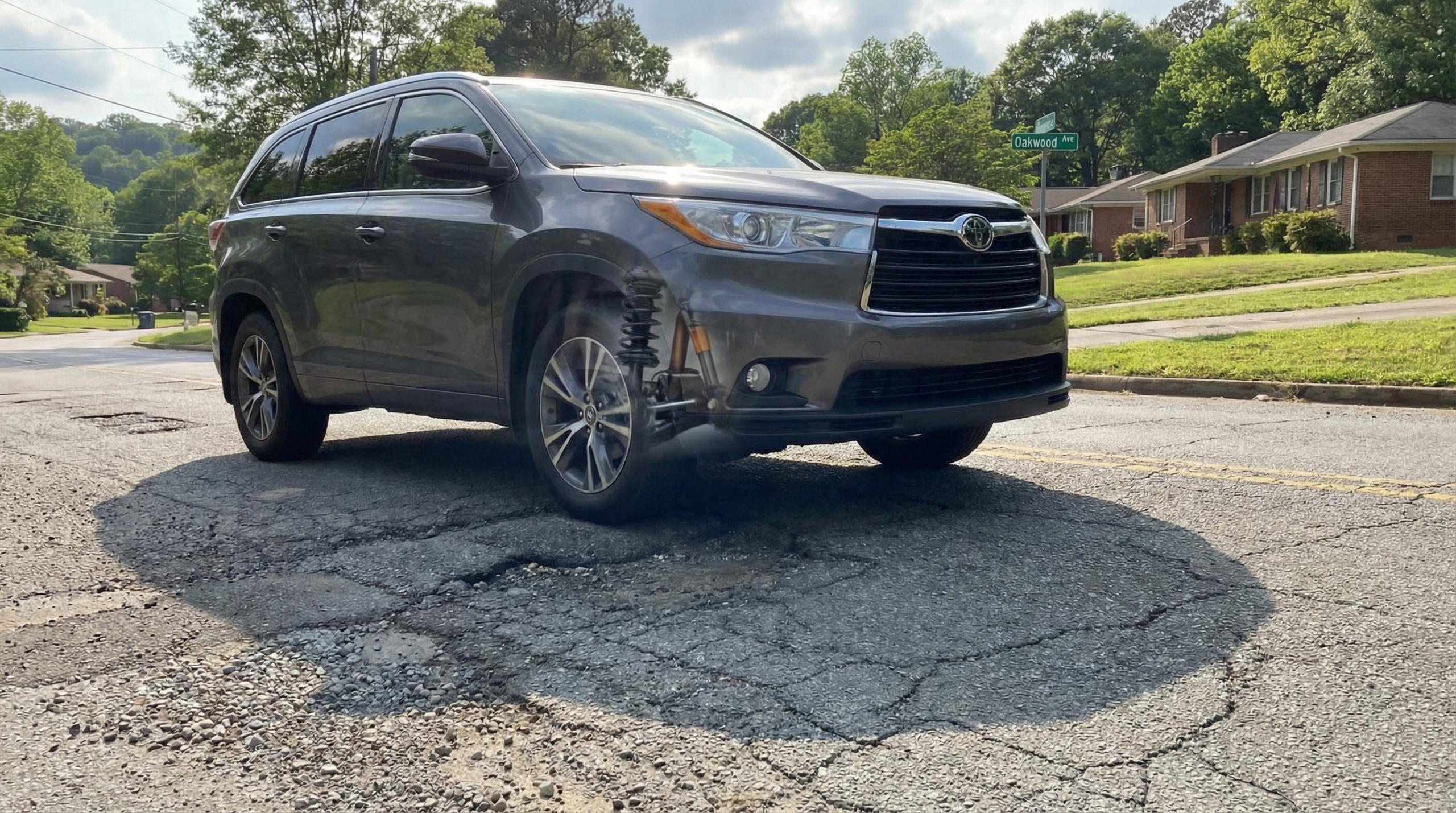
Living in Huntsville means dealing with roads that can really beat up your car. If you feel every bump or your car bounces more than it used to, you’re not alone. Huntsville roads are known for being tough on suspensions, and there are real reasons why.
What Makes Huntsville Roads Different
The Freeze-Thaw Cycle Problem
Huntsville sits in a climate zone that creates a big problem for roads. We get freezing winters and hot summers, and this change causes something called the freeze-thaw cycle.
Here’s how it works. When rain falls, water seeps into tiny cracks in the road. Then, when winter comes and temperatures drop below freezing, that water turns to ice. Ice takes up more space than water, so it pushes the cracks wider.
I remember driving down Memorial Parkway one winter morning after a cold snap. The road looked fine the week before, but suddenly there were potholes everywhere. According to a study published by the National Weather Service, Huntsville experiences frequent temperature swings between freezing and thawing during winter months, which accelerates road deterioration.
When spring arrives, the ice melts and leaves bigger cracks behind. Then more water gets in, and the cycle happens again. Each time this happens, the road gets weaker.
Potholes form fast this way. A small crack in January can become a big pothole by March. The road’s base material underneath gets soft and weak, and when cars drive over it, the surface collapses.
Heavy Rainfall and Standing Water Issues
Huntsville gets a lot of rain. We’re talking about more than 50 inches per year on average. All that rain has to go somewhere, and when drainage systems can’t keep up, water sits on roads.
Standing water is a suspension killer. When you drive through it, you can’t see what’s underneath. There might be a deep pothole hiding under that puddle. I learned this the hard way on Research Park Boulevard after a heavy storm last year.
Water also weakens the ground under roads. The pavement might look solid, but if water has been sitting there, the soil underneath turns soft. Then, when heavy trucks or cars drive over it, the road sinks and cracks.
Roads in North Alabama deal with this problem year-round, but it gets worse inthe spring when we get the most rain.
How Potholes Form on Huntsville Streets
Water Damage and Pavement Cracks
Every road starts with small cracks. Maybe a tree root pushed up from below, or the ground settled unevenly. These cracks don’t seem like a big deal at first.
But water finds these cracks. Rain, melted ice, even morning dew – it all seeps in. Once water gets under the asphalt, it starts eating away at the foundation.
The City of Huntsville repairs thousands of potholes every year, but new ones keep forming. That’s because water damage never stops. It works 24 hours a day, slowly breaking down roads from the inside.
Elevated roadways like overpasses face even more problems. Cold air hits them from all sides, so they freeze faster than regular roads. The freeze-thaw cycle happens more often on bridges than on ground-level streets.
Temperature Swings Speed Up Road Damage
Huntsville’s weather is unpredictable. One day it’s 60 degrees, the next day it drops to 25. These quick changes are terrible for roads.
When asphalt heats up, it expands. When it cools down, it contracts. Do this enough times and cracks form, just like how a rubber band breaks if you stretch it too many times.
I’ve noticed this pattern during winter. We’ll get a warm spell where everything melts, then a hard freeze overnight. Roads that looked fine in the afternoon develop new cracks by morning.
According to the Alabama Department of Transportation, temperature-related road damage costs the state millions in repairs each year. But in places like Madison County, the problem is even worse because of our specific climate.
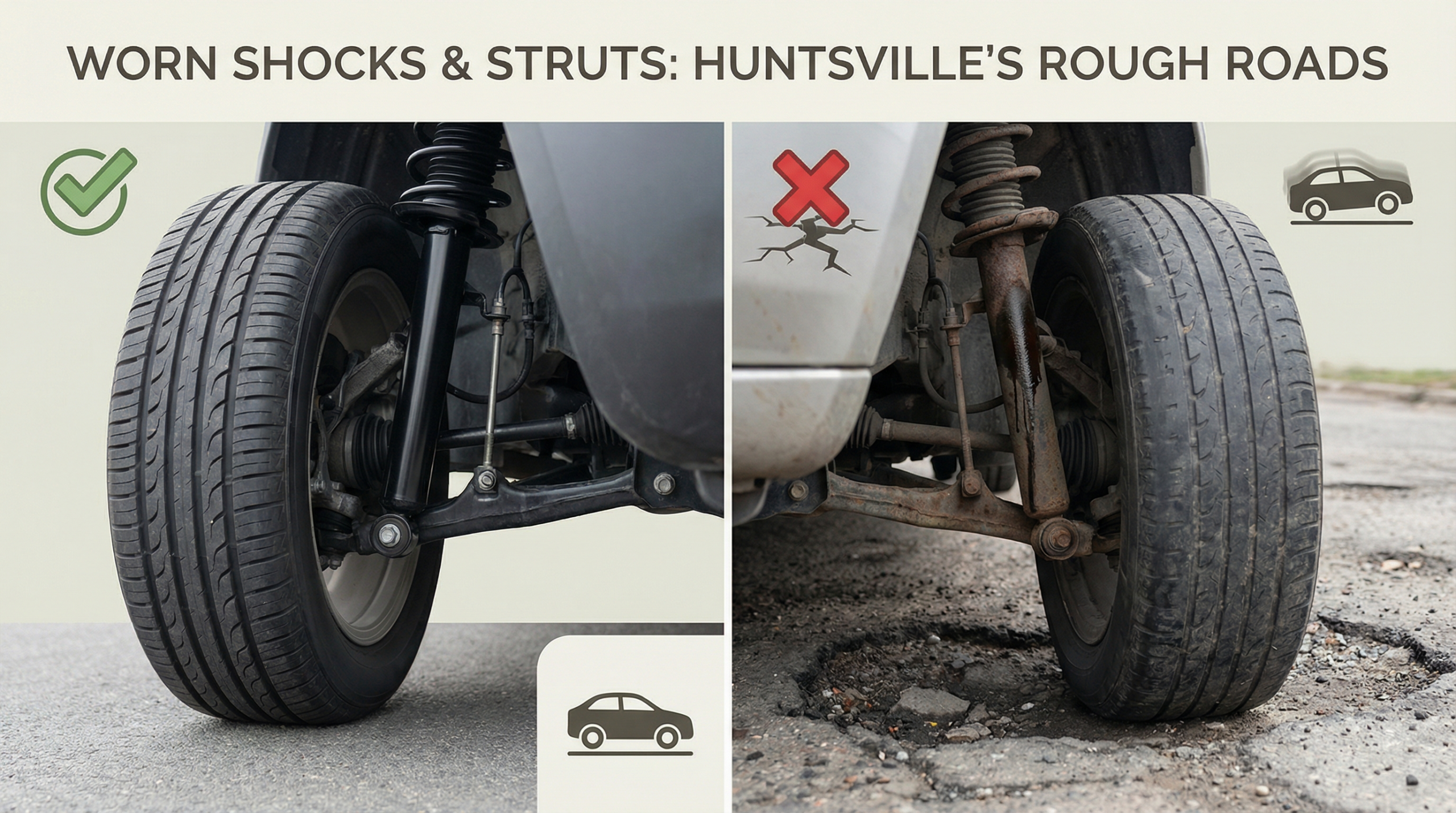
Common Suspension Damage from Huntsville Roads
Worn Shocks and Struts
Your car’s shocks and struts work hard to keep your ride smooth. They absorb all the bumps and impacts from the road. But Huntsville roads give them more work than they can handle.
Think of shock absorbers like sponges. They soak up the impact when you hit a bump. But if you keep hitting bumps all day, every day, that sponge gets worn out.
I talked to a mechanic friend who works at a local shop. He said he replaces shocks and struts on Huntsville cars way more often than he did when he worked in other cities. The rough roads here just wear them out faster.
When your shocks wear out, you’ll feel every little bump. Your car bounces more. It feels loose and wobbly, especially at highway speeds. That bouncing isn’t just uncomfortable – it’s actually hard on other parts of your car too.
Wheel bearings take extra stress when shocks can’t do their job. Ball joints and control arms wear out faster. One problem leads to another, and before you know it, you need expensive repairs.
Alignment Problems from Impact Damage
Alignment is measured in tiny fractions of an inch. Your wheels need to point exactly the right direction for your car to drive straight and for your tires to wear evenly.
When you hit a pothole hard, it can knock your alignment off. Even a small bump can do it if you hit it at the wrong angle. The impact pushes your suspension components slightly out of place.
Last summer, I hit a pothole on University Drive that I didn’t see until too late. My car pulled to the left after that. I took it to a shop, and sure enough, my alignment was off by just a few degrees. That small change made a big difference in how my car drove.
Alignment issues cause your tires to wear unevenly. You might notice one side of a tire wearing down faster than the other. This means you’ll need new tires sooner, which costs money.
It also makes your car harder to control. You have to hold the steering wheel at an angle just to drive straight. This is tiring on long drives and can be dangerous in emergencies when you need quick, precise steering.
Which Huntsville Roads Are Hardest on Your Car
Elevated Roadways and Overpasses
Overpasses on Memorial Parkway and I-565 take the worst beating. These elevated sections freeze first in winter and heat up faster in summer.
When the city announces road closures during winter weather, it’s almost always these elevated parts that close first. They ice over while ground-level roads are still fine. This happens because cold air hits them from below and above.
The constant freezing and thawing create more potholes on these sections than anywhere else. Drive on the Memorial Parkway overpass near University Drive, and you’ll see what I mean. The road surface there needs to be repaired almost every year.
Bridge sections have the same problem. The I-565/Memorial Parkway interchange is notorious for rough pavement. I try to slow down when I drive through there because the bumps are so harsh.
Older Neighborhood Streets
Neighborhood roads in older parts of Huntsville haven’t been repaved in years. Some streets still have the original pavement from decades ago.
These older roads have more cracks, more patches, and more uneven surfaces. Tree roots have pushed up sections of the road. The ground has settled unevenly, creating dips and bumps.
I live in an older neighborhood off Governors Drive. My street has patches on top of patches. Every pothole they fix seems to sink again after a few months. It’s like playing whack-a-mole with road repairs.
Rural roads in the county face similar problems. They don’t get repaved as often as main roads, so they develop worse problems over time. If you live outside the city limits, you know what I’m talking about.
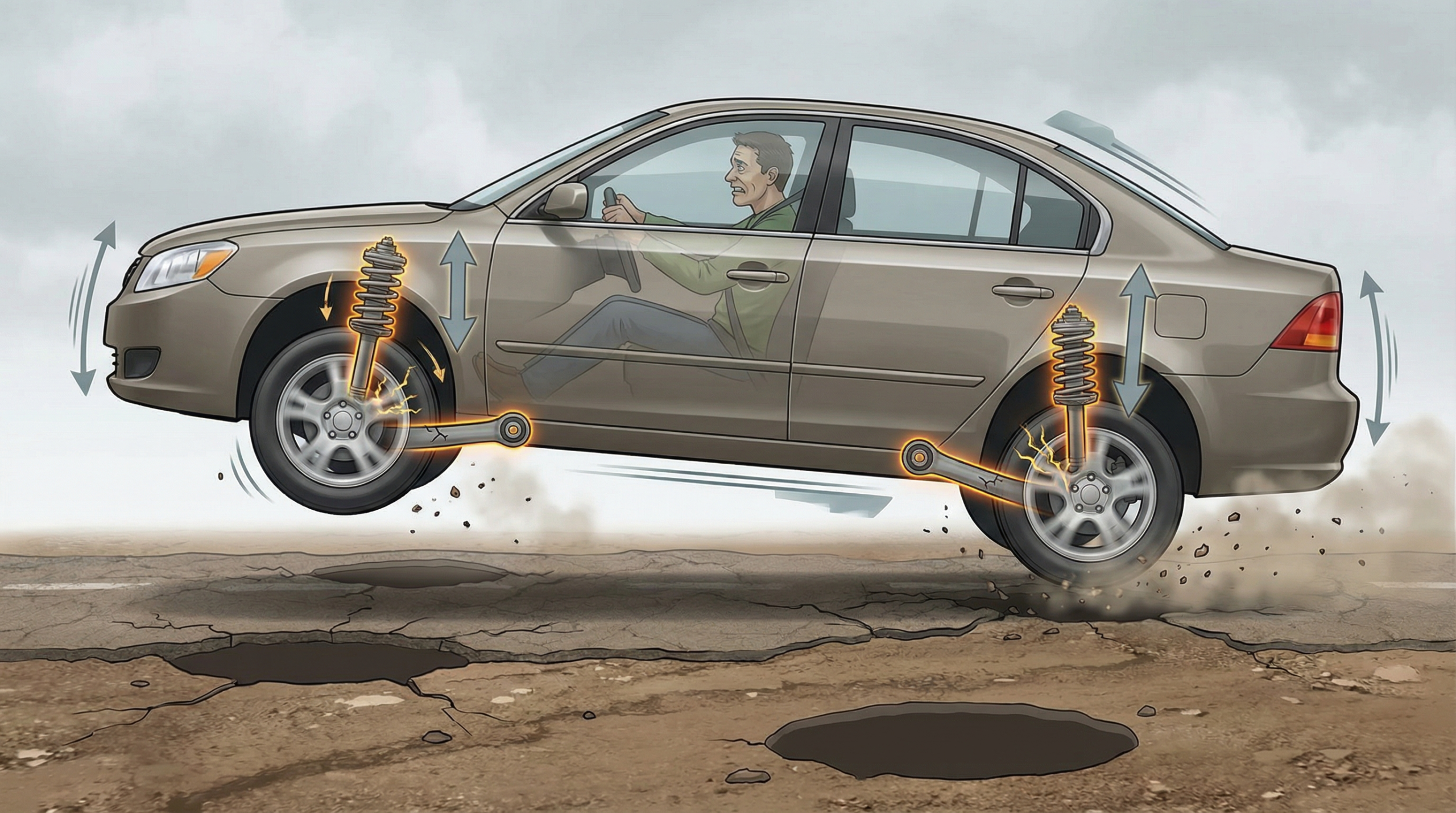
Signs Your Suspension Needs Repair: Bumpy Rides and Excessive Bouncing
The clearest sign of suspension problems is feeling every bump in the road. If your car feels like it’s bouncing on a trampoline when you go over bumps, your shocks or struts are probably worn out.
Try this test: push down hard on your car’s front bumper and let go. The car should bounce once and then settle. If it bounces two or three times, your shocks need replacing. You might also notice the nose of your car diving forward when you brake. Or the back end squatting down when you accelerate. These are signs that your suspension system isn’t controlling the car’s weight properly.
Ride quality matters for more than just comfort. Bad suspension makes it harder to control your car. It takes longer to stop. Your tires don’t grip the road as well in turns. All of this increases your risk of an accident.
Vehicle Pulling to One Side
Does your car drift to the left or right when you drive on a straight road? You probably have an alignment problem.
Sometimes you can feel it in the steering wheel. You have to hold the wheel slightly turned just to go straight. On highway drives, this gets tiring fast.
Check your tires too. If they’re wearing unevenly – one side more than the other, or the inside edge wearing faster than the outside – that’s another alignment clue.
Alignment problems often start with hitting a pothole or curb. But they can also happen from worn suspension components like tie rods or control arms. A mechanic can check which parts caused the problem and fix them.
Don’t ignore pulling. Bad alignment wears out tires fast. A set of tires that should last 50,000 miles might only last 25,000 if your alignment is off. That’s money wasted.
How to Protect Your Suspension in Huntsville
Drive Carefully Around Potholes
The best protection is avoiding potholes when you can. I know that’s not always possible, but here’s what helps.
Slow down. Speed makes pothole impacts much worse. Hitting a pothole at 40 mph does way more damage than hitting the same pothole at 15 mph. The extra speed means more force hitting your suspension.
Watch the road ahead. Don’t tailgate the car in front of you. Keep enough distance so you can see potholes and plan around them.
If you can’t avoid a pothole, don’t brake while you’re hitting it. Braking makes your car’s front end dip down, which means your suspension is compressed. You want your suspension to have room to absorb the impact, so ease off the brake just before you hit the pothole.
Also, try to hit potholes straight on rather than at an angle. Angled hits twist your suspension components, which can cause more damage.
Get Regular Suspension Inspections
I take my car to a local shop for suspension checks twice a year. Many shops in Huntsville offer free inspections if you’re getting other work done.
A good mechanic can spot problems before they get serious. Maybe your shocks are starting to leak fluid, or a bushing is cracking. Catching these issues early costs way less than waiting for something to break completely.
Tire rotation appointments are a great time to check the suspension. The mechanic already has your car on the lift, so it’s easy for them to look at your shocks, struts, and other parts.
Keep records of your inspections. If you know your shocks were at 60% wear six months ago, and now they’re at 90%, you can plan to replace them soon instead of being surprised by a breakdown.
Most suspension components last 50,000 to 100,000 miles under normal conditions. But in Huntsville, with our rough roads, they might only last 30,000 to 60,000 miles. Regular checks help you stay ahead of problems.
Conclusion
Huntsville roads are hard on suspensions because of our climate, heavy rainfall, and the freeze-thaw cycle that creates potholes everywhere. The combination of temperature swings, water damage, and aging road infrastructure means your car’s suspension works harder here than in many other cities.
Your suspension system isn’t just about comfort. It keeps your car stable, helps your tires grip the road, and makes emergency maneuvers safer. When it’s damaged, every part of your driving experience gets worse.
Pay attention to how your car feels. Notice the signs of suspension damage early. Drive carefully around road hazards. Get regular inspections from a trusted mechanic. These simple steps can save you thousands in repair costs and keep you safer on Huntsville’s challenging roads.
Take care of your suspension, and it will take care of you.
Frequently Asked Questions
How often should I check my suspension in Huntsville?
You should have your suspension checked at least twice a year in Huntsville. Because our roads are rougher than average, suspension components wear out faster here. I recommend checking it during spring and fall, or whenever you get your tires rotated. Many local mechanics offer free inspections, so take advantage of that. If you drive a lot or often travel on damaged roads, consider checking it every three months.
Can potholes cause permanent suspension damage?
Yes, potholes can cause permanent damage to your suspension. A single hard hit can bend control arms, crack bushings, or damage shocks beyond repair. The impact from a deep pothole transfers massive force through your suspension system. Components designed to handle normal road bumps aren’t built for the sudden shock of a pothole. If you hit a bad one, get your suspension inspected right away. What seems like minor damage now can turn into expensive repairs later if ignored.
What’s the average cost to fix suspension damage?
Suspension repair costs in Huntsville vary widely depending on what’s damaged. Replacing shocks or struts typically costs $300 to $800 for all four corners. Alignment runs about $75 to $150. If you need control arms, ball joints, or other major components replaced, expect $500 to $1,500 or more. The good news is that catching problems early keeps costs down. Regular maintenance and inspections help you avoid the expensive repairs that come from neglect.
Does insurance cover pothole damage in Alabama?
Standard auto insurance usually doesn’t cover pothole damage in Alabama unless you have collision coverage. Liability-only insurance won’t help. Even with collision coverage, you’ll pay your deductible, which might be more than the repair cost. Alabama law makes it very difficult to sue cities or the state for pothole damage because of sovereign immunity. Your best bet is filing a claim with the Alabama Board of Adjustment, though success isn’t guaranteed. The most practical approach is to drive carefully and maintain your car to prevent damage in the first place.
Which vehicles handle Huntsville roads better?
Vehicles with longer suspension travel and softer springs handle Huntsville roads better. SUVs and trucks generally do better than cars because they have more ground clearance and their suspensions are designed for rougher terrain. Cars with sport suspensions or low-profile tires suffer the most because they have stiffer springs and less cushioning. If you’re shopping for a vehicle and you know you’ll drive Huntsville roads daily, consider something with a comfort-oriented suspension and higher ground clearance. It will save you money on repairs over the years.