
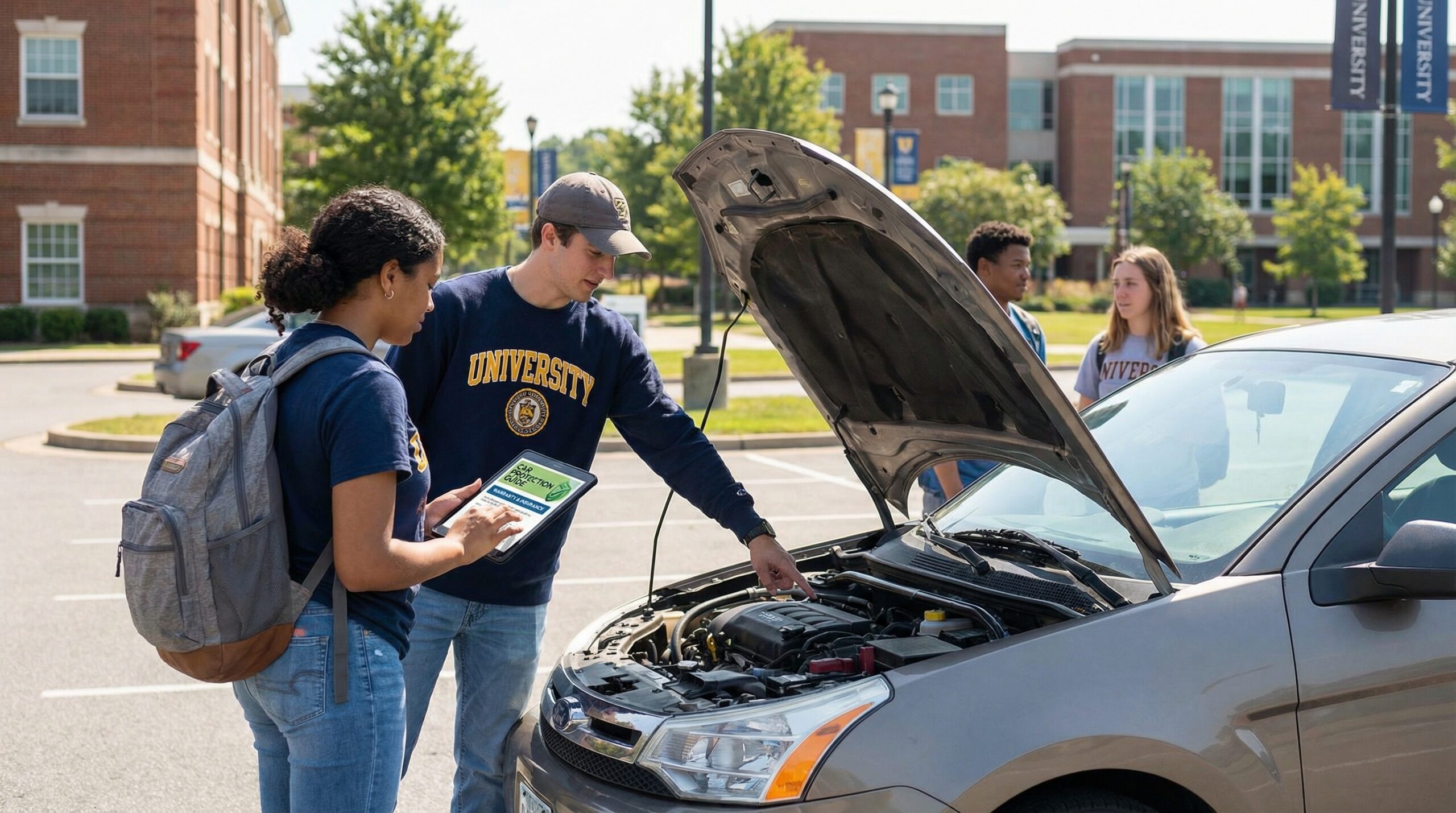
UAH & A&M Students: Car Protection 101
You just bought your first car in Huntsville. The engine runs, the price was right, and you’re ready to drive to class. But then the dealer starts talking about warranties and protection plans. Your head spins with words like “bumper-to-bumper” and “powertrain coverage.”
I get it. When I was a student, I bought a used Honda without understanding any of this stuff. Three months later, my transmission died, and I paid $2,800 out of pocket. That’s a semester of textbooks gone.
This guide will help you understand car protection so you don’t make my mistakes.
Why College Students Need Car Protection
Understanding Your Transportation Investment
Let me be honest with you. A car is not just metal and wheels. It’s how you get to your 8 AM class at UAH. It’s your ride to work after school. It’s your freedom.
But cars break down. According to a study by the Federal Trade Commission, repair bills can cost anywhere from $500 to $5,000 depending on what breaks. For a student living on a tight budget, that’s a huge problem.
Most students at Alabama A&M and UAH drive used cars. These cars are cheaper to buy, but they need more care. The older your car gets, the more things can go wrong. That’s just how it works.
A warranty or protection plan helps cover these unexpected repairs. Think of it like health insurance for your car. You pay a little bit each month, and if something big breaks, you’re covered.
The Huntsville Student Driving Reality
Here’s what I noticed when I was at school in Huntsville. Most of us drove alone to campus. We didn’t carpool much. We needed our cars every single day.
Huntsville isn’t like New York where you can just take the subway. You need a car here. If your car breaks and you don’t have money to fix it, you miss class. You miss work. You fall behind.
I remember my friend Sarah. She was a biology major at UAH. Her car’s engine overheated one summer because the cooling system failed. She didn’t have a warranty. She paid $1,200 to fix it and had to work extra shifts at Starbucks for two months.
Alabama weather is tough on cars too. Summers are hot and humid. Your A/C works overtime. Winters can get cold enough that batteries die. These things wear out your car faster. Protection helps.
What Is a Car Warranty?
Factory vs Extended Warranties Explained
Let’s start simple. A warranty is a promise. When you buy a new car, the manufacturer gives you a factory warranty. This is included in the price. It usually lasts 3 years or 36,000 miles, whichever comes first.
The factory warranty covers most parts of your car. If something breaks because of bad manufacturing, they fix it for free. This is sometimes called a bumper-to-bumper warranty because it covers almost everything from the front bumper to the back.
But here’s the thing. Most students don’t buy brand new cars. We buy used cars. When you buy a used car, the original warranty might be expired or almost done. This is where extended warranties come in.
An extended warranty is not really a warranty. It’s actually called a vehicle service contract. You pay extra money to get more coverage after the factory warranty ends. You can buy this from the dealer or from a third-party company.
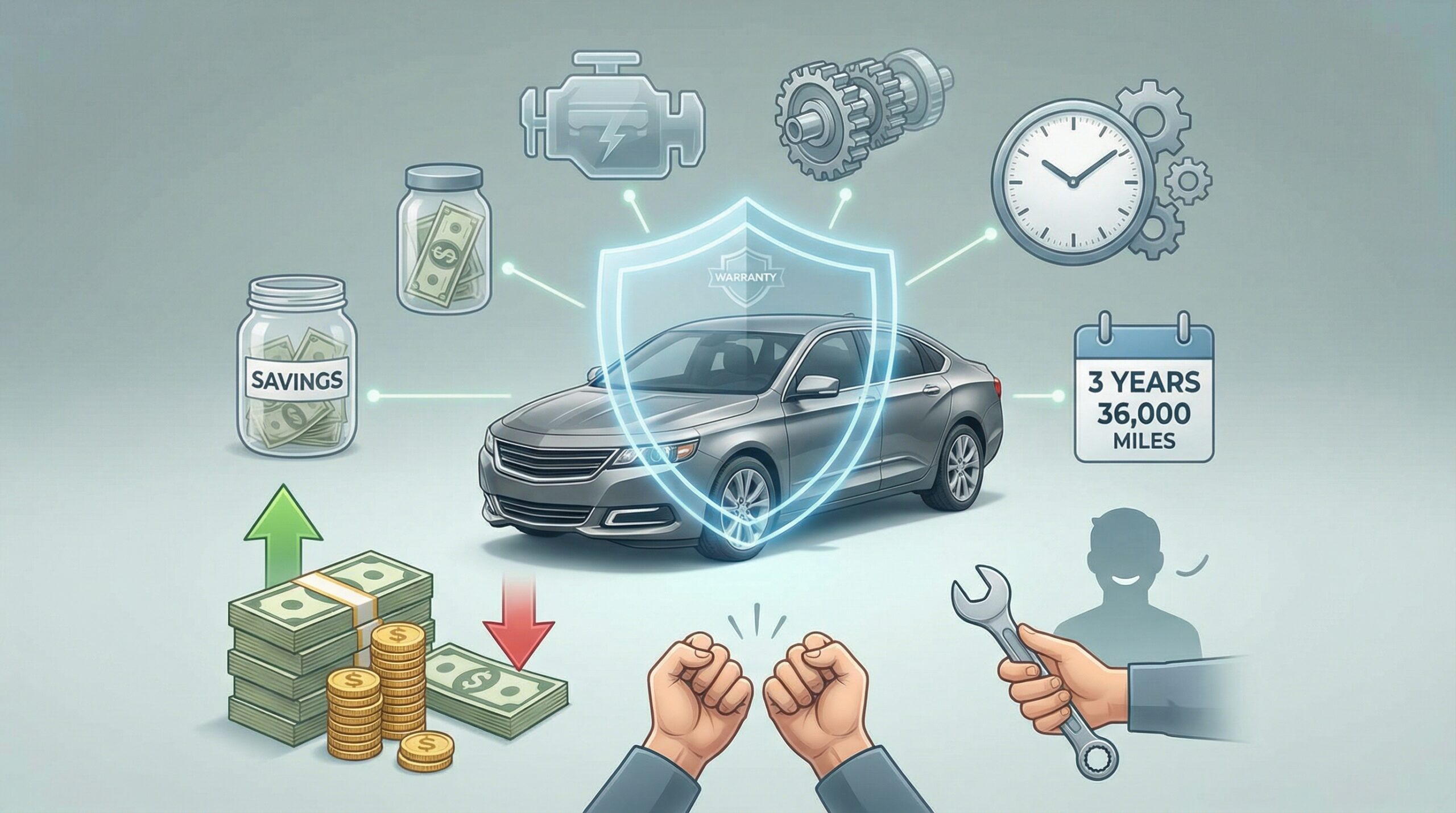
How Warranties Protect Your Budget
Think about it this way. Without a warranty, every repair comes from your pocket. A broken transmission costs $3,000. A failed engine costs even more. Most students don’t have that kind of money sitting around.
With a warranty, you pay a small monthly payment or a one-time fee. Then, when something covered breaks, you only pay a deductible. A deductible is a small amount, usually $50 to $200. The warranty pays the rest.
Let me give you a real example. My roommate had a third-party warranty on his Nissan Altima. His electrical system died. The repair shop said it would cost $1,400. He paid a $100 deductible, and his warranty covered the rest. He saved $1,300.
Not all warranties are created equal, though. Some cover a lot. Some cover very little. You have to read carefully and understand what you’re buying. That’s what this guide is for.
Dealer Warranties: The Good and The Bad
What Dealerships Offer Students
When you buy a used car from a dealership in Huntsville, they’ll probably try to sell you a warranty. This might be a manufacturer extended warranty or a third-party plan that the dealer sells.
The good part about dealer warranties is convenience. You buy the car and the warranty at the same time. Everything is in one place. If you need repairs, you can often go back to that same dealership.
Some dealer warranties use genuine parts from the manufacturer. This can be good because these parts are made specifically for your car. They usually fit better and last longer than aftermarket parts.
But here’s what I learned. Most dealer warranties are actually sold by third-party companies. The dealer is just the middle person. They add a markup to make money. So you’re often paying more than you would if you bought directly from the warranty company.
Hidden Costs You Should Know About
Here’s where it gets tricky. Dealers sometimes use pressure tactics. They make you feel like you have to buy the warranty right now, or you’ll lose the deal. That’s not true. You can always say no and buy a warranty later.
The price can be inflated too. According to consumer protection research, dealerships can charge way more than what the warranty actually costs. Some mark it up by 200% or 300%.
Another hidden cost is the interest rate. If you roll the warranty cost into your car loan, you pay interest on it for years. A $2,000 warranty might end up costing you $2,500 or more after interest.
Also, many dealer warranties limit where you can get repairs. They might say you can only use their dealership or authorized repair shops. If you’re on a road trip and your car breaks down, you might be stuck.
I once talked to a student who had a dealer warranty. Her car broke down in Birmingham, two hours from Huntsville. Her warranty only worked at her Huntsville dealership. She had to tow the car all the way back. The tow cost her $400.
Third-Party Warranties: Your Alternative Option
How Third-Party Plans Work
A third-party warranty comes from an independent company. Companies like Endurance, CARCHEX, or Total Auto Protect sell these plans directly to car owners. You don’t have to buy them at the dealership.
The way it works is simple. You pick a plan online or over the phone. You pay monthly or all at once. Then, when your car needs a covered repair, you call the warranty company. They approve the work, and you take your car to any licensed repair shop they approve.
Most third-party warranties let you use any ASE-certified mechanic. ASE means Automotive Service Excellence. It’s a certification that shows the mechanic knows what they’re doing. This gives you way more options than dealer warranties.
You can also customize your coverage. Want just powertrain coverage to save money? You can do that. Want full bumper-to-bumper coverage? That’s available too. You choose what fits your budget.
Flexibility and Cost Benefits
The biggest benefit is cost. Third-party warranties usually cost less than dealer warranties. You’re buying directly from the company, so there’s no dealership markup. More money stays in your pocket.
Let me share what happened with me. After my transmission disaster, I researched third-party warranties. I found a plan that covered my engine, transmission, and electrical system for $89 a month. The dealer had wanted $150 a month for similar coverage.
Another benefit is flexibility with repairs. Most third-party plans have a big network of repair shops. If you’re traveling or if you have a favorite local mechanic, you can often use them. You’re not locked into one place.
Many third-party warranties also include extras like roadside assistance. If you get a flat tire or your battery dies, they send help. Some even cover rental reimbursement so you can rent a car while yours is being fixed.
But you have to be careful. Not all third-party companies are trustworthy. Some have bad reviews. Some make it hard to file a claim. Some deny claims for small reasons. You need to research before buying.
Dealer vs Third-Party: The Real Comparison
Coverage Differences That Matter
Let’s break down the real differences. Dealer warranties often cover more if they’re manufacturer-backed. They use genuine parts. The claims process is usually straightforward. You know exactly what you’re getting.
Third-party warranties vary a lot. Some are great. Some are terrible. The coverage depends on which plan you buy. A basic plan might only cover the engine and transmission. A premium plan might cover almost everything.
Here’s what matters for students. Check if the warranty covers common problems. Does it cover the cooling system? The fuel system? Electrical components? These are things that break on used cars.
Also check exclusions. Some warranties don’t cover pre-existing problems. If your car already has an issue when you buy the warranty, they won’t fix it. Some have a waiting period of 30 to 90 days before coverage starts.
Maintenance requirements matter too. Most warranties say you have to do regular oil changes and inspections. If you skip maintenance, they can deny your claim. Keep all your service records. You’ll need proof.
Price Breakdown for Students
Let’s talk numbers. According to industry research, extended warranties cost about $132 per month on average. Prices range from $79 to $203 depending on your car and the coverage level.
Dealer warranties tend to be on the higher end. You might pay $150 to $200 a month for good coverage. The price goes up if your car is older or has high mileage. A car with 100,000 miles costs more to cover than one with 50,000 miles.
Third-party warranties can be cheaper. Basic powertrain coverage might cost $70 to $100 a month. Full bumper-to-bumper coverage might be $120 to $180. You can find deals if you shop around.
But remember, cheaper isn’t always better. A cheap warranty that doesn’t pay claims is worthless. Look at reviews on the Better Business Bureau website. See what other customers say. A good warranty that costs a bit more is better than a bad warranty that costs less.
Also think about the deductible. Some plans have no deductible. Some have $50. Some have $200. A higher deductible means lower monthly payments. A lower deductible means higher monthly payments. Pick what works for your budget.
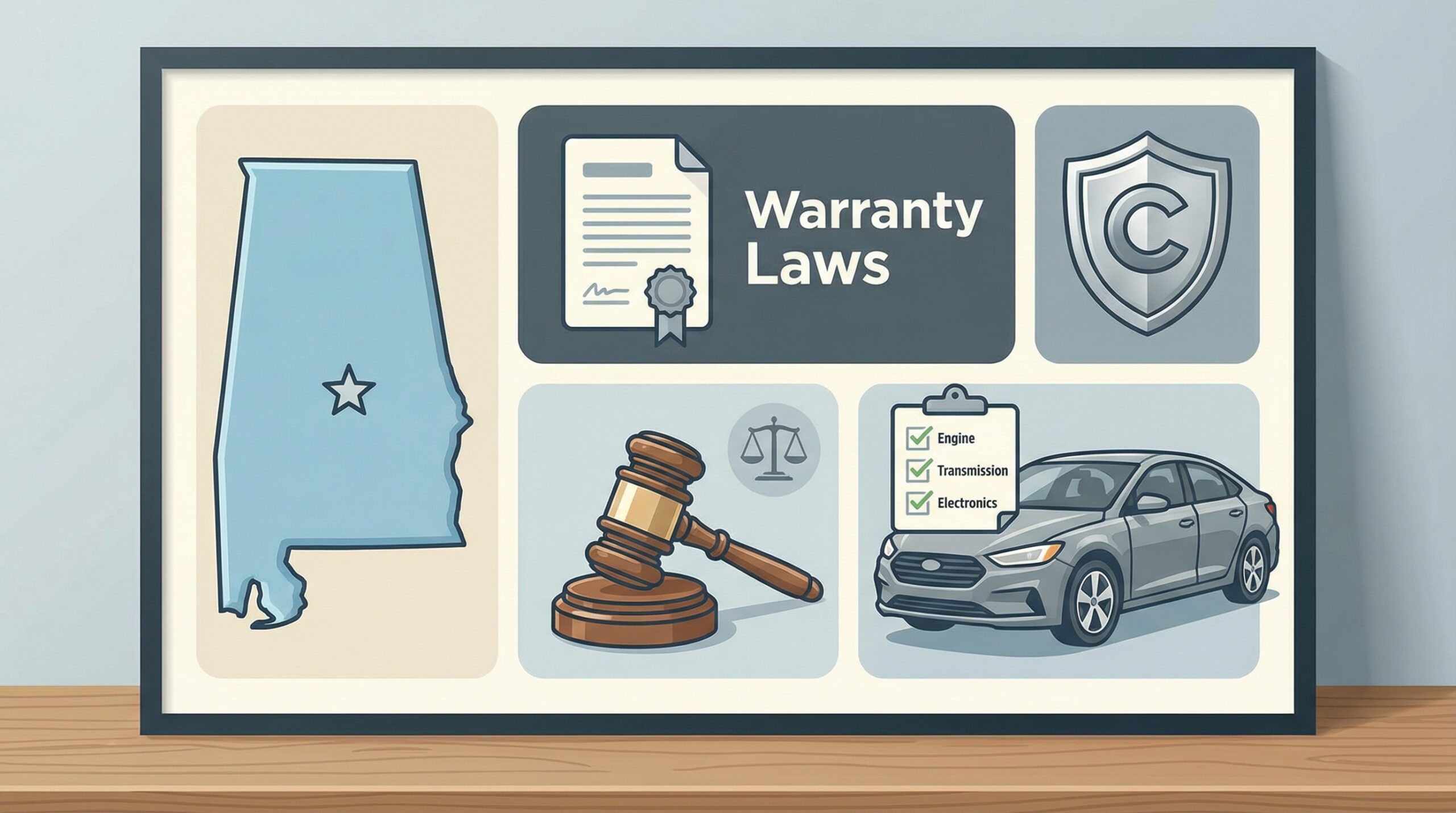
Alabama’s Car Warranty Laws
Model Act Protection in Alabama
Here’s something most students don’t know. Alabama has strong warranty laws. Alabama was one of the first states to adopt the Model Act for service contracts. This law protects you when you buy a warranty.
According to Alabama’s service contract laws, you get 10 days to change your mind after buying a warranty. If you read the contract and don’t like it, you can get a full refund. If the contract arrives by mail, you get 20 days.
The law also says warranty companies must be insured. They have to prove they can pay claims. If they can’t get insurance, they must put money in a trust fund. This protects you if the company goes out of business.
Every warranty sold in Alabama must clearly tell you what’s covered and what’s not. They must tell you about any deductibles. They must explain what you need to do to keep the warranty active, like regular maintenance.
If a company uses aftermarket parts instead of genuine parts, they have to tell you in the contract. You have a right to know what kind of parts they’ll use to fix your car.
Your Legal Rights as a Student Buyer
In Alabama, no one can force you to buy a warranty. A dealership cannot make your car loan depend on buying their warranty. That’s illegal. If they try this, walk away. Report them.
You can also get a pro-rated refund if you cancel your warranty early. Let’s say you buy a 5-year warranty but sell your car after 2 years. You should get money back for the unused 3 years, minus any claims you made and maybe a 10% administrative fee.
Companies that break Alabama’s warranty laws can get in big trouble. They can be fined $500 per violation, up to $10,000 total. They can lose their license to sell warranties in Alabama. This gives you real protection.
Keep copies of everything. Your contract. Your payment receipts. Your maintenance records. If there’s ever a dispute, you’ll need these documents. Don’t just rely on email. Print out physical copies and keep them in a folder.
If a warranty company denies your claim unfairly, you have options. You can file a complaint with the Alabama Attorney General’s office. You can contact consumer protection agencies. Don’t just accept a bad answer.
Smart Tips for Huntsville Students
Questions to Ask Before Buying
Before you buy any warranty, ask these questions. First, what exactly is covered? Get a list of parts and systems. Don’t accept vague answers like “most things.” You need specifics.
Second, what’s not covered? Every warranty has exclusions. They won’t cover wear-and-tear items like brake pads or tires. They won’t cover damage from accidents. Know what’s excluded so there are no surprises.
Third, where can I get repairs done? Can you use any licensed mechanic? Or do you have to use specific shops? This matters a lot if you travel or if you have a trusted mechanic already.
Fourth, what’s the claims process? Do you call them first? Do you get approval before the repair? How long does approval take? A complicated claims process can be frustrating when you need your car fixed fast.
Fifth, is this warranty transferable? If you sell your car, can the new owner keep the warranty? A transferable warranty adds value to your car when you sell it. It can help you get a better price.
Red Flags to Watch Out For
Watch out for high-pressure sales tactics. If someone is pushing you to buy right now, today, or the deal is gone, that’s a red flag. Good warranties will still be available tomorrow. Take your time.
Be careful of unsolicited calls or emails. If a random company calls saying your warranty is expiring, that’s probably a scam. Reputable companies don’t cold-call people. Hang up and research on your own.
Read online reviews before buying. Check the Better Business Bureau. Look at customer complaints. If a company has tons of bad reviews about denying claims, stay away. That’s a sign they won’t help you when you need it.
Don’t finance the warranty with your car loan. Pay for it separately if possible. If you add it to your loan, you’ll pay interest on it for years. A $2,000 warranty could cost you $2,500 or more after interest.
Finally, if a price seems too good to be true, it probably is. A warranty that costs $30 a month won’t give you great coverage. You get what you pay for. Look for fair prices from trustworthy companies, not the absolute cheapest option.
Conclusion
Protecting your car doesn’t have to be confusing. Whether you choose a dealer warranty or a third-party warranty, the key is understanding what you’re buying. Read the contract carefully. Ask questions. Know your rights under Alabama law.
Remember, a warranty is an investment in peace of mind. It protects your budget from unexpected repairs. For students at UAH and Alabama A&M, that protection can be the difference between staying on track and falling behind.
Take your time. Do your research. Compare options. And don’t let anyone pressure you into a decision you’re not comfortable with. Your car is important, and so is your money. Make the choice that’s right for you.
Frequently Asked Questions (FAQs)
Can I buy a warranty after I purchase my used car?
Yes, you can buy a warranty after purchasing your car. You don’t have to buy it at the dealership on the same day. Many third-party companies let you buy coverage weeks or even months after you get your car. However, some companies have limits. They might not cover cars older than 10 years or with more than 150,000 miles. Also, there’s usually a waiting period of 30 to 90 days before coverage starts. During this time, they won’t cover any repairs. This prevents people from buying a warranty only after something breaks.
Do I have to use the dealership for repairs?
It depends on your warranty. Dealer warranties often require you to use authorized dealerships or specific repair shops in their network. Third-party warranties usually give you more freedom. Most allow you to use any ASE-certified mechanic or licensed repair shop. Always check your contract before buying. If you have a favorite mechanic, make sure your warranty will let you use them. Some warranties require you to call for approval before getting any work done.
Are third-party warranties cheaper than dealer warranties?
Usually, yes. Third-party warranties tend to cost less because you’re buying directly from the warranty company. There’s no dealership markup. You can save 20% to 40% by buying a third-party warranty instead of buying through a dealer. However, the cheapest option isn’t always the best. Make sure the company is reputable and actually pays claims. A cheaper warranty from a bad company is worse than paying more for a trustworthy one.
What’s the difference between powertrain and bumper-to-bumper coverage?
Powertrain coverage only covers the parts that make your car move. This includes the engine, transmission, and drive axle. It’s cheaper but covers less. Bumper-to-bumper coverage covers almost everything on your car from front to back. This includes electrical systems, cooling systems, fuel systems, and more. It costs more but gives you better protection. For students with older cars, bumper-to-bumper is usually worth it because more things can break.
How does Alabama’s Model Act protect me?
Alabama’s Model Act requires all warranty companies to be insured or put money in a trust fund. This means they have the money to pay your claims. You also get 10 days to cancel after buying and get a full refund. The law makes companies tell you exactly what’s covered and what’s not. They have to disclose deductibles and maintenance requirements. If they break these rules, they can be fined up to $10,000 and lose their license. This gives you real protection that many other states don’t have.