
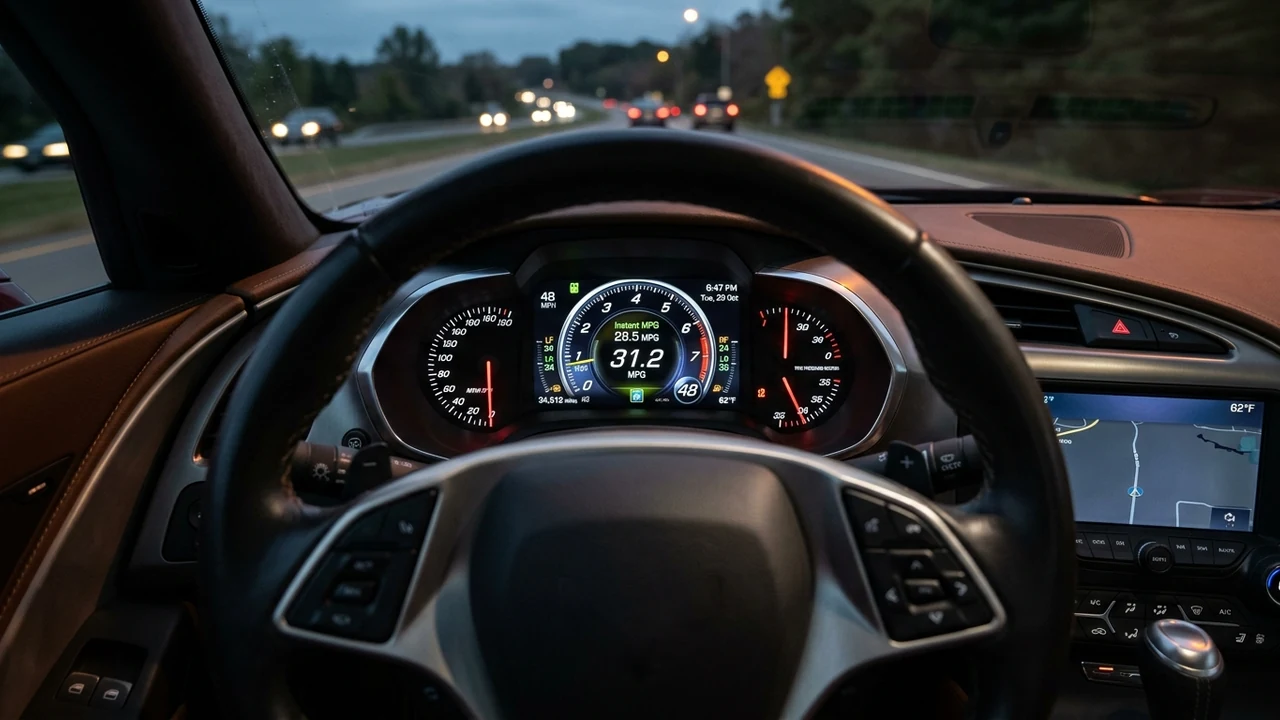
Gas is not cheap, and here’s the part that really stings. Your car does not lose gas mileage all at once. It fades slowly, month by month, until you’re filling up more often and wondering what went wrong. The good news is simple. Most of that loss is fixable, and it doesn’t take a mechanic’s brain to stop it.
I’ve worked on a lot of cars over the years. The ones that sip fuel instead of gulping it almost always share one thing. Their owners handle the small stuff before it grows into big stuff. In this guide, I’ll show you how vehicle maintenance supports better fuel efficiency over time, which jobs matter most, and how a little care keeps real money in your pocket for years.
What Does Fuel Efficiency Really Mean?
Fuel efficiency is easy to understand. It’s how far your car can go on one gallon of gas. We measure it in miles per gallon, or MPG. Higher MPG means your vehicle travels farther on less fuel. Lower MPG means you burn more gas for the same trip. No mystery there.
Here’s why even a small change matters so much. A typical household spends a big chunk of money on gas each year. If your car quietly loses just 10% of its MPG, that’s like adding one extra fill-up out of every ten. Do the math over a full year and it adds up fast. Small leaks in efficiency drain a surprising amount of cash.
Your MPG is not a fixed number stamped on the car forever. It moves. It rises and falls based on how you drive, the weather, and the health of your engine. Two identical models can differ by 20% or more in real-world mileage, and the gap almost always comes down to care. One owner keeps up. One owner skips. The pump tells the difference.
Why Your Car Slowly Drinks More Gas Over Time
In my professional experience, I’ve found that no car “suddenly” gets thirsty. It creeps up on you. A little dirty here, a little worn there, and six months later the driver swears the gas gauge is broken. It’s not broken. The car is just tired and working too hard.
Parts wear out in small steps. Spark plugs age. Oil turns thick and dirty. Tires slowly lose air. Each one alone might cost you only 1% or 2% in mileage. Stack four or five together, though, and you can quietly lose 10% to 15% of your gas mileage without a single warning light flashing.
Think of a runner with a stone in each shoe. One stone is annoying. Five stones, plus a heavy backpack and flat shoes, and now they’re crawling. Your engine feels the same when many small components fall out of shape. It fights harder to do the same job, and harder work always means more fuel burned per mile.
The sneaky part is how normal it feels. Modern vehicles are smart, and they hide problems well. The car keeps driving smoothly even when something is off, so you adjust to the slow slide without noticing. This is exactly why routine checks beat waiting for trouble. Here’s a quick look at how the numbers stack up.
| Neglected part or habit | Rough cost to your gas mileage |
|---|---|
| Low tire pressure | Up to 3% |
| Wrong or old motor oil | 1%–2% |
| Engine out of tune | About 4% |
| Faulty oxygen sensor | Up to 40% |
| Aggressive driving | 10%–40% |
Tire Pressure: The Cheapest Way to Save Gas
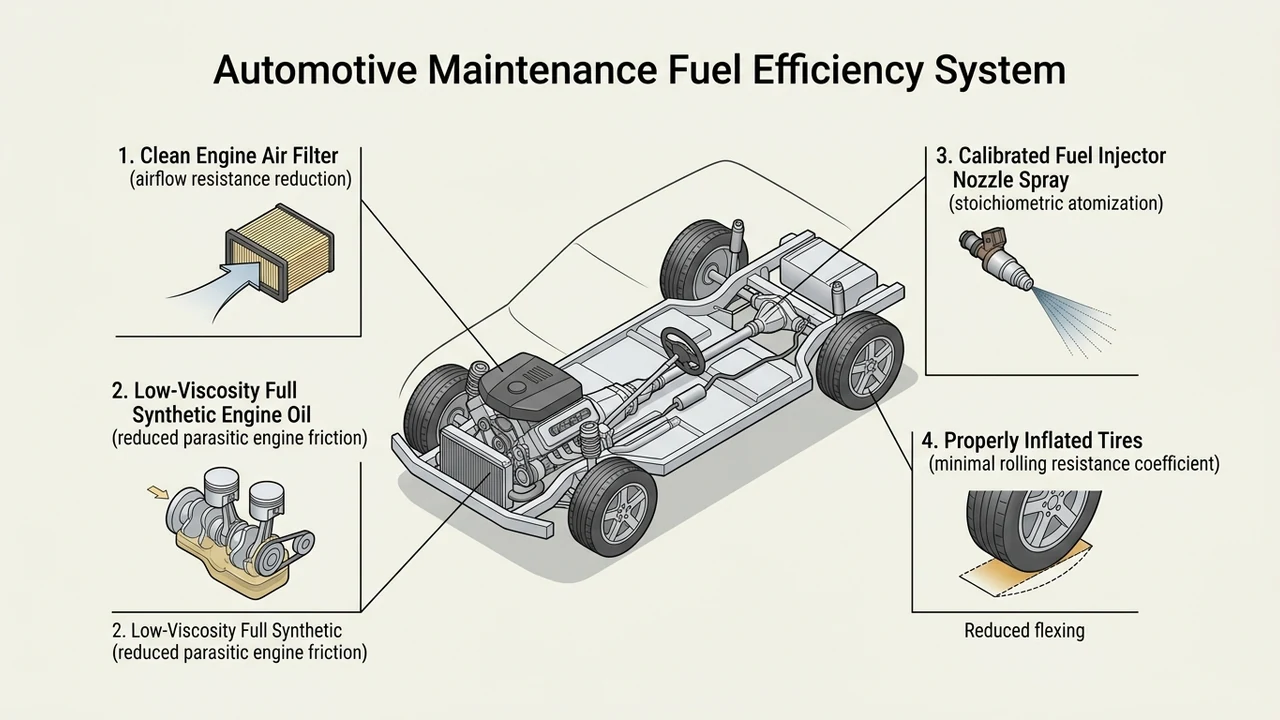
Soft tires are the number one gas waster I see roll into the shop, and they’re the easiest thing on this whole list to fix. When your tires are low, they drag on the road. Your engine has to push harder to keep them rolling. More push means more fuel burned for nothing.
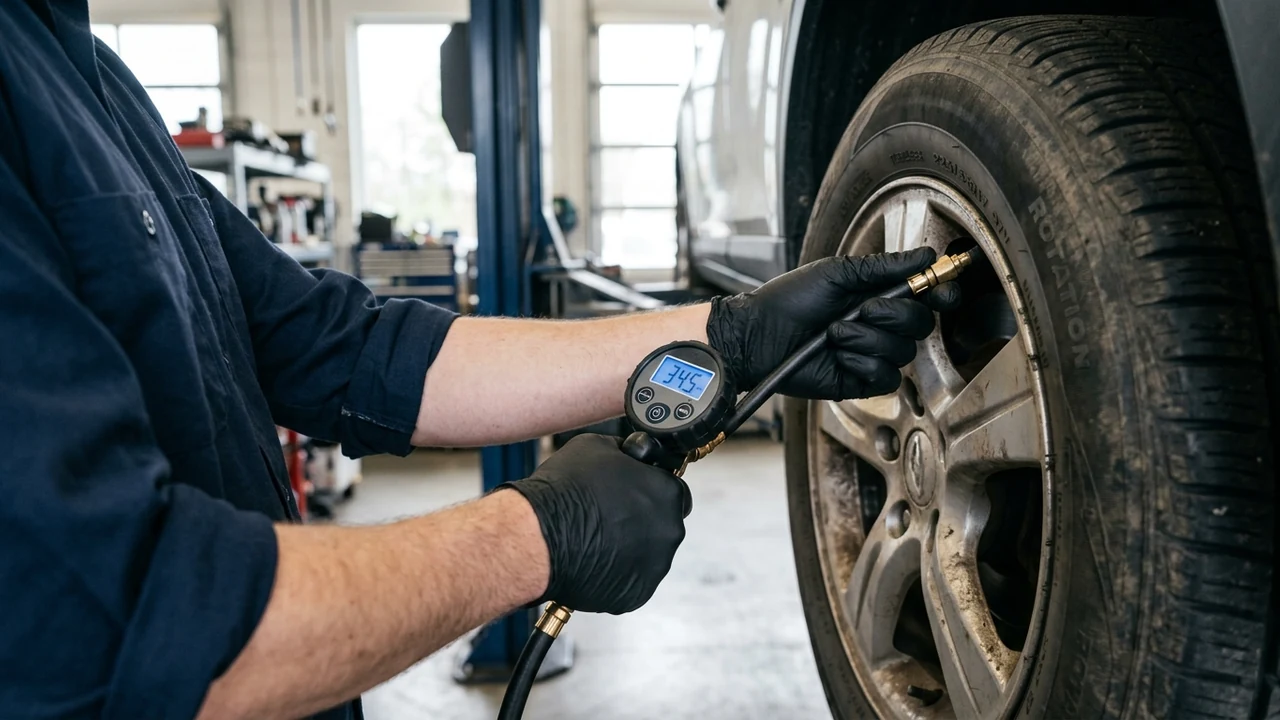
Here’s a number worth taping to your dash. For every 1 psi your tires lose, your gas mileage can drop about 0.2%. That sounds tiny, but tires leak air all the time, and a few pounds low on all four adds up quickly. Keeping them at the proper pressure can improve your mileage by up to 3% in some cases. That’s free money.
Air escapes on its own, and cold weather makes it worse. In North Alabama, a chilly morning can pull a few psi right out of your tires overnight, then the afternoon sun warms them and the number climbs back. That daily swing is why a quick monthly check is smart. It costs you nothing and takes about five minutes.
Fill to the number on the sticker inside your driver’s door, not the max printed on the tire itself. The sidewall number is the ceiling, and it’s too high for daily use. Check them cold, before you drive far. A quick routine like this keeps you safe and saves gas at the same time.
- Check pressure once a month, always when the tires are cold.
- Use the number on the driver’s door sticker, not the sidewall.
- Don’t forget the spare tire.
- Look for uneven or edge wear while you’re down there.
Fresh Motor Oil Keeps the Engine Smooth
I’ve handled cases exactly like this before. A driver rolls in with sinking mileage, and the oil on the dipstick looks like black syrup. Old, dirty oil is one of the most common efficiency killers I find, and it’s also one of the cheapest to fix.
Motor oil is the slippery layer between moving metal parts. Fresh oil lets the engine glide. Old oil turns thick and gritty, so parts grind and the engine strains. Using the maker’s recommended grade of oil can improve your gas mileage by 1% to 2%. Pour in the wrong, thicker grade and you lose that same 1%–2% right back.
Grade matters more than most people think. If your engine was built for 5W-20 and you fill it with 5W-30, you force it to push heavier oil for no reason. That extra drag shows up at the pump. Look for oil marked “Energy Conserving” on the label too, because it carries additives that cut friction inside the engine.
Should you go synthetic or stick with regular oil? It depends on your car and how you drive it. In the Alabama heat, synthetic often holds up better on long, hot days. I broke down the trade-offs in our guide on synthetic vs conventional oil for Alabama drivers. Pick the grade your engine was made for, and change it on time.
How often should you change it? Follow your owner’s manual, not the old “every 3,000 miles” habit. In our shop, we see about 8 out of 10 cars do just fine on the manufacturer’s longer service interval when they run quality oil. Clean oil is cheap. A worn out engine is not.
Spark Plugs and a Well-Tuned Engine
Your engine makes power by burning fuel in tiny, controlled sparks. Spark plugs create those sparks. When they get worn, the spark grows weak. A weak spark means poor combustion, wasted fuel, and a rough-running motor that drinks more than it should.
A misfiring or badly tuned engine burns gas it never turns into motion. Fixing a car that’s clearly out of tune can raise its gas mileage by about 4% on average. Fresh plugs help the engine fire clean on every cylinder, every time. That clean burn is where good performance and good mileage meet.
Most plugs last a long time now, but they don’t last forever. If you feel a stumble, a shake at idle, or slow pickup after many miles, your plugs may be finished. Not sure about timing? Here’s our plain-English guide on when to replace your spark plugs. It’s a small part with a big effect on how your car runs.
A real tune-up is more than plugs, though. It’s a health check for the parts that control combustion and fuel flow. When these work together, the engine runs smooth and sips gas. When one drifts off, the whole system drags. This is where regular service quietly pays for itself.
The Air Filter Truth Most People Get Wrong
I’ve seen this myth many times in my work. Someone swaps a dirty air filter, then swears their gas mileage jumped overnight. On most modern cars, that’s not really what happened, and the government’s own testing backs me up on it.
On today’s fuel-injected cars, a clean air filter helps the car speed up faster, but it does not raise your MPG. According to the U.S. Department of Energy and EPA at fueleconomy.gov, replacing a clogged filter on a modern, computer-controlled engine improves acceleration but not fuel economy. On older carbureted cars, though, it can boost both by a few percent.
So why change it at all? Because a clogged filter still chokes airflow and can hurt performance over time. It also guards your engine from dirt and dust, which matters a lot on dusty back roads. A clean filter is smart, honest care. Just don’t expect a magic MPG jump on a newer vehicle.
This is a good lesson about maintenance in general. Not every job saves gas the same way. Some fixes protect the engine, some lift your mileage, and some do both. Knowing the difference keeps you from wasting money on the wrong promise. A straight-talking shop will always tell you which is which.
Clean Fuel System: Injectors, Sensors, and Combustion
Your fuel system sprays gas into the engine as a fine mist. Fuel injectors do the spraying. Sensors watch the mix and adjust it on the fly. When these parts get dirty or fail, your combustion goes off, and fuel gets wasted with every mile you drive.
One part matters more than most people know: the oxygen sensor. It tells the engine how much fuel to burn. When it fails, the engine guesses wrong and dumps in extra gas. The U.S. Department of Energy reports that fixing a serious problem like a faulty oxygen sensor can improve your mileage by as much as 40% (energy.gov). That’s not a typo. Forty percent.
Clogged injectors are quieter trouble. They spray an uneven pattern, so the engine runs rich or lean and burns more fuel than it needs. You might feel a rough idle or lazy pickup. If your car hesitates or has been drinking more gas lately, learn the signs of fuel injector problems so you catch it early instead of late.
Here’s the tricky part. A weak oxygen sensor or a dirty injector may not trip a warning light at all. The car just feels “a little off” and costs more at the pump. If your fuel bill crept up and you can’t find the reason, we can run a scan and pinpoint it fast. Take a look at what Brian’s Buddies members actually get when they bring a car in.
How You Drive Matters as Much as Maintenance
In my professional experience, the driver’s right foot moves the MPG needle just as much as any wrench I turn. You can keep a car in perfect shape and still waste gas with heavy, angry driving. The best part? These habits cost nothing to fix.
Fast starts and hard braking burn fuel you never needed. The Department of Energy and EPA report that aggressive driving can lower your gas mileage by 15% to 30% on the highway and 10% to 40% in stop-and-go traffic (fueleconomy.gov). Smooth, calm driving is basically free gas. Ease onto the pedal and let the car flow.
Speed plays a big role too. Most cars start losing mileage fast once you pass about 50 mph. Every 5 mph over that mark is like paying more per gallon at the pump. Wind resistance climbs quickly at high speed, and your engine fights it the whole way. Back off a little on the highway and you’ll feel the change in your tank.
Weight and idling pile on as well. An extra 100 pounds of junk in the trunk can cut your MPG by about 1%, and idling burns a quarter to a half gallon of gas per hour while you sit still. Clean out the clutter. Shut the engine off during long waits. These are tiny habits with real savings over time.
| Driving habit | What it does to your gas |
|---|---|
| Fast starts and hard stops | Wastes up to 10%–40% in city traffic |
| Speeding over 50 mph | Loses MPG fast; costs more per gallon |
| Extra 100 lbs of cargo | Cuts MPG by about 1% |
| Long idling | Burns ¼ to ½ gallon per hour |
| Smooth, steady driving | Can save around 10% overall |
Huntsville Traffic, Alabama Heat, and Your MPG
Where you drive changes how much gas you burn, and Huntsville has its own challenges. Our stop-and-go traffic on the busy roads keeps your engine stuck in its thirstiest mode. Lots of starts. Lots of stops. Lots of wasted fuel between every light along the way.
Stop-and-go driving is the worst case for mileage. This is exactly where that 10% to 40% loss from hard driving bites the hardest. Add our long, hot summers on top, and your car works even harder. Heat is tough on tires, oil, and the battery, and each one can nudge your efficiency down over time.
Hills and heat also mean your cooling system and engine oil earn their keep. Thin, old oil breaks down faster in high heat, and low tires flex more and build heat on hot pavement. These small things turn into bigger, pricier things when North Alabama weather gets ignored. Local cars really do need local care.
This is why I tell Huntsville drivers not to wait for a warning light. A quick seasonal check before summer keeps your fuel costs flat when the heat spikes. If you’d rather skip the guessing, here’s why our members get faster answers and repairs when the weather turns rough.
A Simple Maintenance Schedule to Protect Your Gas Mileage
After years under the hood, I’ve noticed the drivers who save the most gas all share one habit. They never skip the boring stuff. I once had a customer put off “small” maintenance for two years, then face a repair bill three times bigger than the care would have cost. A simple plan stops that story cold.
Most gas-saving jobs are cheap and quick. Skipping them is what gets expensive. The parts that guard your mileage are oil, tires, spark plugs, filters, and sensors. Stay on top of these five and you protect most of your efficiency. For the full picture, here’s the maintenance schedule most drivers ignore and why it quietly costs them.
| Maintenance task | How often (typical) | Why it helps fuel efficiency |
|---|---|---|
| Check tire pressure | Once a month | Low tires can cost up to 3% MPG |
| Change motor oil | Per owner’s manual | Right grade saves 1%–2% |
| Replace spark plugs | Per manual (long interval) | Fixing out-of-tune adds about 4% |
| Check oxygen sensor | If MPG drops | Bad sensor can waste up to 40% |
| Replace air filter | Per manual or when dirty | Protects the engine; helps older cars |
Notice the phrase “per manual.” Your owner’s manual is the real boss here, not a shop trying to sell you extra work. Every engine is a little different, so follow the book written for your exact vehicle. Do that and you’ll rarely go wrong. That’s honest maintenance boiled down to one sentence.
One more tip that pays off later. Keep records of what you did and when. It helps you spot patterns, plan ahead, and it lifts your resale value down the road. Buyers trust a car with a clean history. Regular care becomes a story your vehicle tells the next owner for you.
What Better Fuel Efficiency Saves You Over Time
Let’s talk money, because that’s the real prize. Small maintenance wins look tiny on their own. But they stack, and they repeat every single month for years. That’s the quiet magic of “over time.” The savings pile up while you barely notice them.
Say good care keeps your MPG about 10% higher than a neglected version of the same car. On a fuel bill of a couple thousand dollars a year, that’s a couple hundred dollars back in your pocket every year. Stretch that across a decade of owning the car, and you’re talking real thousands saved. Same car. Better habits. Bigger bank account.
There’s an environmental win folded in too. Burning less gas means fewer emissions coming out of your tailpipe. Better fuel efficiency is good for your wallet and good for the air we all share here in Alabama. You don’t need a brand-new electric car to help. A well-kept engine already burns cleaner and wastes less.
Don’t forget the hidden bonus, either. The same care that saves fuel also prevents breakdowns. Clean oil, good plugs, and healthy sensors mean fewer surprise repairs and fewer tows on the side of the highway. You save at the pump and at the shop. That’s the long game of routine maintenance done right.
The Bottom Line
Better gas mileage isn’t luck. It’s the payoff from small, steady care. Keep your tires full. Change your oil on time with the right grade. Fix worn plugs and bad sensors before they drain your tank. Drive smooth, skip the junk in the trunk, and your fuel efficiency will hold strong for years instead of slipping away.
None of this is hard, and that’s the best part. You don’t need to be a mechanic to win here. You just need a simple plan and a little follow-through each month. Your car will thank you with better mileage, fewer repairs, and more money left over when the bills come due.
If your fuel costs crept up and you can’t find the reason, let’s take a look together. We can run a scan, check the components that matter most, and tell you straight what’s dragging your MPG down. Small fixes today keep your vehicle running strong and efficient for a long time to come.
Have you noticed your gas mileage slipping lately? Pick one tip from this list and try it this week. I’d love to hear which change made the biggest difference for you and your car.
Frequently Asked Questions
Does regular maintenance really improve fuel efficiency?
Yes, and the small jobs add up. Proper tires, fresh oil, good spark plugs, and healthy sensors each save a little fuel on their own. Put together, they can protect 10% or more of your gas mileage over time. Skip them and your MPG slowly falls without warning. Regular maintenance is the cheapest way to keep your car efficient for the long haul.
What single maintenance task saves the most gas?
Fixing a serious engine problem, like a faulty oxygen sensor, saves the most in one shot. The U.S. Department of Energy says it can improve mileage by up to 40%. For everyday care, keeping your tires at the proper pressure is the cheapest and fastest win. Both matter a lot. One is a repair, and the other is a simple monthly habit.
How often should I check my tire pressure?
Once a month is the sweet spot, plus a check before any long trip. Tires lose air on their own, and cold mornings pull out even more. Every 1 psi low can cost you about 0.2% in mileage, so it adds up. Check them cold, use the door-sticker number, and don’t skip the spare. The whole thing takes five minutes.
Will a new air filter improve my gas mileage?
On most modern, fuel-injected cars, no. A clean air filter helps your car speed up, but it does not raise MPG on newer engines. On older carbureted cars, it can help both fuel economy and pickup. Either way, a clean filter guards your engine from dirt and dust, so it’s still smart maintenance worth doing on schedule.
Can how I drive really change my fuel economy that much?
Absolutely, and more than most people believe. Hard starts and heavy braking can waste 10% to 40% in city traffic. Speeding past 50 mph burns more, and extra weight and long idling pile on top of that. Smooth, steady driving can save around 10% all by itself. Your right foot is one of the biggest fuel-saving tools you own.