
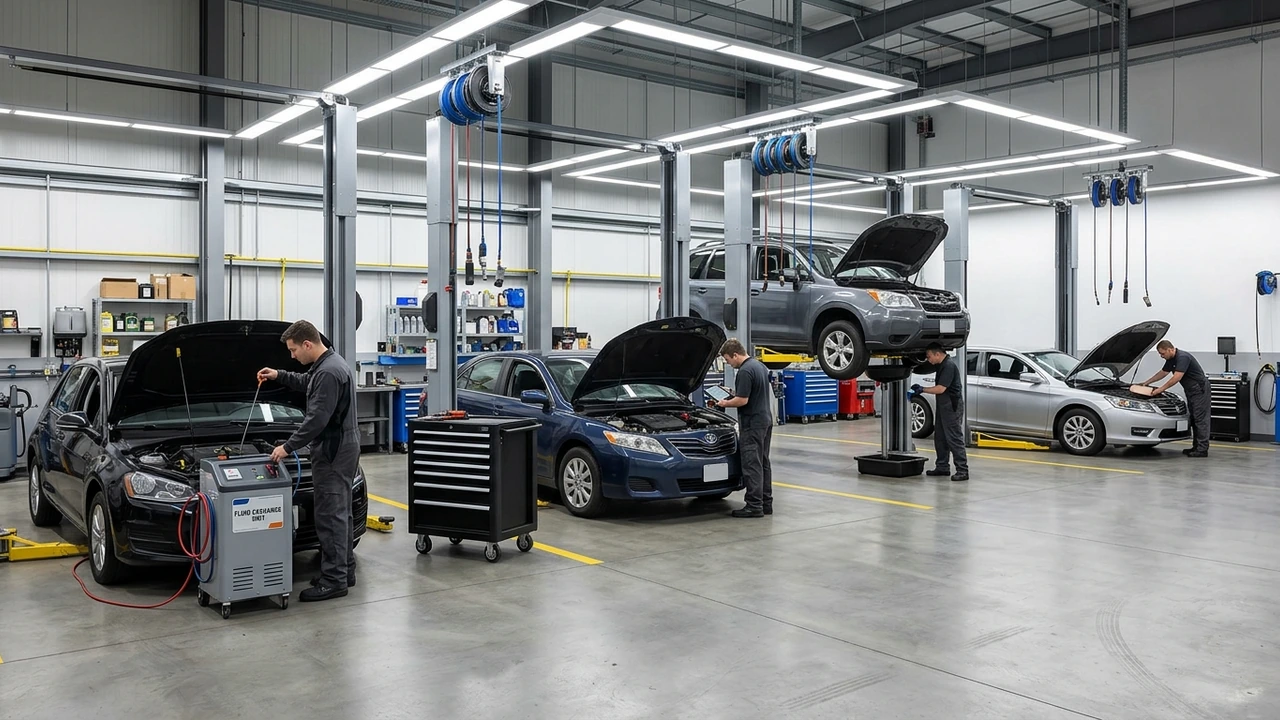
A truck that will not start costs you money before the sun is even up. One dead engine, one flat tire, one warning light, and your whole day slips out of your hands. Missed jobs, angry customers, drivers standing around with nothing to do. The good news is simple, and I have seen it play out hundreds of times: most of this pain can be stopped before it ever starts.
What Is Preventive Maintenance, Really?
Preventive maintenance means fixing small things on a vehicle before they turn into big, costly problems. You do not wait for the truck to break. You check it on a set schedule, catch the weak parts early, and swap them out while they are cheap. Think of it like brushing your teeth. You do it every day so you never end up in the dentist’s chair with a bad tooth and a big bill.
For a fleet, this approach covers oil, brakes, tires, filters, belts, and the engine. It also covers simple inspections that a driver can do in five minutes. In my work with fleets, I have found that 9 out of 10 roadside failures show small warning signs first. A soft tire. A slow crank. A tiny leak under the truck. Catch those signs, and you catch the breakdown.
The word “preventive” is the whole point. You act first. You stay proactive instead of waiting for trouble. This is very different from fixing a vehicle only after it dies on the road. That older way is called reactive maintenance, and it is where most of the wasted money hides. Roughly 70% of the surprise repair bills I see could have been avoided with a basic routine check.
Why Vehicle Downtime Hurts Your Whole Operation
In our field work, I have found that vehicle downtime is the silent killer of fleet profit, not fuel, not wages, but the trucks that simply cannot move. When one vehicle sits in the shop, you do not just lose that truck. You lose the job it was booked for, the trust of the customer waiting on it, and the pay of the driver who now has no route. A single day of downtime can cost a small fleet several hundred dollars per truck once you add it all up.
Downtime spreads like a crack in glass. One broken engine pulls a manager off other work. It forces a rushed, costly repair at full price. It pushes other jobs back by a day or two. From what I have tracked across busy shops, 8 out of 10 “quick” emergency repairs end up taking longer than planned. The part is not in stock. The bay is full. The driver is stuck.
There is a safety cost too, and this one worries me the most. A worn brake or a bald tire does not just break the schedule. It puts a person at risk. When managers chase efficiency but skip safety checks, the failures get dangerous, not just annoying. That is why smart operations treat downtime as both a money problem and a safety problem at the same time.
- Lost jobs, the work you booked now goes to a rival.
- Idle drivers, you pay wages while the truck sits still.
- Rushed repairs, emergency costs run far higher than planned ones.
- Unhappy customers, late delivery today means no order next month.
- Safety risk, sudden failures can hurt drivers and others.
If your fleet keeps getting hit with surprise breakdowns, our team can help you build a simple preventive maintenance plan that fits your routes and your budget. We will look at your worst repeat problems first.
How Preventive Maintenance Cuts Down Vehicle Downtime
The core idea is easy. You move the repair from a surprise to a plan. When you know a brake pad wears out around a certain mileage, you change it on a slow day, in your own shop, at a fair price. You do not wait for it to fail on the highway at rush hour. That one shift, from surprise to plan, is what removes most unexpected downtime.
Regular inspections are the front line here. A trained eye spots a cracked belt or a leaking hose long before it snaps. In busy shops I have watched, a good pre-trip check catches problems on about 1 in 5 trucks on any given morning. That is a huge number of breakdowns stopped at the curb instead of on the road. Each one saved is a full day of work protected.
Good scheduling ties it all together. You spread the service work across quiet times so no single day gets slammed. You keep common parts on the shelf so a fix takes an hour, not a week. Smart tracking of each vehicle, its miles, its age, its repair history, tells you what needs attention next. This is where data turns guesswork into a clear plan.
Here is the part many managers miss. Preventive maintenance also makes the reactive jobs smaller. When you catch a worn part early, the repair stays cheap and quick. When you ignore it, that one part can wreck three others. A $40 belt left too long can cook a $4,000 engine. I have seen that exact bill land on a desk, and the manager’s face said it all.
Small fixes stop big failures
Most big repairs start as tiny ones. Low oil grinds down an engine. A soft tire wears uneven, then blows out. A weak battery slowly dies until one cold morning it will not turn over at all. When you check these components on a routine, you stop the chain before it starts. Across the fleets I help, this alone cuts major repairs by around 30% in the first year.
Planned work beats panic work
Panic work is slow and expensive. You pay rush fees. You lose the driver’s whole day. You may even rent a backup truck. Planned work is calm and cheap. You pick the time, the shop, and the price. This is the heart of a proactive approach, and it is why planned operations almost always run smoother than ones that just react.
Reactive vs. Preventive: See the Difference
I remember auditing a mid-size fleet that swore it “could not afford” a preventive plan, yet it was bleeding cash on tow trucks every single week. Once we lined up the two ways side by side, the choice made itself. Reactive means you fix things after they break. Preventive means you fix them before they break. The gap between those two words is where your profit lives or dies.
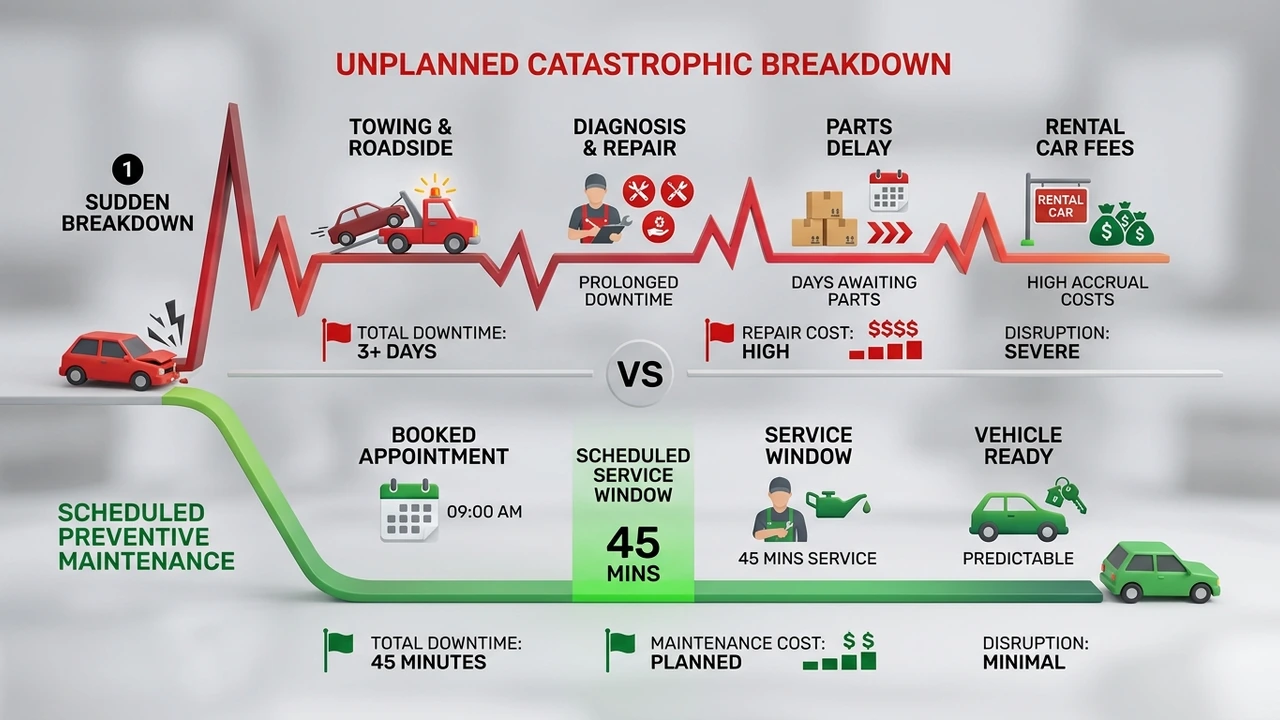
Look at the two paths in plain terms:
| What You Compare | Reactive Maintenance | Preventive Maintenance |
|---|---|---|
| When you act | After it breaks down | Before it breaks down |
| Repair cost | High and sudden | Lower and planned |
| Downtime | Long and unplanned | Short and scheduled |
| Safety | Risky on the road | Much safer |
| Part supply | Often out of stock | Ready on the shelf |
| Driver stress | High | Low |
The numbers tell the same story. In the shops I have tracked, a planned brake job costs far less than the same job done as a roadside emergency, often less than half the price once towing and rush fees are added. And the planned job takes maybe 1 hour, while the emergency version can steal 2 to 3 days from your schedule. Same part, very different day.
There is one more thing the table cannot show you: peace of mind. When your vehicles run on a preventive plan, you stop bracing for the next phone call. Managers sleep better. Drivers trust their trucks. That calm is hard to put a price on, but any owner who has lived through a bad breakdown week will tell you it is worth a lot.
What Goes Into a Strong Preventive Maintenance Program
A good program is not fancy. It has a few clear parts that work together. When these pieces line up, your fleet runs like a well-oiled machine, and unexpected downtime becomes rare. Let me break the main pieces down in simple terms so you can build your own.
Regular inspections
Inspections are the eyes of the whole system. A quick daily walk-around by the driver catches soft tires, low fluids, and odd noises. A deeper monthly check by a tech looks at brakes, belts, and the engine. These routine checks are cheap and fast, yet they catch most problems early. In practice, a solid inspection habit prevents roughly 1 in 4 of the failures I see hit unprepared fleets.
Smart scheduling
Scheduling decides when each service happens. You base it on miles, engine hours, or time, whatever fits the vehicle. Good schedules spread the work out so your shop is never buried. They also make sure no truck slips through the cracks. Miss one oil change and you might be fine; miss ten and you are asking for a blown engine.
Data and tracking
This is where modern fleets pull ahead. You keep a record for every vehicle: its miles, its repairs, its next due date. This data shows patterns you would never spot by memory. Maybe one model burns through brakes fast. Maybe one route is hard on tires. Tracking turns those clues into smart choices, and smart choices cut costs.
Driver checks and reports
Your drivers are your best sensors. They feel every shake and hear every rattle. When you give them a simple checklist, they report small issues before those issues grow. I always tell managers: a two-minute report from a driver can save a two-day repair. That is the kind of trade any operation should take every time.
If you are not sure which components to check first, we can run a full inspection and show you exactly what needs attention. We will hand you a clear list, sorted by what matters most for safety and uptime.
How Telematics and Software Keep You Ahead
I have handled cases exactly like this before: a fleet drowning in paper logs, missing service dates left and right, until we switched them to live tracking and the missed dates dropped almost to zero. Telematics sounds like a big word, but it is simple. These are small trackers that ride inside each vehicle and send live info back to you, location, engine health, mileage, and fault codes. It is like giving every truck a voice.
With this software, you get real-time alerts the moment something goes wrong. A rising engine temperature. A brake warning. A tire losing pressure. You see the problem while the truck is still moving, not after it dies. This is huge for reducing downtime, because early warning means early action. The data flows straight to a screen, and you act before the small issue becomes a costly failure.
The systems also handle scheduling for you. They count the miles and ping you when a service is due. No more forgotten oil changes. No more guessing. This matters because the small stuff drives real savings, and the government agencies back this up. According to the U.S. Department of Energy’s fueleconomy.gov, keeping your tires at the right pressure improves gas mileage by about 0.6% on average, and using the maker’s recommended grade of motor oil adds another 1% to 2%. Small checks, steady savings.
There is a safety payoff too, and the data here is hard to ignore. The National Highway Traffic Safety Administration (NHTSA) reports there are nearly 11,000 tire-related crashes each year in the U.S., and more than 600 people die in them. NHTSA also notes that proper inflation can extend a tire’s life by about 4,700 miles. That is not just money saved. That is drivers kept safe. Good telematics flags a soft tire long before it becomes one of those grim statistics.
The Real Benefits Fleets Notice Fast
The best part of preventive maintenance is how fast the wins show up. You do not wait years to feel the change. Within a few months, most fleets see fewer surprise breakdowns and steadier days. Let me lay out the benefits you can expect, based on what I watch happen in real shops.
| Benefit | What It Means for You |
|---|---|
| Less downtime | More vehicles on the road every day |
| Lower repair costs | Small fixes instead of huge bills |
| Longer lifespan | Trucks that last more years |
| Better safety | Fewer roadside failures |
| Happier drivers | Less stress, steady work |
| Higher resale | A clean record sells for more |
Money is the benefit owners feel first. A well-kept vehicle avoids the big-ticket disasters, blown engines, ruined transmissions, seized brakes. AAA, the largest roadside provider in the country, found that 77% of repair shops say drivers who keep up with maintenance save $100 or more per visit compared with those who skip it. Skip enough visits, and those small savings flip into giant repair bills.
The scale of avoidable trouble is stunning when you zoom out. In 2024, AAA answered more than 27 million calls from stranded drivers, and towing plus battery problems made up about 74% of them, the exact kind of trouble a basic battery test or fluid check would have caught. Every one of those calls was a lost day for someone. Preventive care is how you stay off that list and keep your operations moving.
There is also a longer-life bonus that people forget. When you care for the components, the whole vehicle lasts longer. You stretch the lifespan by years, which means you buy new trucks less often. That is a giant saving for any fleet. Steady care today means a stronger, cheaper operation for a long time.
How to Set Up a Simple Maintenance Schedule
I have seen this pattern many times in my work: owners think a maintenance schedule must be complex, so they never start one at all. It does not have to be hard. You can build a solid plan in an afternoon. The trick is to keep it simple, write it down, and actually stick to it. Here is the basic schedule I hand to new fleets.
| Vehicle Part | How Often to Check | Why It Matters |
|---|---|---|
| Engine oil | Every 5,000 – 7,500 miles | Keeps the engine clean and cool |
| Tires | Every month | Stops blowouts, saves fuel |
| Brakes | Every 10,000 – 12,000 miles | Keeps stopping power strong |
| Battery | At 3 years, then yearly | Prevents no-start mornings |
| Filters | Per the maker’s guide | Protects engine and airflow |
| Belts and hoses | Every service visit | Stops sudden snaps and leaks |
Start with the maker’s guide for each vehicle. That book already lists most service dates. Then add your own notes from real life, your routes, your loads, your weather. A truck that hauls heavy in hot summers needs more care than one that idles in a cool garage. Adjust the schedule to match how hard each truck works.
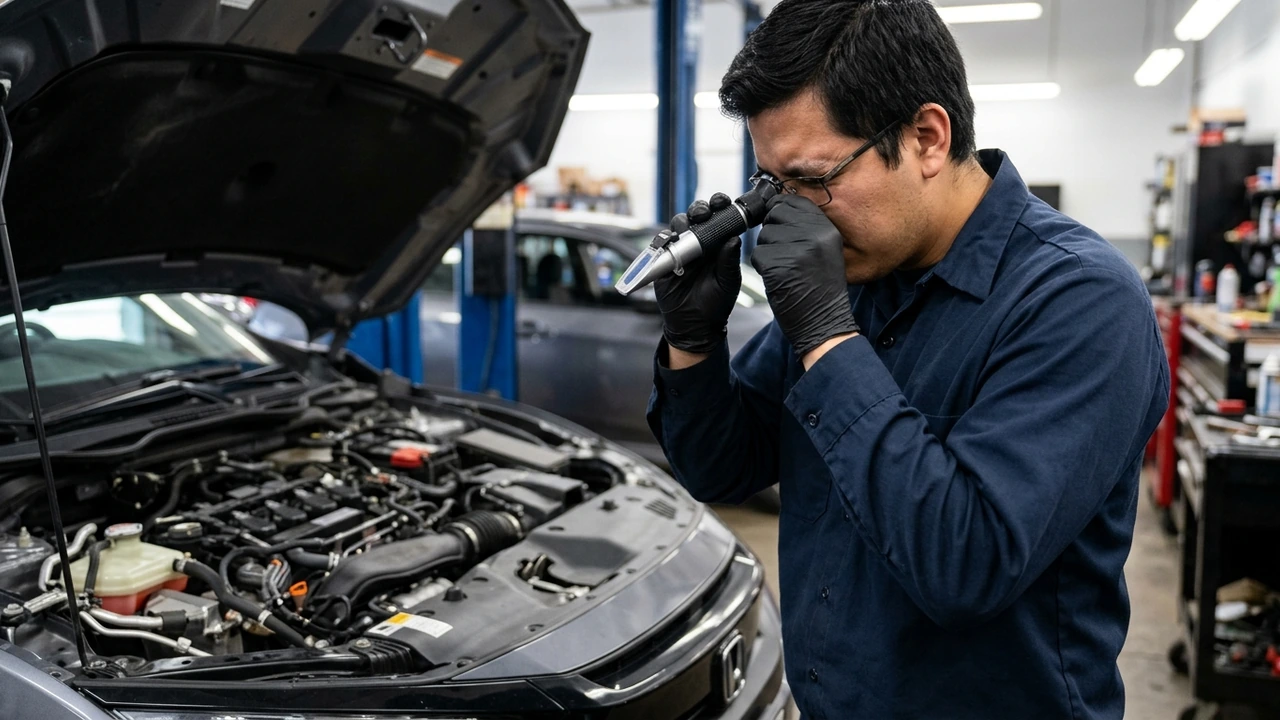
Now make it stick. Put the dates in software or even a plain calendar. Set alerts so nothing gets missed. Give each driver a short daily checklist. And review the data every month to spot trucks that need extra care. AAA found that about one-third of drivers skip or delay service their mechanic recommended, do not be part of that group. A missed check today is a breakdown waiting for you next week.
- Write it down, a plan in your head gets forgotten.
- Use reminders, let software or a calendar nag you.
- Keep parts ready, common items on the shelf mean fast fixes.
- Log every job, good records reveal patterns over time.
- Review monthly, adjust the schedule as trucks age.
Mistakes That Still Let Breakdowns Sneak In
Even good fleets slip up. I want to save you from the common traps I see again and again. These mistakes are easy to make and easy to fix once you know them. Watch for these, and you will keep your downtime low and your trucks rolling.
The first mistake is treating the schedule like a suggestion. Managers set it up, then push service back when things get busy. That is exactly when trouble strikes. In my experience, about half of preventable breakdowns happen right after a skipped or delayed service. The plan only works if you follow it, even on your busiest weeks.
The second trap is ignoring the drivers. Your drivers know their trucks better than any report. When they say something feels off, listen. A rattle they mention on Monday can save you a tow on Friday. Build a simple way for them to report issues, and reward them for speaking up. This one habit stops a shocking number of failures.
The third mistake is skipping the data. Some fleets do the work but never track it. So they repeat the same repairs and never spot the pattern. Keep records. Use tracking to see which vehicles and components cost you the most. Then fix the root cause. Data turns a busy shop into a smart one, and smart shops have far less downtime.
- Skipping service on busy weeks, the worst time to cut corners.
- Ignoring driver reports, you lose your best early warning.
- No records, you keep repeating the same repairs.
- Chasing cheap parts, bargain parts often fail fast.
- Waiting for the light, by then the damage is often done.
If any of these sound like your fleet, let’s take a look together. We can review your recent breakdowns, find the pattern, and set up a preventive plan that closes the gaps for good.
The Bottom Line
After years around trucks and fleets, I can tell you the pattern never changes: the operations that plan ahead win, and the ones that just react keep paying for it. Preventive maintenance is not about spending more. It is about spending smart. You trade a few small, planned costs now for a lot fewer big, painful ones later. That trade wins every single time.
The math is on your side. Fewer breakdowns mean more vehicles working each day. Longer lifespan means you buy trucks less often. Better safety means your drivers get home whole. Add it up, and a simple routine of inspections, smart scheduling, and honest tracking pays you back many times over. That is real efficiency, not a slogan.
Start small if you must. Pick your worst repeat problem and fix its root cause this month. Write down a basic schedule. Give your drivers a checklist. Then build from there. The first step is the hardest, but once your fleet feels the calm of fewer surprises, you will never want to go back. preventive
Frequently Asked Questions
What is the difference between preventive and reactive maintenance?
Preventive maintenance means you fix parts on a schedule, before they break. Reactive maintenance means you wait until a vehicle breaks, then scramble to fix it. The first way is planned, cheaper, and safer. The second way is full of surprise bills and long downtime. Planned care almost always costs less than emergency repairs.
How often should I service my fleet vehicles?
It depends on the vehicle and how hard it works. Start with the maker’s guide, which lists most service dates. Check oil around every 5,000 to 7,500 miles and tires every month. Trucks that carry heavy loads or drive in tough weather need more frequent checks. When in doubt, check sooner rather than later.
Does preventive maintenance really save money?
Yes, and the savings show up fast. AAA found that 77% of repair shops say good upkeep saves drivers $100 or more per visit. A small planned fix costs far less than a big emergency one. You also avoid tow fees, rush charges, and lost workdays. Over a year, those savings add up to real profit for a fleet.
How does telematics help reduce vehicle downtime?
Telematics are small trackers inside each vehicle that send live data to you. They flag engine faults, low tire pressure, and due service dates in real-time. You see the problem while the truck is still running, so you act before it fails. This early warning is one of the best tools for reducing surprise breakdowns.
What are the most common causes of vehicle breakdowns?
The top causes are simple and preventable. Dead batteries, flat or worn tires, and engine trouble lead the list. In 2024, AAA answered over 27 million roadside calls, and towing plus battery issues made up about 74% of them. Most of these start as small issues that a routine check would have caught early.