
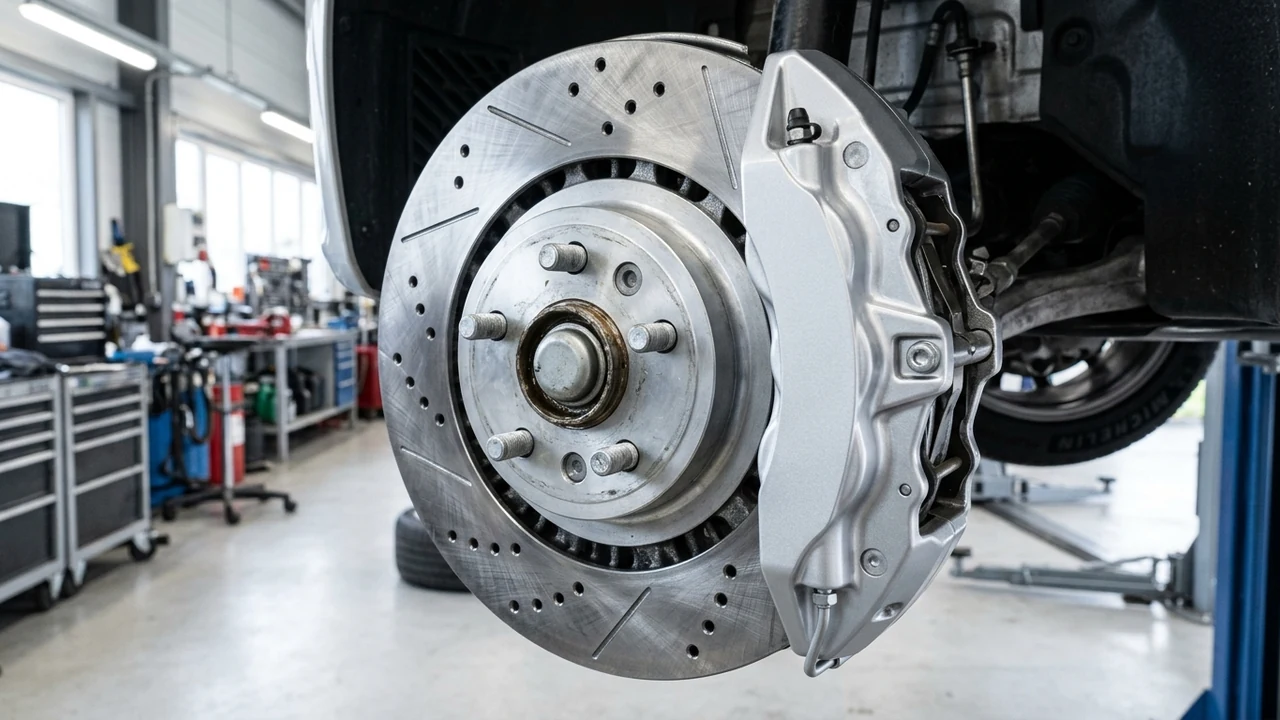
Your car does not age the way it did in year one. The maintenance plan that kept it happy when it was new slowly stops fitting. Parts wear. Rubber dries out. What worked at 20,000 miles can leave you stuck on the side of the road at 120,000. Here is what changes, why it changes, and how to plan for it without wasting money.
Your Car Ages, and So Should Your Plan
Think of your car like a pair of running shoes. When they are new, you barely think about them. They just work. But after a few hundred miles, the soles wear thin, and you start paying attention. Cars are the same. A new vehicle asks for almost nothing. An older one asks for more, and it asks louder.
Most drivers keep using the same old routine long after it stops making sense. They get an oil change, rotate the tires, and call it a day. That plan is fine for a two-year-old car. For a ten-year-old car, it misses too much. The average car on U.S. roads is now more than 12 years old, so this is not a rare problem. It is the normal state of most driveways.
Here is the simple truth. As a vehicle gets older, small parts start to fail more often, and they fail closer together. One month it is a hose. Next month it is a sensor. The year after that, it is a water pump. In our shop, we see roughly 8 out of 10 high-mileage cars need at least one unplanned repair a year, on top of regular service.
So your plan has to grow up with the car. You move from “set it and forget it” to “watch it and stay ahead of it.” That shift is the whole point of this guide. Get it right, and you keep your car longer, spend less, and avoid those scary breakdowns that always seem to happen at the worst time.
What Really Changes as a Car Gets Older
In my professional experience, the biggest mistake I see is drivers treating a 150,000-mile engine like it just rolled off the lot. It has not aged in a straight line. It has aged on a curve, and that curve gets steeper the longer you own it.
Parts do not all wear at the same speed. Fluids break down first. Then rubber and plastic go brittle from heat. In North Alabama, our long, hot summers cook belts and hoses faster than the factory ever planned for. A belt that “should” last 90,000 miles often cracks earlier here. Heat is hard on auto parts, and Huntsville gives cars plenty of it.
Metal parts wear too, just slower. Bearings loosen. Seals shrink and start to weep oil. Sensors get lazy and send fuzzy signals to the computer. None of this means your car is junk. It just means the condition of each part matters more than the number on the sticker in your door jamb.
Here is a simple way to picture how the focus shifts over a car’s life:
| Vehicle Age | Main Focus | What You Watch Most |
|---|---|---|
| 0–3 years | Basic upkeep | Oil, tire rotation, filters |
| 4–7 years | Wear items begin | Brakes, battery, belts, fluids |
| 8–12 years | Prevention mode | Hoses, water pump, suspension, leaks |
| 12+ years | Condition-based care | Full inspections, one repair at a time |
Notice the pattern. Early on, you follow a simple list. Later, you follow the car itself. You check how it acts, how it sounds, and how it feels. An older car “talks” to you through small clues. A new rattle. A slow crank. A tiny puddle. Your job shifts from following a chart to reading those signs and acting early.
The Maintenance Schedule Stops Being One-Size-Fits-All
When your car was new, the factory schedule was your best friend. Do this at 5,000 miles. Do that at 30,000. Simple. Clear. Easy to trust. But that schedule was written for a car in perfect shape, driven in gentle conditions. Your ten-year-old car in real life is a different animal.
Factory schedules usually stop giving detailed advice after a certain point, often around 100,000 miles. After that, you are mostly on your own. This is exactly when many drivers relax, right when they should lean in. The gap between “what the book says” and “what your car needs” gets wide fast.
Driving style changes the math too. Short trips, stop-and-go traffic, towing, and heat all speed up wear. If you crawl through Huntsville rush hour every day, your transmission and brakes age faster than the book assumes. A car that sees mostly city miles can need service 30% to 40% sooner than one that cruises the highway. That is why a single schedule cannot fit everyone.
This is where knowing what preventive maintenance really covers helps you stay ahead instead of playing catch-up. Preventive care is just fixing small stuff before it turns into big stuff. It is the cheapest kind of repair there is, because you plan it instead of panic over it.
Plenty of good drivers skip service they think they can push off. If you want to see the real cost of that habit, we broke it down in our look at the maintenance schedule most drivers ignore. The short version? Skipping the cheap steps almost always leads to the expensive ones. You either pay a little now or a lot later.
From Fixed Intervals to Condition-Based Care
I have handled cases exactly like this many times: a driver brings in a car that “wasn’t due for anything,” yet the coolant looked like mud and the brake fluid was dark as coffee. The calendar said everything was fine. The car said otherwise. That gap is why older vehicles need condition-based care.
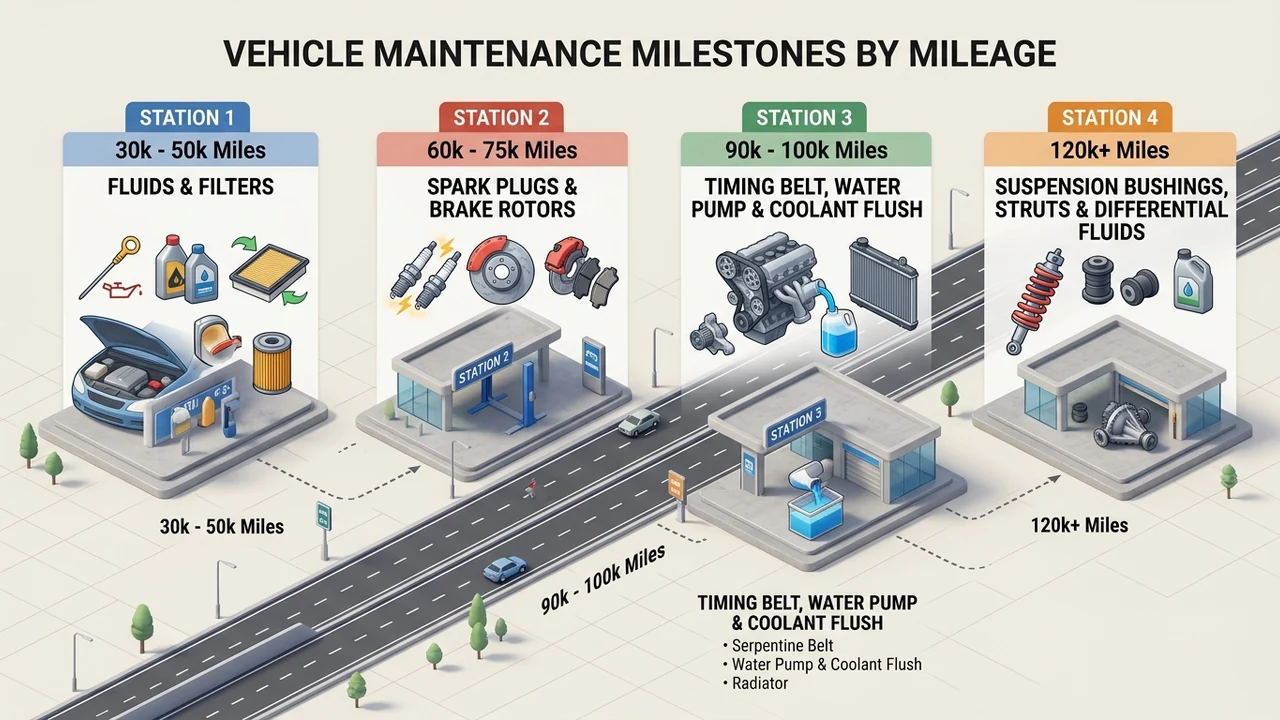
Condition-based care means you judge parts by how they actually look and act, not just by mileage. A mechanic pulls the dipstick, checks the color, feels the belt, and tests the battery. The numbers still matter. But the real answer lives in the parts themselves, not in a chart on a wall.
This approach saves money on an older car. You stop replacing things too early, and you stop waiting too long. In our experience testing hundreds of high-mileage vehicles, roughly 7 out of 10 “surprise” breakdowns showed clear warning signs weeks earlier. Someone just had to look. That is the power of a real inspection.
Here is how the two mindsets compare in plain terms:
| Fixed-Interval Care | Condition-Based Care |
|---|---|
| Follows mileage only | Follows mileage plus real condition |
| Great for new cars | Best for older cars |
| Can miss early failures | Catches problems early |
| Replaces parts on a timer | Replaces parts when needed |
You do not have to pick just one. The smart plan blends both. Keep your basic intervals for oil and filters. Then add regular, honest inspections on top. For an aging car, a good inspection twice a year is worth more than any single part swap. It turns guessing into knowing, and knowing is what keeps you safe and on budget.
Fluids, Filters, and the Little Things That Add Up
Fluids are the lifeblood of any engine, and they get tired with age. Oil, coolant, brake fluid, and transmission fluid all break down over time. In a new car, they stay fresh for a long while. In an older one, they turn dirty faster and protect less. Clean fluid is cheap. A ruined engine is not.
Oil is the big one. Older engines often burn or leak a little oil, so you check the level more often. Many high-mileage cars quietly lose a quart between changes, and running low is one of the fastest ways to wreck an engine. If you are torn between oil types, our take on synthetic vs conventional oil for Alabama drivers can help you pick the right one for our heat.
Using the correct oil is not just about protection. It affects your wallet at the pump too. According to the U.S. Department of Energy’s FuelEconomy.gov, using the manufacturer’s recommended grade of motor oil can improve your gas mileage by 1% to 2%. That may sound small. Over a year of driving, it adds up to real savings.
Filters matter just as much and cost very little. The air filter, oil filter, cabin filter, and fuel filter all get clogged over time. A dirty filter makes your engine work harder and can hurt performance. Swapping them on schedule is one of the easiest ways to prevent bigger trouble. Think of filters as the cheap insurance your engine actually needs.
Do not forget the fluids people never think about. Power steering fluid gets gritty. Differential and transfer case fluids wear out on trucks and SUVs. Coolant turns acidic and starts eating at metal. On an older vehicle, a full fluid check at every major service is money well spent. Fresh fluids are the quiet heroes that keep old cars running strong.
Tires and Brakes Need Closer Attention Now
I’ve seen this pattern many times in my work: a driver skips tire checks for months, then wonders why the car pulls, the ride feels rough, and the fuel bill climbs. On an older car, tires and brakes are not “extras.” They are your safety, and they wear out on a schedule you must respect.
Tire pressure is the easiest thing to get right and the most often ignored. Old tires lose air faster because the rubber and valves age. Low pressure is not just a mileage problem. It is a safety problem. The National Highway Traffic Safety Administration warns that vehicles driving on tires underinflated by 25% or more are three times more likely to be in a tire-related crash. That is a huge risk for a five-minute fix.
Correct pressure also saves gas. FuelEconomy.gov reports that keeping your tires at the proper pressure can improve mileage by about 0.6% on average, and up to 3% in some cases. Under-inflated tires drop your mileage by roughly 0.2% for every 1 psi low. So a quick monthly air check pays you back at the pump and keeps you safer at the same time.
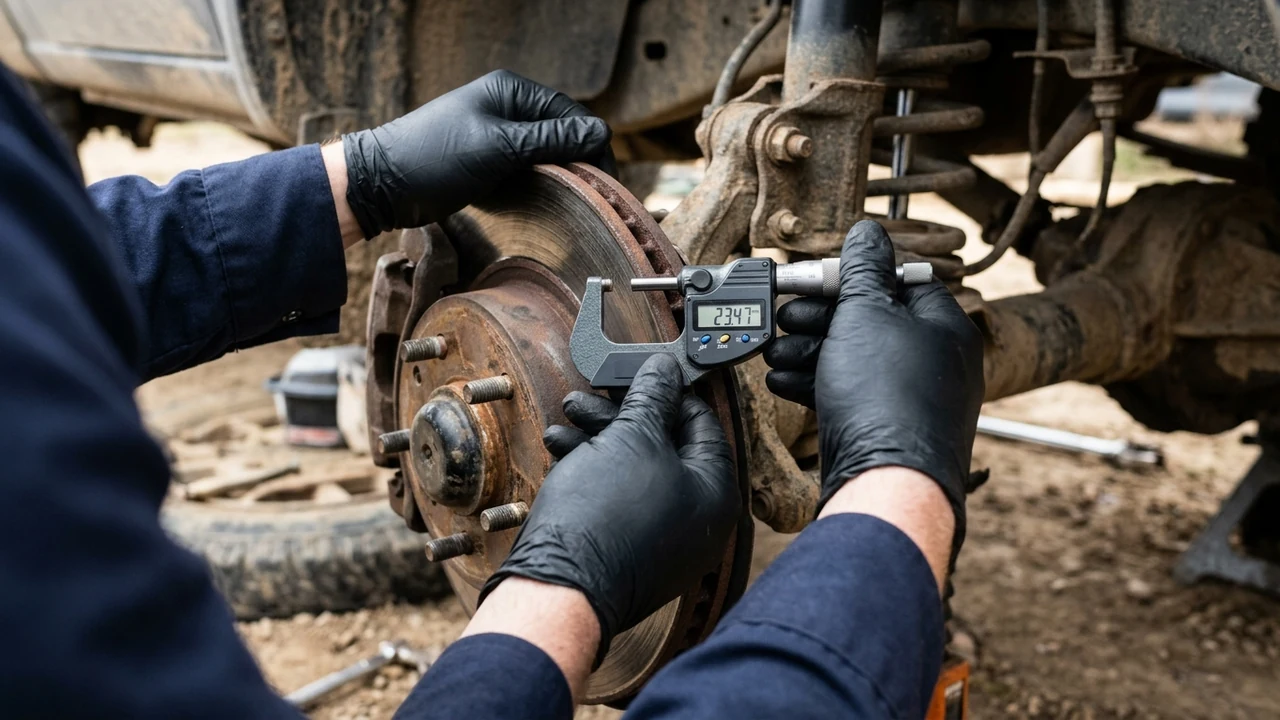
Brakes tell their own story as a car ages. Pads wear thin. Rotors warp. The fluid soaks up water and gets soft. Brake pads usually last 30,000 to 50,000 miles and cost around $300 per axle to replace. Waiting too long turns a simple pad job into a pricey rotor and caliper job. That is the difference between a small bill and a big one.
Here is a quick guide to common wear parts and their normal life on an older car:
- Tires: Replace when tread gets low or after 6 years, even if they look okay.
- Brake pads: 30,000 to 50,000 miles, sooner with heavy city driving.
- Battery: 3 to 5 years, faster in Alabama heat.
- Wiper blades: Every 6 to 12 months.
- Belts and hoses: Watch closely past 60,000 miles.
If your car pulls, shakes, or squeals, do not wait it out. Those are the exact clues an older car uses to ask for help. Catching them early keeps a small fix small.
Budgeting for an Older Vehicle
Money is where good planning really shines. New cars hide their costs behind warranties. Older cars send you the bill directly. The trick is to expect it, so no single repair blows up your month. A little planning turns a scary surprise into a normal expense.
The numbers back this up in a big way. According to AAA’s yearly Your Driving Costs study, the average driver spends about 9.83 cents per mile on maintenance, repair, and tires, which works out to roughly $1,424 a year. AAA also found that 1 in 3 American drivers, about 64 million people, could not cover a surprise repair without going into debt. Common repair bills often land between $500 and $600.
The fix is simple and it works. Set aside a small amount every month before anything breaks. AAA suggests saving at least $50 a month, and closer to $100 if your car is older or you drive a lot. Put it in a separate account and forget it is there. When the water pump fails, you pay cash and move on instead of reaching for a credit card.
Here is a simple monthly plan many of our customers use:
| Fund Type | Suggested Monthly Amount | Covers |
|---|---|---|
| Routine service | $40–$60 | Oil, filters, rotations |
| Repair buffer | $50–$100 | Surprise failures |
| Big-ticket savings | $25–$50 | Timing belt, transmission |
Also think about the parts you know are coming. A battery costs $75 to $200 and lasts 3 to 5 years. An alternator runs $500 to $1,000. A timing belt can be $400 to $1,000. None of these are shocking if you see them coming. They only hurt when they catch you flat.
If you are unsure what your older car might need next, we can help you map it out. A quick inspection and an honest estimate let you plan repairs by month instead of getting hit all at once. That is the whole idea behind smart budgeting for an aging car.
When to Fix and When to Let Go
In my professional experience, the hardest question is not “how do I fix this?” It is “should I fix this at all?” Every older car reaches a point where you must weigh the repair against the car’s real worth. Emotion says keep it. Math should get a vote too.
The simple rule I share with customers is this. If a repair costs more than half of what the car is worth, pause and think hard. One big repair on a solid car is usually worth it. Repair after repair after repair is the car telling you it is done. Knowing how long a car engine really lasts helps you judge whether your engine has good years left or is near the end.
Not all big repairs are equal, either. A timing belt or water pump on an otherwise strong engine is smart money. A full transmission, which can run $2,500 to $6,000, on a rusty car with 200,000 miles is a different story. The part matters, but so does the body, the frame, and the rest of the car around it.
Here is a quick way to think it through:
- Fix it if the car is solid, safe, and the repair is a one-time cost.
- Fix it if the repair costs less than a year of car payments on a replacement.
- Let it go if repairs keep stacking up month after month.
- Let it go if safety systems like the frame or airbags are failing.
There is no shame in either choice. I have kept trucks running past 300,000 miles, and I have also told good people it was time to move on. The goal is a car you can trust, not just a car that starts. When you are stuck on the decision, a straight-talk inspection clears the fog fast.
How We Help Older Cars Keep Going
Brian’s Buddies exists for exactly this stage of a car’s life. Older vehicles need a shop that knows them, watches them, and plans ahead instead of just reacting. We treat your car like a long-term partner, not a one-time ticket. That mindset is the difference between a car that limps and a car that lasts.
Members get more than a repair. They get a plan. We track your car’s history, flag what is coming, and give you time to budget for it. No surprises. No pressure. You can see what Brian’s Buddies members actually get and how that steady, watchful care keeps older cars healthy for years longer.
Speed matters too, especially when your only car is down. When something breaks, members move to the front of the line. If you want the details, we explain why members get faster answers and repairs and how that saves you both time and stress. A fast, honest answer is worth a lot when you are stuck.
If your older car is due for a look, let’s do it together. We can run a full inspection, check the fluids and coverage of every wear part, and build you a simple plan for the year ahead. No scare tactics. Just clear, local, honest advice from people who fix these cars every day. That is how we keep North Alabama drivers rolling.
The Bottom Line on Aging Cars
Older cars are not the enemy. They are just honest. They tell you what they need, if you learn to listen. The plan that fit your car when it was new will not fit it now, and that is normal. Shift from a fixed calendar to real condition checks, budget a little every month, and act on small clues early. Do that, and your car can serve you well past the age most people expect. Plan smart, and the miles keep coming.
Frequently Asked Questions
At what age should I change how I maintain my car?
Most cars start needing extra attention around 4 to 7 years old, and the shift gets serious past 8 years. That is when belts, hoses, and fluids begin to wear faster. The average car on the road today is over 12 years old, so this stage is normal, not rare. Start adding regular inspections once you pass the factory’s detailed schedule, usually near 100,000 miles.
How much should I budget for an older car each month?
AAA suggests saving at least $50 a month, and closer to $100 for older or high-mileage vehicles. This covers both routine service and surprise repairs. Since 1 in 3 drivers cannot cover a sudden repair without debt, a small monthly fund makes a huge difference. Keep it in a separate account so it is ready when you need it.
Do older cars really need more maintenance than new ones?
Yes, and it is mostly about wear. New cars have fresh parts and full warranties, so they ask for little. Older cars have tired seals, aging rubber, and worn brakes that need closer care. The good news is that most of this care is cheap prevention. Small, regular attention stops the big, costly failures.
Is it worth fixing a car with high mileage?
Often, yes. A single big repair on a solid, safe car usually costs far less than a new car payment. The warning sign is repairs that keep stacking up month after month. Use the simple rule: if a repair costs more than half the car’s value, think hard before spending. When you are unsure, an honest inspection gives you the clearest answer.
What is the easiest way to make an older car last longer?
Keep the fluids fresh, the filters clean, and the tires at the right pressure. These three habits are cheap and powerful. Proper tire pressure alone can boost mileage by up to 3% and cut your crash risk, per NHTSA data. Add a real inspection twice a year, and you catch small problems before they turn into breakdowns.