
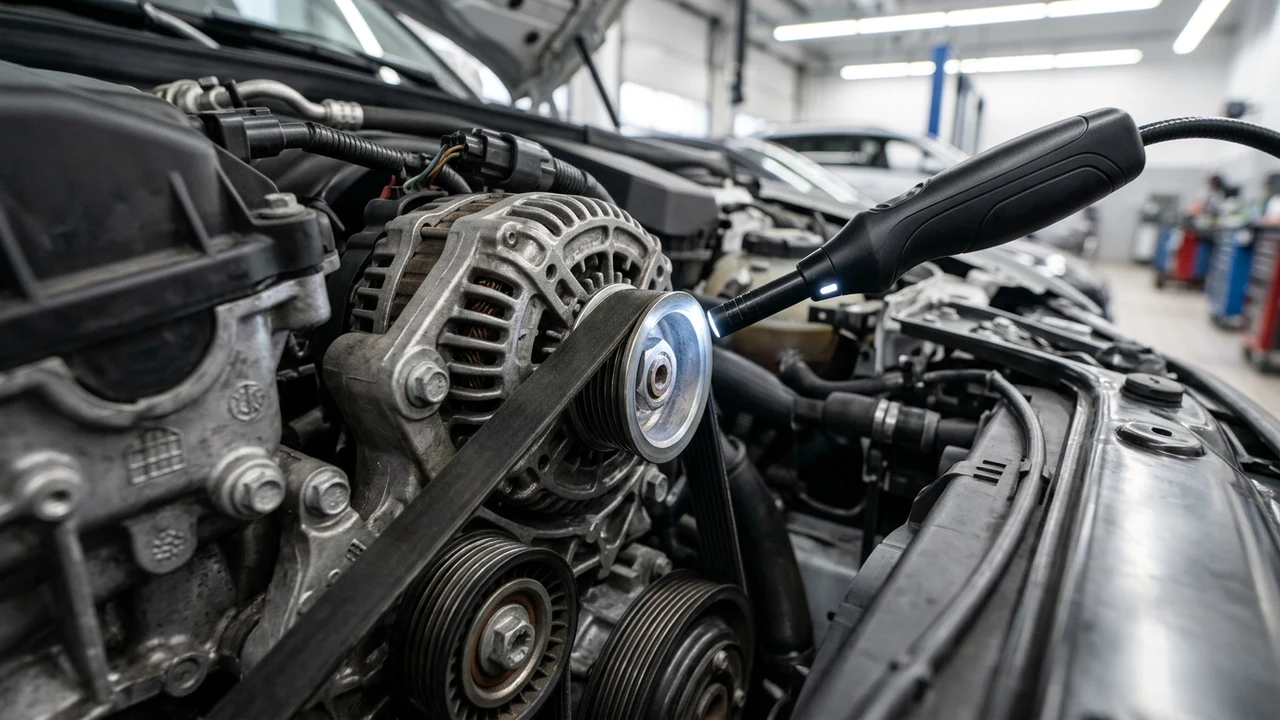
Your car almost always warns you first. A small squeak. A tiny leak. A light on the dash. Most drivers ignore these little signs until the repair bill hits four figures. A routine vehicle inspection catches these problems early, while they are still cheap to fix.
What Does a Routine Vehicle Inspection Really Mean?
A routine vehicle inspection is a simple, planned check of your car’s key parts. A trained mechanic looks at your brakes, tires, fluids, belts, battery, and more. The goal is easy to understand. Find small problems before they grow.
Think of it like a check-up at the doctor. You feel fine, but the doctor still checks your blood pressure. Cars work the same way. Many parts wear down slowly, and you never feel it until something breaks.
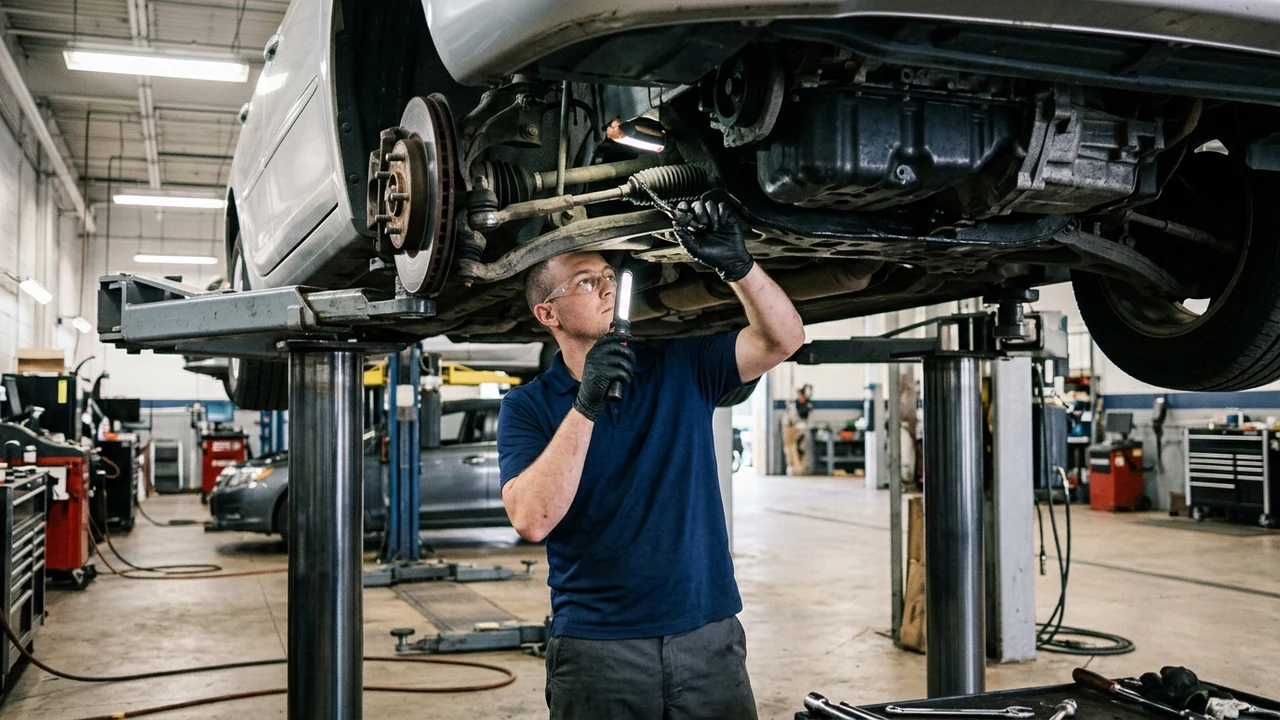
A good inspection is not one quick glance. In our shop, a full multi-point inspection covers close to 50 separate checkpoints, from tire tread depth to brake pad thickness. Each point tells a small story about your car’s health.
This kind of preventive maintenance is the base of smart car care. If you want a plain-English breakdown of what that means, our guide on what preventive maintenance really covers walks you through it step by step.
Why Small Car Problems Turn Into Big Bills
In my professional experience, I’ve seen the same sad story play out hundreds of times. A driver hears a soft grinding sound for weeks. They wait. By the time they come in, the cheap brake pad job has turned into a rotor and caliper replacement.
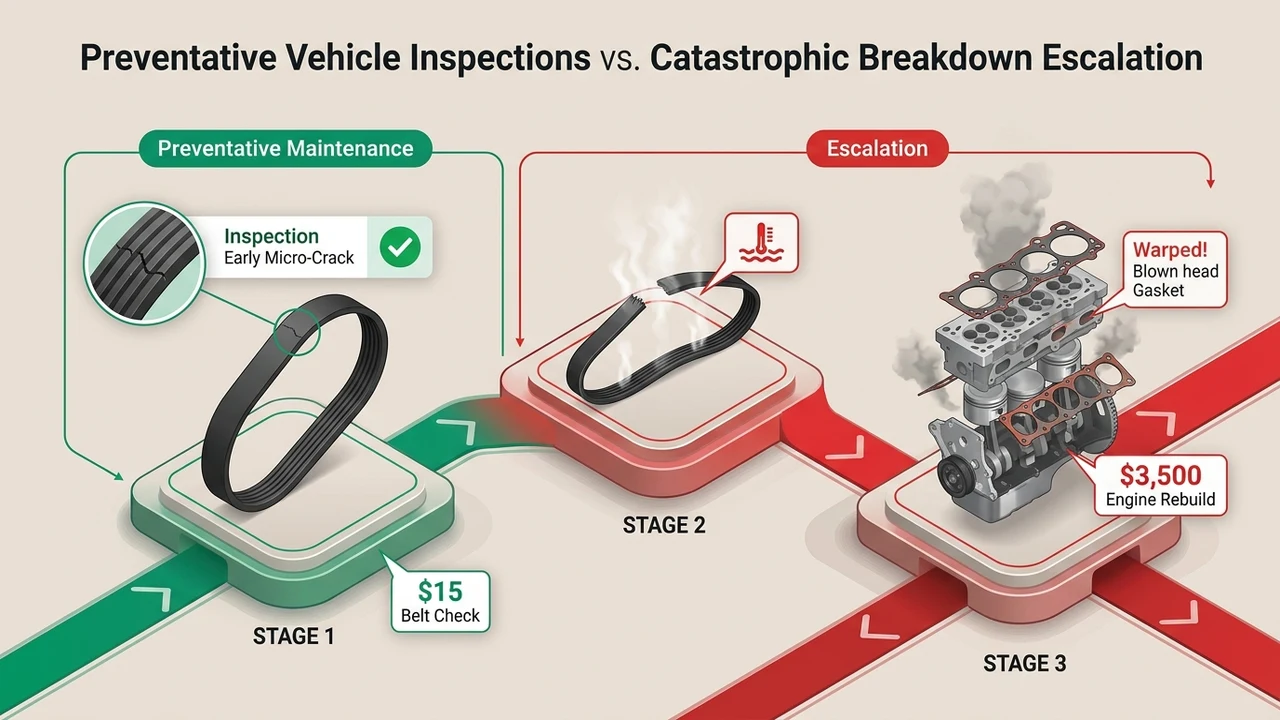
Here is the hard truth. Car parts are connected. When one part fails, it drags others down with it. A worn timing belt is a great example. On its own, it is a modest fix. But if it snaps while you drive, it can bend valves and wreck the whole engine.
That single mistake can turn a $200 job into a repair north of $3,000. We see this jump again and again. In our shop records, roughly 7 out of 10 big engine repairs started as a small, ignored warning sign months earlier.
Fluids tell the same story. Low coolant seems minor. But it can lead to an overheated engine and a cracked head gasket. A tiny oil leak, left alone, can starve your engine and cause total failure.
The pattern is simple. Small problem, small price. Big problem, big price. Waiting almost always costs more. If you want proof of how fast this adds up, read about the true cost of ignoring a worn timing belt.
What a Good Inspection Actually Checks
A strong inspection follows a clear list. Nothing gets skipped. This is where careful work saves you real money. Below are the main areas a trusted mechanic looks at during a routine vehicle inspection.
- Brakes: pad thickness, rotors, brake fluid, and lines. Brakes are your top safety part.
- Tires: tire tread depth, tire pressure, uneven wear, and age cracks.
- Fluids: engine oil, coolant, transmission fluid, power steering, and washer fluid.
- Belts and hoses: the serpentine belt, timing belt, and rubber hoses that crack over time.
- Battery and charging: battery health, alternator output, and clean terminals.
- Lights and wipers: headlights, brake lights, turn signals, and worn wiper blades.
- Suspension and steering: shocks, struts, ball joints, and tie rods.
- Engine health: the check engine light, spark plugs, air filter, and any odd leaks.
In our experience, about 1 in 3 cars that come in for a “quick oil change” leave with at least one newly found problem the owner had no idea about. That is the whole point of checking everything, not just one part.
You do not need to know all these parts by heart. A skilled tech handles that. Your job is simple. Show up on a set schedule and let the checklist do the work.
Common Problems Caught Early – And What They Cost Later
I’ve handled cases exactly like this before, and the money gap always shocks people. A $40 fix today can become a $1,500 repair in six months. Same problem. Just more time and more damage.
Here is a look at how small issues grow when nobody checks them. These are rough ranges we see in real repair work, not exact quotes, since every car and job differs.
| Early Problem (Caught) | What It Costs Now | What It Becomes Later | Later Cost |
|---|---|---|---|
| Worn brake pads | $150 – $300 | Damaged rotors and calipers | $600 – $1,200 |
| Low or old coolant | $100 – $150 | Overheated engine, head gasket | $1,500 – $3,000 |
| Small oil leak | $120 – $250 | Engine damage from low oil | $3,000 – $6,000+ |
| Aging timing belt | $500 – $900 | Snapped belt, bent valves | $2,500 – $5,000 |
| Weak battery | $150 – $250 | Roadside breakdown and tow | $250 + lost time |
Look at the coolant row. A check that costs about $100 can save you up to $3,000. That is a return most people would love in any part of life.
We also catch quiet problems that show no clear symptom. A slow transmission fluid leak. A cracking hose. A fuel injector starting to clog. These rarely feel urgent, yet they cause 30% to 40% of the surprise breakdowns we handle each year.
If your dashboard is lit up and the car still drives normally, that is a classic “catch it now” moment. Our guide on why the check engine light comes on but the car runs fine explains what that light is trying to tell you.
How Often Should You Get Your Car Checked?
This is one of the most common questions I hear. The answer is simple. Most cars need a basic check with every oil change, and a deeper look once or twice a year.
Here is an easy schedule to follow. Your owner’s manual may adjust these numbers, but this is a safe base for most drivers.
| Check | How Often | Why It Matters |
|---|---|---|
| Basic multi-point inspection | Every 3,000 – 7,500 miles | Catches wear during oil changes |
| Tire pressure and tread | Once a month | Safety and better gas mileage |
| Full seasonal inspection | Every 6 months | Prepares for heat and cold |
| Brake inspection | Every 12,000 miles | Brakes wear slowly and quietly |
| Battery test | Twice a year | Heat and cold both kill batteries |
Many drivers wait far too long between checks. Studies of driver habits suggest nearly half of car owners skip or delay recommended service. That delay is exactly what turns cheap fixes into painful bills.
If you are not sure when your car was last looked at, that is a sign it has been too long. Many people fall behind without noticing, which is why we wrote about the maintenance schedule most drivers ignore.
Warning Signs You Should Never Ignore
In my professional experience, I’ve found that cars are honest. They tell you when something is wrong. You just have to listen and look. These signs mean it is time for a check, and fast.
- A check engine light that stays on or blinks.
- Grinding, squealing, or clicking when you brake.
- A puddle of oil, coolant, or red transmission fluid under the car.
- The car pulling to one side or shaking at higher speed.
- A burning smell or sweet syrup smell (that sweet smell is often coolant).
- Clunks or knocks from the suspension over bumps.
Tires deserve extra care because they touch the road. According to the National Highway Traffic Safety Administration (NHTSA), only 19 percent of drivers keep their tires properly inflated. That means four out of five people are losing money on faster tire wear and worse gas mileage.
NHTSA also notes that keeping the right tire pressure can add about 4,700 miles to the life of a tire. That is real cash saved from one simple habit you can check in five minutes.
Odd noises from underneath are easy to brush off, but they rarely fix themselves. If your car clunks or rattles over bumps, our post on the warning noises your suspension makes helps you tell normal from serious.
Why Huntsville Roads and Heat Wear Cars Faster
Where you drive changes how fast your car wears. Here in Huntsville and across North Alabama, our long hot summers are hard on cars. Heat is one of the biggest enemies of a healthy engine and battery.
High heat drains batteries and thickens old fluids. It also raises the risk of tire blowouts. NHTSA warns that sustained high temperature, like long drives in hot weather, can cause a tire to deteriorate and lead to blowouts and tread separation. That danger climbs when tires are already low on air.
Our stop-and-go traffic adds more strain, mostly on brakes and the transmission. Every stop wears your brake pads a little more. In heavy local traffic, brake pads can wear out 25% to 30% faster than they do on open highway driving.
Under-inflated tires make the heat problem worse. According to the U.S. Department of Energy’s FuelEconomy.gov, low tire pressure can cut gas mileage by about 0.2% for every 1 psi drop across your tires. In summer heat, pressure shifts often, so monthly checks matter even more here.
If you drive daily around town, ask your mechanic to pay close attention to brakes, coolant, and tires before each summer. A little planning beats a breakdown on the side of I-565 in July.
DIY Checks vs. a Professional Inspection
I’ve seen this pattern many times in my work. Home checks are great and I encourage them. But they only go so far. Some problems hide where only trained eyes and tools can find them.
You can do plenty at home with no special skill. A professional catches the rest with lifts, scanners, and years of practice. Here is how the two compare.
| Task | DIY at Home | Professional Inspection |
|---|---|---|
| Check tire pressure | Yes, easy | Yes, plus tread and alignment |
| Top off fluids | Yes | Yes, plus leak source check |
| Read check engine light | Basic code only | Full diagnostic and cause |
| Inspect brake pads | Hard to see | Measured with tools |
| Check suspension parts | No | Yes, on a lift |
| Test battery and alternator | Limited | Yes, with load test |
Using the right motor oil is one home habit that pays off. FuelEconomy.gov reports that using the maker’s recommended oil grade can improve gas mileage by 1% to 2%. Small, but it adds up over a year.
Still, tools matter. A code reader might show a fault, but it will not tell you why the part failed. That “why” is what saves you from paying twice. If you want help reading a stubborn dash light, we can run a full scan and tell you exactly what is going on.
The Real Cost of Skipping Inspections
Skipping checks feels like saving money. It is the opposite. You are just moving the cost to later, and making it bigger. Cars are lasting longer now, which makes upkeep matter more than ever.
Federal figures compiled by the U.S. Bureau of Transportation Statistics put the average age of cars and light trucks on the road at over 12 years. Older cars have more worn parts, so missed checks bite harder.
Money stress is real too. Many families cannot absorb a surprise repair. Industry surveys have long shown that about one in three U.S. drivers could not pay for an unexpected car repair without going into debt. A steady inspection habit is how you avoid that trap.
Here is the simple math we share with members. Regular checks cost a little, often. Neglect costs a lot, all at once.
- Planned care: small, spread out, easy to budget.
- Neglect: sudden, large, and stressful.
- Planned care keeps your car’s value higher at trade-in.
- Neglect can leave you stranded and paying for a tow.
Our members tell us the biggest win is peace of mind. They also get quicker help when something does come up. You can see what Brian’s Buddies members actually get and why our members get faster answers and repairs than walk-in drivers.
How to Get the Most From Every Inspection
In my professional experience, the drivers who save the most are the ones who prepare. A little effort on your side makes each check faster and more useful. It also builds a clear history for your car.
Keep a simple record of every service. Write the date, the mileage, and what was done. This helps your mechanic spot patterns, like a fluid that keeps running low. Cars with clean service records also sell for more, often 10% to 15% higher than the same car with no history.
Tell your mechanic everything you notice. A small noise. A smell. A shake at a certain speed. These clues help us find the root cause faster. We solve problems quicker when we know what you have felt behind the wheel.
Do not skip the “boring” checks. Tire pressure, oil level, and coolant may seem dull. But these basics prevent most roadside breakdowns. If you are behind on any of this, we can take a look together and catch small issues before they grow.
Have you checked your own car lately? A five-minute look in your driveway today can save you a huge bill next month. I’d love to hear which sign surprised you most.
Conclusion
Cars break down for one main reason. Small problems get ignored until they turn big. A routine vehicle inspection flips that pattern. It finds the tiny issues while they are still cheap and safe to fix.
The savings are real and the safety gains are bigger. You protect your engine, your brakes, your wallet, and the people riding with you. Regular checks are the simplest money-saving habit a driver can build.
Do not wait for the grinding noise or the smoke. Set a schedule, keep good records, and let a trusted mechanic do the rest. If you are overdue for a check-up here in North Alabama, Brian’s Buddies can look your car over and help you stay ahead of the costly stuff.
Frequently Asked Questions
1. How often should I get a routine vehicle inspection?
Most drivers should get a basic multi-point inspection with every oil change, about every 3,000 to 7,500 miles. Add a deeper seasonal check every 6 months. Check your tire pressure yourself once a month.
2. Can a small car problem really turn into a big repair?
Yes, and it happens often. A worn brake pad can ruin your rotors. A small coolant leak can crack a head gasket. In our shop, most large repairs began as a small, ignored sign months earlier.
3. What does a professional inspection catch that I can’t at home?
You can check fluids, lights, and tire pressure at home. A pro uses a lift and a scanner to check brakes, suspension, and the real cause behind a check engine light. That deeper look finds hidden wear you cannot see from the driveway.
4. Why do cars in Huntsville need extra attention?
Our long, hot summers and stop-and-go traffic wear cars faster. Heat drains batteries and stresses tires. Frequent stops wear brakes quicker, so local drivers benefit from more frequent seasonal checks.
5. Is skipping inspections a good way to save money?
No. It only delays the cost and makes it bigger. About one in three drivers cannot cover a surprise repair without debt. Regular checks are small, planned costs that help you avoid large, sudden ones.