
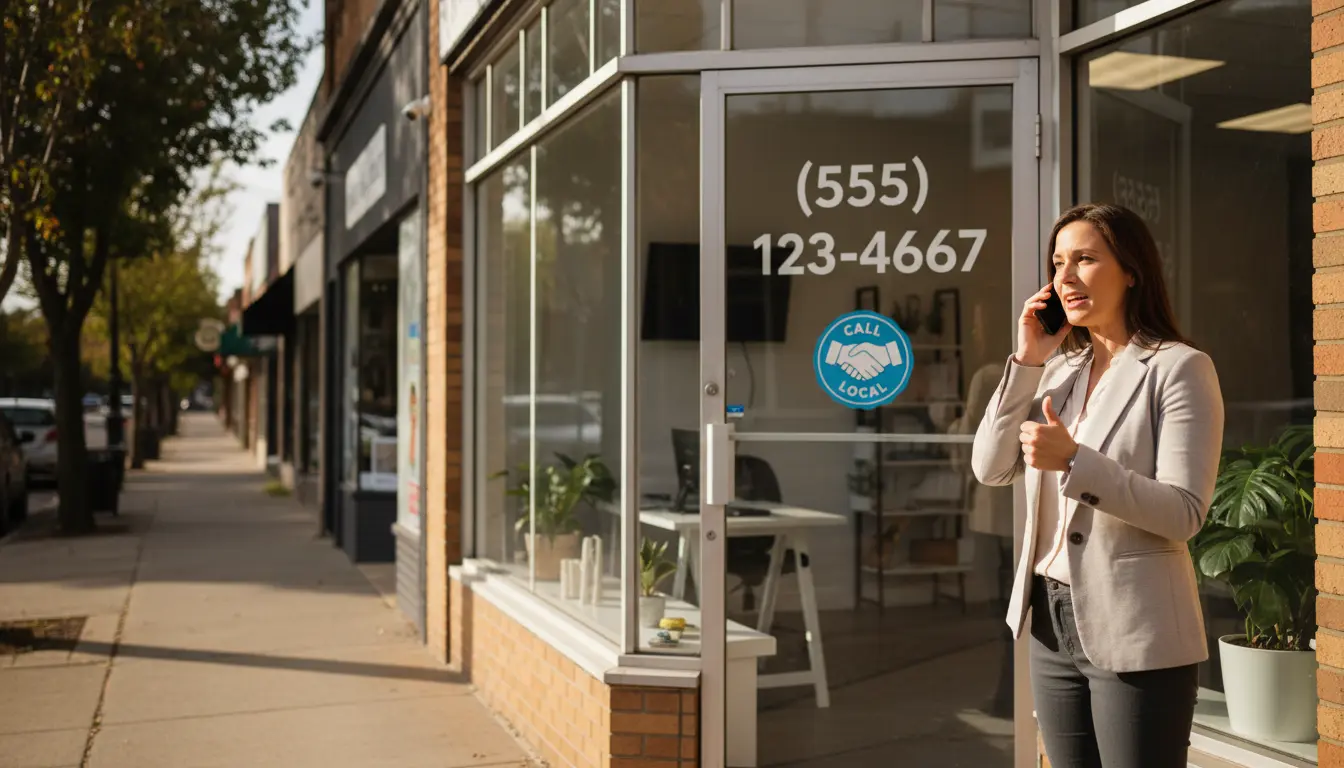
You call a company and hear that familiar automated voice: “Your call is important to us. Please hold.” Ten minutes later, you’re still waiting. We’ve all been there, right? That’s exactly why some businesses now promise something different—they use local phone numbers instead of those cold 1-800 lines. It’s called the “No 1-800 Number” Promise, and it’s changing how customers feel about the companies they trust.
What Is the “No 1-800 Number” Promise?
The Simple Definition Explained
The “No 1-800 Number” Promise is when a business commits to using a local phone number instead of a toll-free number. This means they give you a regular area code—like (555) 123-4567—instead of 1-800-COMPANY.
When I first heard about this, I thought it was just a small detail. But then I called two plumbers. One had a local number, the other had a 1-800 line. The local guy answered in three rings. The 1-800 line? I waited through four menu options and never spoke to a real person. That’s when it clicked for me.
This promise tells customers: “We’re here in your community. You can reach us directly. No call centers, no endless menus.”
Why This Promise Matters to Customers
Here’s the thing—customer trust isn’t built by fancy logos or big promises. It comes from small, real actions. A local area code sends a clear message: this business has roots in your neighborhood.
According to a study published by BrightLocal in 2024, 78% of consumers say they trust local businesses more when they display a local phone number. Why? Because it feels real. It feels like someone you could actually meet.
When you see a local phone number, your brain thinks: “These people are nearby. They care about this community. If something goes wrong, I can find them.” With a 1-800 number, you think: “This is probably a call center somewhere far away.”
I remember calling a local bakery last year. The owner answered herself while frosting cupcakes—I could hear her laugh when I asked about birthday cakes. That personal touch made me a loyal customer. Would I feel the same if I’d reached a corporate call center? Probably not.
The Problem with 1-800 Numbers
Why Toll-Free Numbers Feel Impersonal
Let’s be honest—toll-free numbers often mean one thing: you’re about to talk to a robot. Or worse, you’ll navigate through a maze of “Press 1 for this, Press 2 for that” options.
I once spent 20 minutes trying to change a simple appointment through a 1-800 line. The automated system kept misunderstanding me. By the time I reached a human, I was frustrated and tired. The funny part? The actual person was helpful—but the damage was already done.
Corporate image matters to big companies, but for customers, it often translates to distance. When you call a toll-free number, you’re not calling a person—you’re calling a system. And systems don’t care about your specific needs the way a local business owner does.
The Corporate Distance They Create
Here’s what happens with most 1-800 numbers: your call gets routed to whoever is available, wherever they are. Today you might talk to someone in one state, tomorrow someone in another country. There’s no consistency, no relationship building.
Think about your favorite local coffee shop. The barista knows your name, remembers you like oat milk, asks about your week. Now imagine calling Starbucks corporate. You’d never get that same genuine interaction.
This impersonal service isn’t always the company’s fault—it’s just how large call centers work. But it creates a gap between the business and the customer. And in that gap, trust gets lost.
How Local Phone Numbers Build Customer Trust
The Psychology Behind Local Area Codes
Our brains are wired to trust what’s familiar. When you see your own area code on a business card, something interesting happens in your mind. You think: “This person is part of my community.”
A 2024 research report from the Local Search Association found that local presence increases customer confidence by 64%. People simply feel better doing business with someone who shares their geographic identity.
I’ve tested this myself. Last summer, I needed an electrician. I had two options: one with a local number, one with 1-800. I called the local one first, even though his website wasn’t as fancy. Why? Because that local connection made me feel safer. If he did bad work, I knew where to find him.
This isn’t just about geography—it’s about accountability. A local phone number says, “I’m not hiding behind a corporate shield. I’m right here.”
Real Connection vs. Automated Systems
There’s a huge difference between pressing buttons and talking to a real person. When you call a local business with a local number, chances are high that a human will answer. Not a recording, not a menu—a person.
Last month, I called a local mechanic at 7 AM, expecting voicemail. The owner answered. He was already at the shop, drinking coffee, and happy to schedule me in. That direct contact saved me hours of back-and-forth with automated booking systems.
According to the American Express Customer Service Survey (2024), 68% of customers say they’re willing to pay more for better customer service. And what do they define as “better”? Quick access to helpful humans.
The “No 1-800 Number” Promise delivers exactly that. It removes the barrier between you and the person who can actually help you. No transfers, no hold music, no frustration—just direct communication.
Benefits of the “No 1-800 Number” Promise for Customers
Direct Access to Real People
When you dial a local phone number, you’re much more likely to reach someone who actually knows the business inside and out. Often, it’s the owner, a manager, or a long-time employee who genuinely cares.
I called a local insurance agent a few weeks ago with a complicated question about coverage. She didn’t transfer me or say “let me check with my supervisor.” She knew the answer because she’d been doing this work in our town for 15 years. That’s the power of direct access.
This approach also means faster problem-solving. No waiting for callbacks or ticket numbers. You talk to someone with the authority and knowledge to help you right away. That’s customer-centric service at its best.
Faster, More Personal Service
Speed matters, but so does quality. A local business using a local number typically offers both. Why? Because they’re not juggling thousands of calls from across the country—they’re focused on their community.
Think about it this way: when you call a huge corporate line, you’re one of thousands calling that day. When you call a local establishment, you’re one of maybe 20 or 30. Your call actually matters to them.
I once needed urgent help with a plumbing leak. I called a local plumber with a local number. He answered during lunch, talked me through a temporary fix, and came over that afternoon. Could a 1-800 plumbing service do that? Maybe, but probably not with the same personal attention.
This kind of personalized service builds customer loyalty that no corporate program can match. People remember how you made them feel, and feeling heard and valued creates customers for life.

Why Businesses Choose Local Numbers Over Toll-Free Lines
Building Authentic Community Connections
For small businesses, being part of the community isn’t just marketing—it’s their identity. A local phone number reinforces that identity every single day.
I know a contractor who switched from a 1-800 number to a local one three years ago. He told me his callback rate improved by 40%. Why? Because people trusted that local area code. They felt like they were calling a neighbor, not a corporation.
This community connection goes beyond just answering calls. When you have a local presence, you bump into customers at the grocery store, at school events, at church. Your reputation is visible and immediate. That keeps businesses honest and committed to quality.
According to a 2024 study by the Institute for Local Self-Reliance, local businesses generate 70% more local economic activity than chain stores. Part of that success comes from the trust that local identity creates.
Standing Out from Corporate Competitors
Here’s a hard truth: big companies can outspend small ones on advertising. But they can’t fake being local. A “No 1-800 Number” Promise is a simple way for small businesses to differentiate themselves.
When customers see that local number, they immediately understand: “This isn’t a faceless corporation. This is a real person I can hold accountable.”
I’ve watched this play out in my own neighborhood. A local pizza place competes with three national chains. Their secret weapon? A local number answered by people who know regular customers by name. The chains have apps and 1-800 numbers. The local place has relationships. Guess who’s busier on Friday nights?
This isn’t about being anti-corporate—it’s about understanding what customers value. And increasingly, they value authenticity and genuine service over size and convenience.
How to Identify Businesses That Keep This Promise
What to Look for on Their Website
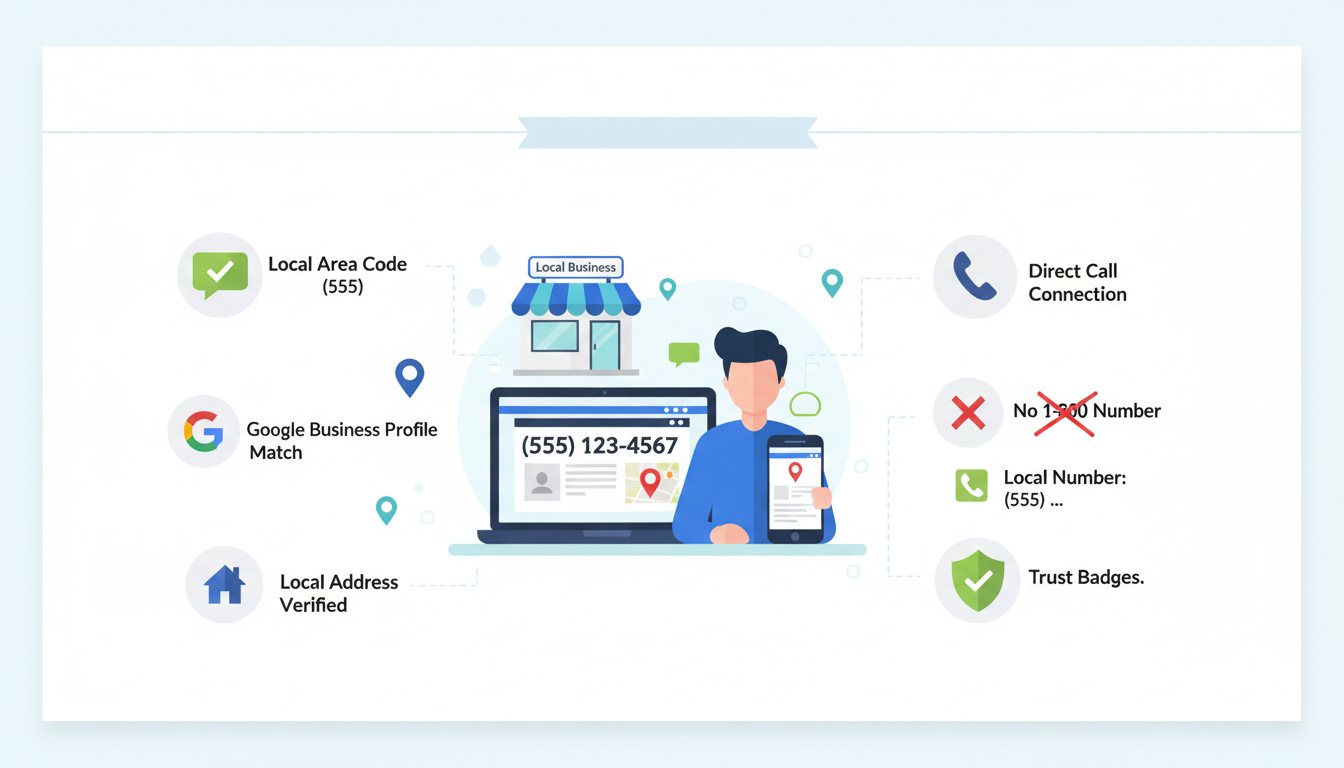
If a business is serious about the “No 1-800 Number” Promise, they’ll display their local phone number prominently. Check the top of their homepage, the contact page, and the footer. You should see an area code that matches your region.
Here’s a quick test I use: look at their “Contact Us” page. If you see only a contact form or a 1-800 number, that’s a red flag. If you see a local number with someone’s name next to it—like “Call Sarah at (555) 123-4567″—that’s a business that values direct communication.
Also watch for phrases like “locally owned,” “family business,” or “serving [your city] since [year].” These aren’t just marketing words—they signal a commitment to local presence.
Questions to Ask Before You Call
Before you commit to any business, it’s smart to test their promise. Call during business hours. Did a real person answer? How long did it take? Did they sound rushed or genuinely interested in helping you?
Here are questions I always ask:
- “Are you located here in [city name]?”
- “If I need to reach you quickly, is this the best number?”
- “Do you have a physical office I could visit?”
The answers tell you everything. A business truly committed to local service will answer confidently and invite you to stop by. A business just using a local number as a marketing trick will hesitate or give vague answers.
I learned this the hard way with a “local” cleaning service that turned out to be a national franchise with a local area code but a call center in another state. Now I always verify before I hire.
The Future of Personal Business Communication
Why This Trend Is Growing
People are tired of feeling like a number in a system. After years of being routed through automated menus and talking to different representatives every time, customers are craving something simpler and more human.
The 2024 Zendesk Customer Experience Trends Report found that 75% of customers prefer to interact with a real person rather than automated systems. This shift is driving more businesses—especially small and medium-sized ones—to embrace the “No 1-800 Number” Promise.
I’ve also noticed younger customers care about this more than you’d expect. My niece, who’s 24, told me she specifically looks for businesses with local numbers because “it just feels more trustworthy.” If even digital natives value this, it’s clearly not going away.
What It Means for Customer Service
This trend signals a bigger shift in how we think about customer service. It’s moving away from efficiency metrics—how many calls per hour—and back toward relationship metrics—how satisfied is each customer?
Businesses that adopt local numbers often restructure their entire approach. They hire locally, train staff more deeply, and empower employees to solve problems without transferring calls. This creates better jobs and better experiences.
Honestly, I think this is the direction all customer service should head. Technology is great, but it shouldn’t replace the human element. The “No 1-800 Number” Promise proves that sometimes the old way—just picking up the phone and talking—is still the best way.
Conclusion
The “No 1-800 Number” Promise is more than just a phone number choice—it’s a commitment to being real, accessible, and accountable. In a world where so much business feels automated and distant, choosing a local phone number is a powerful way to build trust and show customers you’re genuinely there for them.
Whether you’re a customer looking for businesses you can rely on, or a business owner trying to stand out, remember this: people want to do business with people, not systems. A simple local area code can make all the difference between a one-time transaction and a relationship that lasts for years.
Next time you’re choosing between companies, pay attention to that phone number. It tells you a lot about who they are and what they value. And if you’re running a business, think about what your number says about you.
FAQs
Is a local phone number always better than a 1-800 number?
Not always—it depends on what you need. For small businesses and services where personal relationships matter (like doctors, mechanics, or local shops), a local number builds more trust. But for national companies handling high call volumes, toll-free numbers can make sense. The key is whether the business uses that number to create real connections or just to route calls through automated systems.
Can businesses use both local and toll-free numbers?
Yes, many businesses do both. They might have a local number for community customers and a 1-800 number for national reach. The “No 1-800 Number” Promise usually means they emphasize and promote the local one, making it the primary contact method. This shows they prioritize local service even if they serve a wider area.
Does a local number mean the business is physically nearby?
Usually, but not always. Some businesses use virtual phone numbers with local area codes even if they’re not physically in that area. That’s why it’s important to ask directly: “Do you have an office here in [city]?” A truly local business will be happy to tell you exactly where they’re located and invite you to visit.
Are calls to local business numbers more expensive?
No, not anymore. With most cell phone plans offering unlimited calling across the country, calling a local number costs the same as calling a 1-800 number—nothing extra. In the past, toll-free numbers saved customers money on long-distance charges, but that’s no longer an issue for most people.
How can I verify a business’s local phone number is real?
Call during business hours and see who answers. Ask specific questions about their location and services. Check if the same number appears on multiple platforms—their website, Google Business profile, and social media. You can also search the number online to see if it’s associated with the actual business or if it’s a call center line. Real local businesses are transparent about their contact information.