

Ever turned your key and heard nothing but a sad click? That little click is your car’s electrical system trying to tell you something. Let’s break it down in plain, easy words so you actually get it.
Most drivers never think about their car’s electrical system until something goes wrong. A dead battery on a cold morning. A dashboard light that suddenly turns on. A radio that resets itself for no reason. All of these small annoyances trace back to the same hidden network of parts working under your hood, every single day, without you ever noticing.
By the end of this guide, you’ll know exactly what’s happening every time you turn your key, why certain warning lights show up, and what simple habits can help your car’s electrical system last longer. No confusing jargon, no boring textbook talk just plain answers.
We’ll walk through the main parts first, then move into how electricity actually flows through your car, and finish with real warning signs to watch for. Take your time with it this isn’t a race, and every section builds a little on the last one.
What Is a Car’s Electrical System?
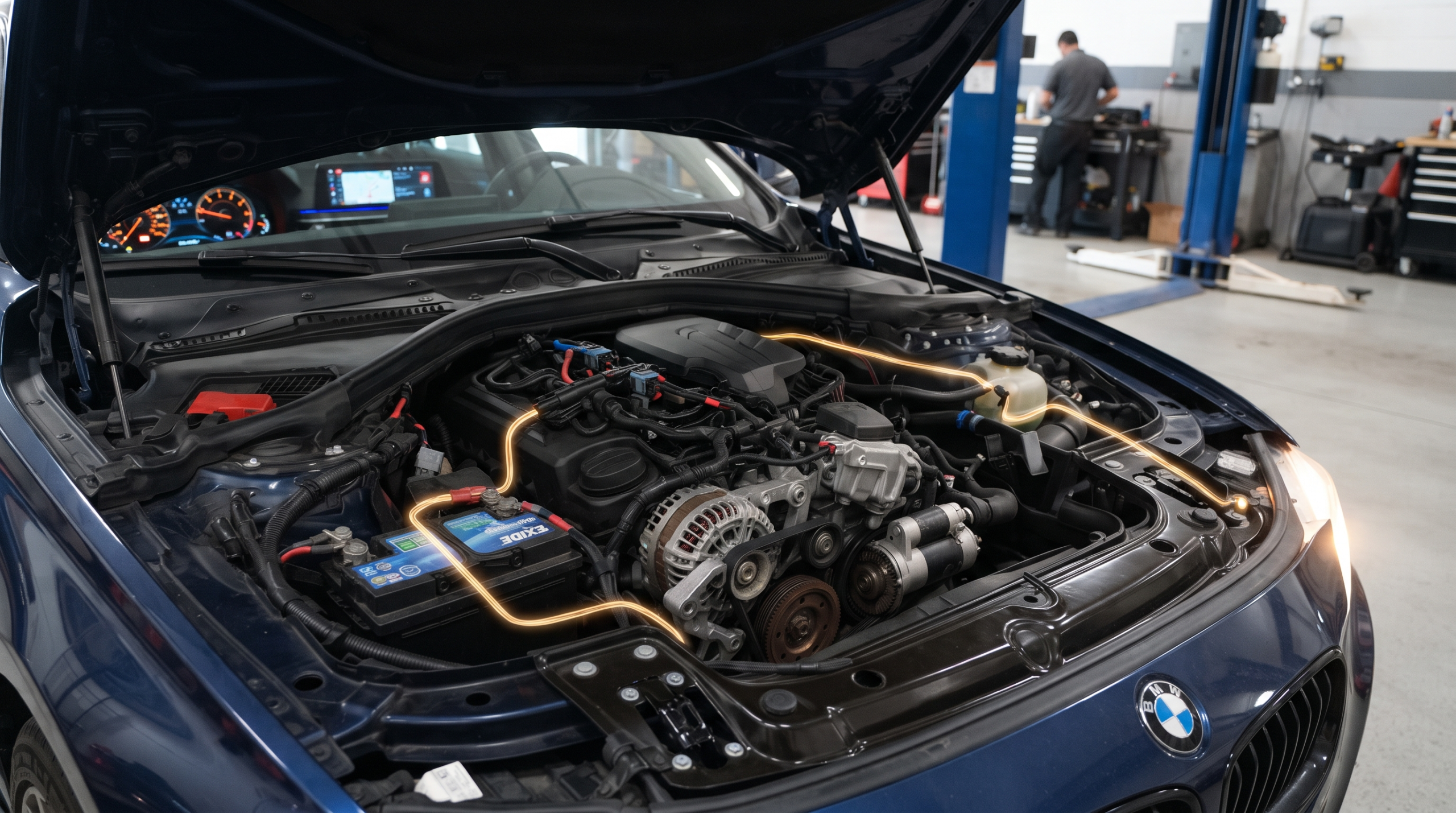
Think of your car’s electrical system like a small power plant that lives under the hood. It makes, stores, and sends electricity to almost every part of your car.
Without it, your car would just be a heavy metal box. No lights, no radio, no way to even start the engine. Even small things like your power windows, your dashboard clock, and your seat warmers all pull power from this same system.
The Basic Job It Does
The main job is simple: move power from the battery to the parts that need it, and bring it back again. This loop is called a circuit.
Every wire, fuse, and switch works together so power goes exactly where it’s needed and nowhere else. If one part fails, the whole loop can be interrupted, which is why even a small issue, like a loose wire, can cause a part of your car to stop working completely.
How It’s Different From Your Home’s Electrical Wiring
Your house uses about 120 volts of power. Your car uses far less usually just 12 volts.
That’s because a car’s system is a closed circuit. Power flows out from the battery, through the car’s metal body, and back to the battery again. Your house wiring doesn’t work that way at all.
This difference matters because it means your car’s electrical parts are built for lower power levels. That’s also why you can safely touch most parts under your hood without any risk of shock, unlike the wiring hidden behind your walls at home.
The Main Parts of a Car’s Electrical System
A car’s electrical system isn’t one single thing. It’s really a team of parts working together, kind of like players on a football team each one has a job.
I remember the first time I popped my hood and tried to name every part. I got maybe two right. Don’t worry, we’ll go slow. By the time you finish this section, you’ll be able to point at your engine bay and actually know what you’re looking at.
Battery, Alternator, and Starter Motor
The battery stores power and gives your engine the first push to start. It sits quietly most of the time, holding onto stored energy until the moment you turn your key.
The starter motor uses that push to actually turn the engine over. It’s a small but powerful motor, built to spin hard for just a second or two before its job is done.
Once your engine is running, the alternator takes over. It makes new electricity and refills the battery at the same time, kind of like a generator that never stops working while you drive. Without the alternator, your battery would slowly drain every time you used your headlights, air conditioning, or radio.
Wiring, Fuses, and Relays
Electrical wiring connects every part of this system, running from the front of the car to the back. Some wires are thick, some are thin, depending on how much power they need to carry.
Thicker wires usually carry more current, like the cable connecting your battery to your starter motor. Thinner wires handle smaller jobs, like sending a signal to your fuel gauge.
Fuses are small safety parts. If too much current tries to flow, a fuse burns out on purpose to protect the rest of the system. Think of a fuse as a tiny sacrifice it breaks so nothing more important gets damaged.
Relays act like tiny remote switches they let a small signal control a much bigger flow of power, like turning on your headlights. This matters because the switch on your dashboard doesn’t have to carry all that electricity itself; it just tells the relay when to do its job.
You’ll usually find a small box under your hood or near your dashboard packed full of fuses and relays, often called a fuse box or fuse panel. If you ever lose power to one part of your car, like your radio or a turn signal, that box is often the very first place a mechanic will check.
How Does Current Flow?
This part sounds technical, but honestly, it’s not that hard once you see the picture in your head.
Picture water flowing through a pipe. The current works kind of the same way, just with electricity instead of water. The pipe carries the water from one place to another, then the water eventually finds its way back around. Electricity in your car does something very similar.
What Is an Earth-Return Circuit?
In a car, power leaves the battery, travels through wires to a part like a headlight, then flows back to the battery through the car’s own metal body. This setup is called an earth-return circuit.
The metal body acts like a giant wire. That’s actually a pretty clever design, if you ask me. It saves manufacturers from having to run a second wire back from every single part, which keeps the whole system lighter and simpler to build.
This is also why you’ll sometimes hear mechanics talk about a part being “grounded.” It just means that part is connected to the car’s metal body, completing its little piece of the circuit.
Why Current Only Flows One Way (Polarity)
Electricity in your car only moves in one direction. This is called polarity.
Most cars connect the negative side of the battery to the car’s metal body. This is called a negative earth system. If you ever install new electrical parts, always check the polarity first hooking things up backward can damage them fast.
A simple way to remember this: the positive terminal feeds power out to your car’s parts, while the negative terminal is the return path back to the battery. Mixing these up, even briefly, is one of the most common mistakes people make when working on their car’s electrical system themselves.
Volts, Amps, and Ohms Explained Simply
Okay, honestly, when I first heard “volts, amps, and ohms,” my eyes glazed over a bit. But stick with me it’s easier than it sounds, and once it clicks, it clicks for good.
What Each Word Actually Means
Voltage is the push behind the electricity, kind of like water pressure in a hose. Current, measured in amps, is how much electricity is actually flowing. Resistance, measured in ohms, is how much a wire fights against that flow.
Here’s a simple way to remember it: more voltage pushes more current through, but more resistance slows it down. All three work together, all the time, in every part of your car.
Let’s use a small example. A headlight bulb needs a certain amount of power to glow properly. If the voltage drops too low, like when your battery is weak, the bulb simply can’t shine as bright, even though the wiring and bulb itself are perfectly fine.
Why Most Cars Use 12 Volts (and What’s Changing)
Almost every gas car on the road today runs on a 12-volt system. It’s been the standard for decades because it works well and it’s affordable to build.
But cars are changing. Some newer vehicles now use a 48-volt system alongside the normal 12-volt one, mostly to run extra electric parts like turbo boosters and stop-start features more efficiently. Full electric cars go even further, often running at 400 volts or more, just for the motor that drives the wheels.
Even with these changes, most everyday parts in your car, like your headlights, radio, and power locks, still run on the same simple 12-volt system that’s been trusted for generations. The higher voltage systems mainly exist to handle bigger jobs, like moving the whole car forward.
How the Electrical System Works When You Start Your Car
This is where it all comes together, so let’s slow down a bit for this one.
I once had my car die on me in a grocery store parking lot on a freezing morning. I turned the key, heard a slow, groaning crank, and then… nothing. That was my battery telling me it was tired. Looking back, there were small warning signs for weeks before that, I just didn’t know what they meant yet.
What Happens the Moment You Turn the Key
When you turn your key or press start, the ignition switch closes a circuit that sends power from the battery straight to the starter motor. The starter spins the engine’s flywheel just enough to get the pistons moving and the engine running on its own.
This whole process takes less than a second in a healthy car. If your battery is weak, though, you’ll notice that slow crank sound I mentioned that’s a classic warning sign, and it’s one of the easiest ones to catch early if you’re paying attention.
According to AAA, most car batteries only last about three to five years, and heat, vibration, and short trips can all wear them down faster than normal. A slow-cranking starter or a dim dashboard light is often the very first clue that your battery is nearing the end of its life. AAA also notes that batteries in hot climates tend to wear out faster than those in cooler areas, since heat speeds up the internal chemical breakdown inside the battery.
Batteries also play a role in fuel-saving stop-start technology. According to the U.S. Department of Energy’s Alternative Fuels Data Center, lead-acid batteries are commonly used to power stop-start systems in gas-powered vehicles, letting the engine shut off briefly at stoplights and restart automatically to save fuel. That means your battery isn’t just working when you first start your car in the morning; in newer vehicles, it might be quietly restarting the engine dozens of times during a single drive.
How the Alternator Takes Over Once the Engine Runs
Once your engine is running, the alternator kicks in and takes over the electrical workload. It generates fresh electricity using the spinning motion of the engine itself, then sends some of that power back into the battery to recharge it.
This is why your car doesn’t drain the battery dry every time you drive. The alternator and battery work as a team one supplies power at rest, the other keeps things charged in motion.
It’s worth remembering that the alternator only works while your engine is running. That’s why a short drive to the corner store and back might not give your battery enough time to fully recharge, especially if you’re also running the air conditioning, headlights, and radio all at once.
Common Electrical Questions Drivers Ask
Over the years, I’ve heard the same few questions come up again and again from friends and family. Let’s clear a few of them up here.
Why Do My Lights Dim When I Start the Car?
This happens because starting the engine pulls a big burst of power from the battery all at once. For a split second, there’s less power left over for your headlights, so they dim slightly.
It’s usually completely normal. But if your lights dim a lot, or stay dim, it might be a sign your battery or alternator needs a check. Honestly, this is one of those things that looks scarier than it actually is, most of the time.
Why Is My Car Harder to Start in Winter?
Cold weather thickens engine oil, which makes the engine harder to turn over. At the same time, cold temperatures also slow down the chemical reaction inside your battery, so it has less power to give.
Put those two things together, and you get that classic slow winter crank. Keeping your battery in good shape before winter hits can help a lot. It’s also part of why so many drivers get caught off guard the first cold snap of the year, even if the battery seemed totally fine all summer long.
Signs Your Car’s Electrical System Needs Attention
Nobody wants to get stranded. Learning a few warning signs can save you a lot of stress and money.
A friend of mine ignored a flickering dashboard light for weeks. Turned out to be a failing alternator, and by the time she got it checked, she also needed a new battery. One small warning turned into two costly fixes. The funny part is, she’d actually mentioned the flickering to me weeks earlier, and neither of us thought much of it at the time.
That’s honestly how most electrical problems start. Nothing dramatic, just a small, easy-to-ignore clue that slowly gets worse until one morning your car simply won’t start at all.
Warning Signs of a Weak Battery or Alternator
Watch out for a slow engine crank, dim or flickering lights, a battery warning light on your dashboard, or strange electrical glitches like power windows moving slower than usual.
If your radio or clock resets itself often, that can also be a small clue that something in your electrical system isn’t holding a steady charge. A burning smell near the battery or a swollen battery case are also strong signs that something needs attention right away.
When to Call a Mechanic vs. When You Can Check It Yourself
You can usually check things like battery terminals for corrosion or a loose connection on your own. A quick clean and tighten sometimes fixes the problem completely, and it only takes a few minutes with a simple wrench and a wire brush.
But if you’re seeing multiple warning signs together, or the battery light won’t turn off, it’s smarter to get a professional to test the whole charging system. Guessing with electrical problems can turn a small fix into a bigger one fast, and a proper diagnostic test can tell you exactly which part is actually at fault, instead of replacing parts one by one and hoping for the best.
Do Electric and Hybrid Cars Work the Same Way?
Short answer: kind of, but not exactly. Let’s break down the difference simply.
What’s Different About EV Electrical Systems
Electric and hybrid cars still use a small 12-volt system for basic things like headlights and the radio. But they also carry a much bigger, high-voltage battery pack that powers the actual motor driving the wheels.
That high-voltage system is a completely separate setup, built with extra safety protections since it carries far more power than anything in a gas car. In fact, most electric vehicles use bright orange cables specifically so technicians can instantly recognize the high-voltage wiring and handle it with proper care.
What Stays the Same
Even with all these changes, the basic idea of a closed circuit, careful wiring, and fuses protecting the system stays the same. The core concept you learned earlier in this guide still applies, just scaled up for higher power needs.
It’s actually kind of reassuring once you realize this. You don’t need to learn a whole new set of rules for electric cars you just need to picture everything you already learned, running at a bigger scale.
Simple Tips to Keep Your Electrical System Healthy
You don’t need to be a mechanic to take good care of your car’s electrical system. A few small habits go a long way.
Check your battery terminals now and then for a white, crusty buildup that’s corrosion, and it can weaken your connection over time. Try not to leave lights or accessories running when your engine is off, since that drains the battery without the alternator there to refill it.
If you don’t drive often, consider starting your car every so often just to let the alternator top off the battery. And if you ever notice warning signs like slow starts or dim lights, don’t wait too long to get it looked at.
A quick habit I picked up over the years: every time I get an oil change, I also glance at my battery terminals for a few seconds. It costs nothing and takes almost no time, but it’s caught small problems before they turned into a dead battery on a cold morning.
Also, try to avoid letting your battery sit completely dead for long periods, even if you can jump-start it back to life. Deep discharges like that quietly shorten a battery’s lifespan every time they happen, even if the car seems to run just fine afterward.
Conclusion
Your car’s electrical system might seem complicated at first, but really, it comes down to a few simple ideas: a battery that stores power, an alternator that refills it, wires that carry it, and fuses that keep it safe.
Once you understand these basics, those strange dashboard lights and slow morning starts start to make a lot more sense. You don’t need to be an engineer to notice a slow crank, a dim light, or a strange smell near your battery, and now you know exactly what those little signs are actually telling you.
Most guides make this topic sound way more complicated than it needs to be. In my experience, once you learn these five or six core ideas, the rest just falls into place naturally, the same way learning a few key phrases makes an entire new language feel less intimidating.
I’d love to hear if any part of this matched something you’ve noticed in your own car feel free to think it over next time you turn your key, and pay a little more attention to what happens in that first second before your engine roars to life.
FAQs
What is the most common cause of car electrical problems?
A weak or dying battery is usually the top cause, often made worse by corrosion on the terminals or a failing alternator.
Can I still drive with a bad alternator?
You might be able to drive a short distance, but your battery will drain fast and your car could eventually stall or refuse to restart.
How long does a car battery usually last?
Most car batteries last around three to five years, though heat, short trips, and vibration can shorten that lifespan.
Is a car’s electrical system safe to check myself?
Basic checks like looking at battery terminals are safe for most drivers, but deeper electrical issues are best left to a trained mechanic.
What voltage does a normal car battery run on?
Most gas-powered cars run on a 12-volt system, while some hybrids add a 48-volt system and full electric cars use much higher voltage for the motor.
If you take just one thing away from this guide, let it be this: your car’s electrical system is always quietly talking to you, through small signs like a slow crank, a dim light, or a flickering dashboard icon. Learning to listen a little closer can save you from a stressful morning, a stranded car, or an expensive repair bill down the road.