
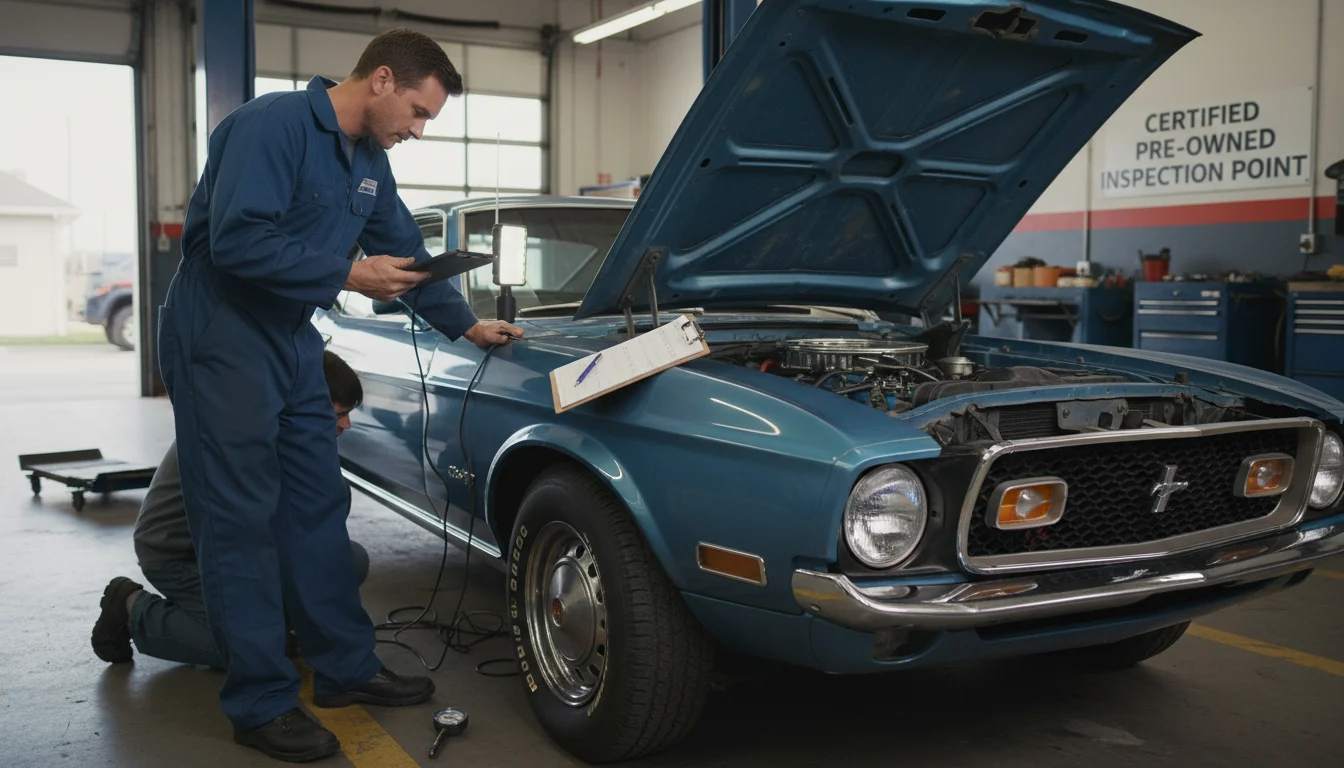
You look at your old car sitting in the driveway and wonder — can I actually get money for this thing, or is it just too far gone? That question is more common than you think, and the answer depends on a few simple rules that most people never bother to check.
Many people assume their old car has zero value. They think it is too old, too beat up, or too slow. But that is not always true. Whether you are thinking about a cash for clunkers type program, a dealer trade-in, or a state vehicle retirement program, the rules around vehicle age and eligibility requirements are specific — and knowing them could save you real money. This guide breaks it all down in plain, simple words so you can figure out exactly where your car stands.
What Does “Car Too Old” Actually Mean in Trade-In Programs?
The 25-Year Rule — Where It Comes From
When the U.S. government launched the original Car Allowance Rebate System (CARS) — what most people call Cash for Clunkers — back in 2009, they set a very clear age limit. Your trade-in vehicle had to be less than 25 years old on the date you traded it in. That was the hard cutoff. No exceptions, no wiggle room.
So if you tried to trade in a 1983 car in 2009, the dealer would have turned you away at the door. The program was never designed to take cars that old. It was built to get gas-guzzling vehicles from the late 1980s and 1990s off American roads, replacing them with newer, fuel-efficient vehicles that met modern EPA standards.
Honestly, I find it interesting that so many people still ask about this rule today, because it shows just how confusing government programs can be when they use vague words like “clunker” without a clear definition attached to them.
Why Vehicle Age Alone Is Not the Only Thing That Matters
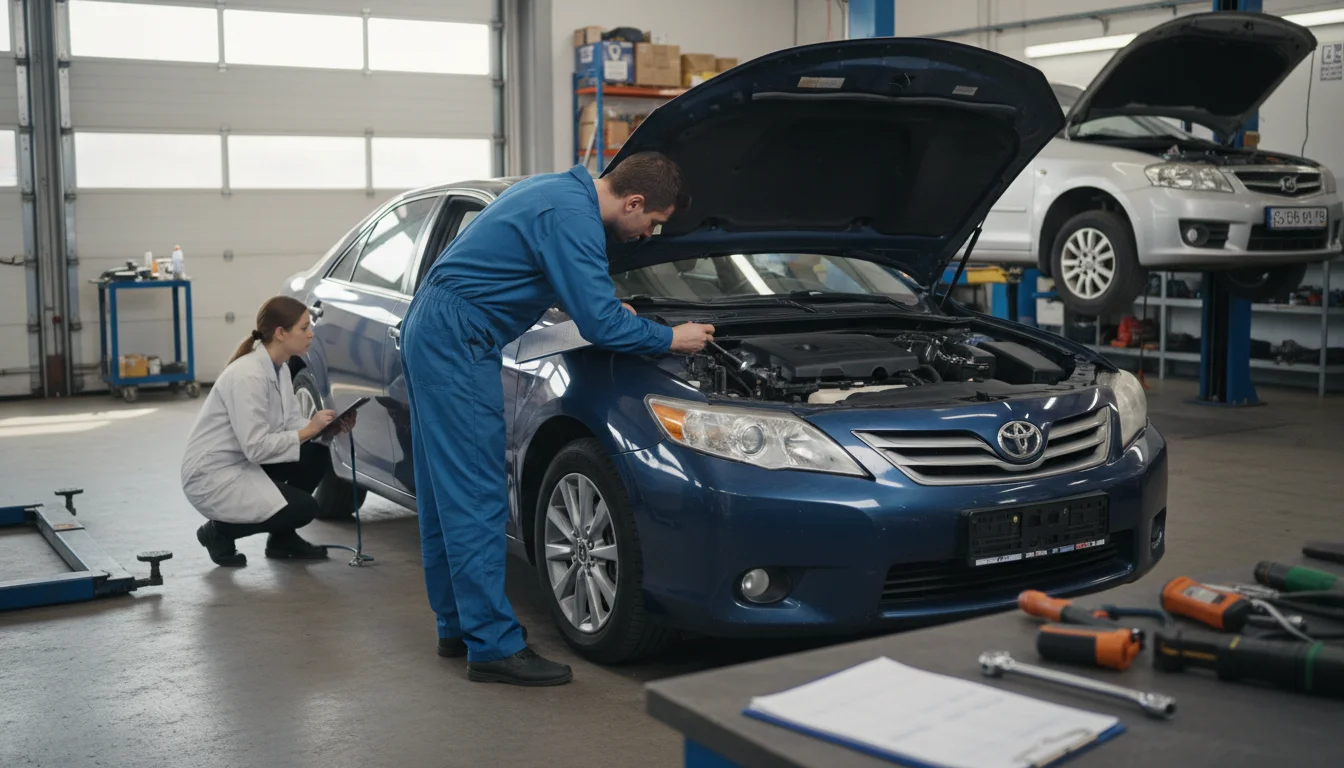
Here is the part most people miss. Even if your car was under 25 years old, it still had to pass another test — the fuel economy rating. Under the original federal program, your vehicle’s combined city/highway MPG had to be 18 miles per gallon or less. This was checked against official EPA fuel economy data, not just what you thought your car got on a good day.
This is where a lot of people got surprised. They assumed their old pickup truck or SUV would qualify, but then found out the EPA had updated its MPG ratings and their vehicle no longer fell below the threshold. As the Quarterly Journal of Economics noted in a 2012 study, the program induced roughly 370,000 additional car purchases — but millions of hopeful owners were simply turned away because their car got one or two miles per gallon too many.
According to Fuel Economy, the lesson here is simple: age matters, but fuel efficiency matters just as much. You need to check both before you get excited about any rebate.
Full Eligibility Checklist — Does Your Car Qualify?
The Four Requirements You Must Meet
Let me put this as simply as I can, because I have seen people show up to dealerships with a car that fails on the very first point. Under the original CARS program rules — which still form the basis of most state-level vehicle retirement programs today — your trade-in car had to tick every single box on this list:
| Requirement | What It Means |
| Vehicle Age | Must be less than 25 years old at the time of trade-in |
| Fuel Economy | EPA combined rating of 18 MPG or less (standard cars) |
| Drivable Condition | Must be able to run and be driven to the dealership |
| Registration & Insurance | Continuously registered and insured for one full year by the same owner |
All four had to be met. Miss one and you were out. This is still the general framework that most modern state-run programs and private vehicle scrappage schemes follow, even if the exact numbers vary slightly.
Special Rules for Trucks, Vans, and Work Vehicles
Work trucks and large cargo vans played by slightly different rules under the original program. For large pickup trucks weighing between 8,500 and 10,000 pounds, the MPG requirement was dropped entirely — because these vehicles do not have a standard EPA MPG rating. Instead, the age rule was tightened. The truck had to be a 2001 model year or older to qualify, and only a $3,500 voucher was available, not the full $4,500.
I think this is a detail that gets overlooked too often. If you drive a heavy-duty work truck, the eligibility path was actually different from what applied to everyday passenger cars. Knowing which category your vehicle falls into could mean the difference between qualifying and being turned away entirely.
Quick tip: Not sure what weight class your truck falls into? Check the door jamb sticker or your owner’s manual. The Gross Vehicle Weight Rating (GVWR) is listed there and tells you exactly which category applies.
What Programs Exist Today in 2025–2026?
The Federal Program Is Gone — Here Is What Replaced It
Let me be upfront about this: the original federal Cash for Clunkers program ended on August 24, 2009. It was a short-lived program that ran for less than two months before the $3 billion in federal funding ran out. As of 2026, there is no active federal-level car trade-in rebate program in the United States.
But that does not mean you are out of options. Two states have stepped in with their own versions. California runs a program called Clean Cars 4 All, which helps income-qualified drivers retire older, high-polluting vehicles. And Colorado has the Vehicle Exchange Colorado (VXC) program, which offers point-of-sale rebates for eligible households trading in older cars for cleaner alternatives. Both programs have their own eligibility criteria, funding limits, and application processes.
According to Coltura.org, which tracks clean transportation incentives, these state programs are the closest thing to a modern Cash for Clunkers in the U.S. right now — and even they have limited funding that can run out quickly.
Private Trade-In Options When You Do Not Qualify for a Program
Here is something that most people do not think about until they get turned away from a government program. You do not need a special program to get money for your old car. Private dealers, junk car buyers, and online car-buying platforms will often make offers on vehicles regardless of age, condition, or MPG. The offer might not be $4,500, but it is usually more than zero, which is what many people expect to receive.
If your car does not run, that is still not necessarily the end. Many private buyers offer free towing and will pay based on scrap value and usable parts. The vehicle’s condition, the make and model, the current price of scrap metal, and even the location you are in can all affect the final offer you receive.
How to Check If Your Specific Car Qualifies
Using fueleconomy.gov to Verify Your MPG
This is the step that so many people skip, and then they are shocked when the dealer says their car does not qualify. Go to fueleconomy.gov, which is the official U.S. Department of Energy and EPA website for vehicle fuel economy data. Select your car’s model year, make, and model. The site will show you the official EPA combined MPG rating for your specific vehicle.
Do not use what the sticker on your car used to say. In 2008, the EPA changed how it calculates fuel economy, which reduced the average rating by roughly 10 percent. A car that used to be rated at 19 MPG under the old system might now officially show 17 MPG, which could actually make it eligible when it did not appear to be before. This is worth checking carefully.
Finding Your Car’s Manufacturing Date and Model Year
Your car’s exact age is determined by the model year, not the year you bought it, or the year it was registered. The month and year of manufacture are listed on the safety standard certification label, which is usually found on the frame or edge of the driver’s door on most vehicles. It will show something like “1-96” for January 1996.
This matters because a car manufactured in late 2000 is a 2001 model year vehicle in most cases. If a program has a cutoff like “must be a 2001 model or older,” you need to know the official model year — not just the calendar year of manufacture. A quick VIN check will also give you this information instantly if the door label is missing or worn out.
Common Mistakes That Get People Rejected
Assuming “Old” Automatically Means “Eligible”
This is probably the single biggest misunderstanding I see. People think that because their car is old, beat-up, and barely running, it must automatically qualify for some kind of program. That is simply not how it works. The whole point of the original CARS program was to remove inefficient vehicles — cars that burned through fuel and put out more carbon emissions than modern vehicles. A 1995 Honda Civic that gets 32 MPG is old, but it was never going to qualify, no matter how rusty it looked.
Age is a filter, but fuel economy is the real test. And for state programs like California’s, smog test failure is often the primary requirement — so a car that is old but still runs cleanly may not qualify there either. Every program has its own logic, and assuming your car fits without checking the specifics is a recipe for disappointment.
Not Having a Full Year of Continuous Registration
Under the original federal program, your trade-in vehicle had to have been continuously registered and insured to the same owner for the full twelve months before the trade-in date. This was there specifically to stop people from going out, buying a cheap old car, and immediately flipping it for a government rebate. The program was for real owners of real clunkers — not opportunists.
If you bought a car six months ago,o hoping to use it in a program, you would have been turned away. And if you let your insurance lapse at any point during that year, that could also disqualify you. It sounds strict, but it was one of the key anti-fraud measures built into the law. Most state programs today carry a similar kind of ownership or residency requirement for the same reason.
Conclusion
So, is your car too old? Maybe. Maybe not. The answer depends on a combination of things: how old the car actually is by model year, what the official EPA MPG rating says, whether it runs, and which program you are trying to use. The original federal Cash for Clunkers program set the standard with its 25-year age limit and 18 MPG threshold, and most programs since have used some version of that same framework.
What I would tell anyone in this situation is simple: do not assume. Spend ten minutes on fueleconomy.gov, check your door label, and then look up whatever program is currently running in your state. The Vehicle Exchange Colorado and California Clean Cars 4 All programs are real options right now in 2025–2026. And if none of those fit, a private buyer or junk car service might still put cash in your hand — often without any of the rules at all.
The worst thing you can do is leave an old car sitting on your property, ty thinking it has no value. Even a car that does not run has scrap value. Even a car that fails every government test can be sold privately. Do the check, know your numbers, and make the move. I would love to hear if this helped you figure out your situation — drop your thoughts in the comments below.
Frequently Asked Questions
How old does a car have to be to qualify for a cash for clunkers program?
Under the original federal CARS program, a trade-in vehicle had to be less than 25 years old at the time of trade-in. This rule was set by the National Highway Traffic Safety Administration (NHTSA). State programs like California’s Clean Cars 4 All may have different age thresholds, so always check the specific program you are applying to before assuming your car qualifies.
Does my car need to run to qualify for a trade-in program?
For most government-run programs, yes, your car must be in drivable condition and be able to be driven to the authorized collection point under its own power. California’s program, for example, requires the vehicle to start on its own and drive to the facility with no towing assistance. However, private junk car buyers and online platforms often accept vehicles that do not run at all, sometimes with free towing included.
What MPG rating makes a car eligible for a CCLunker program?
The original federal program required a combined EPA fuel economy rating of 18 MPG or less for standard passenger vehicles. This was the EPA’s combined city and highway figure, not what you experienced driving. Large pickup trucks and cargo vans weighing over 8,500 pounds had no MPG requirement but faced a stricter age cutoff. You can check your official EPA rating at fueleconomy.gov for free.
Is Cash for Clunkers still available in 2025 or 2026?
The original federal Car Allowance Rebate System (CARS) ended in August 2009 and has not been reinstated at the national level. As of 2026, there is no active federal program. However, California and Colorado both operate state-level programs that work similarly. California’s Clean Cars 4 All and Colorado’s Vehicle Exchange Colorado (VXC) program offer cash incentives to eligible residents who trade in older, high-polluting vehicles.
What happens to my car after I trade it in through a clunkerrogram?
Under government programs, the traded-in vehicle is permanently taken off the road and destroyed. The original federal program required dealers to disable the engine by draining the oil and replacing it with a sodium silicate solution, then running the engine until it seized completely. This was done to make sure the old vehicle could never be resold or its parts reused in other vehicles. The remains were then sent to a licensed salvage operator for scrapping.